



Best Exterior Wall Cladding Panels 2026: Trends & Material Guide
The best exterior wall cladding panels in 2026 prioritize high-performance sustainability, climate resilience, and the "Soft Modernism" aesthetic. To choose the right system, you must balance thermal efficiency with long-term maintenance costs and local fire safety compliance.
In this guide, you will learn to:
- Identify the top-performing materials for 2026 architectural standards.
- Compare lifecycle costs between WPC, fiber cement, and bamboo fiber.
- Select color palettes that align with current "Moody Hue" design trends.
- Avoid common installation pitfalls that lead to moisture trapping or warping.
The 2026 Facade Shift: Sustainability & "Soft Modernism"
As we move through 2026, the architectural landscape has shifted away from the cold, clinical minimalism of the early 2020s. We are seeing the rise of "Soft Modernism"—a style that combines clean lines with organic curves and tactile, eco-friendly materials.
Sustainability is no longer a secondary feature; it is a primary procurement requirement. Builders are increasingly opting for panels with low VOC emissions and high recycled content to meet stricter "Green Building" certifications.
2026 Design Examples:
- Anthracite and Charcoal: Deep, matte finishes that provide a sophisticated backdrop for natural greenery.
- Burnt Cedar Textures: Achieving the "Shou Sugi Ban" look using durable composites rather than high-maintenance natural wood.
- Organic Curves: Using flexible cladding profiles to wrap around rounded corners, breaking the "box" shape of traditional residential design.
Top Materials Compared: WPC, Fiber Cement, and Bamboo Fiber
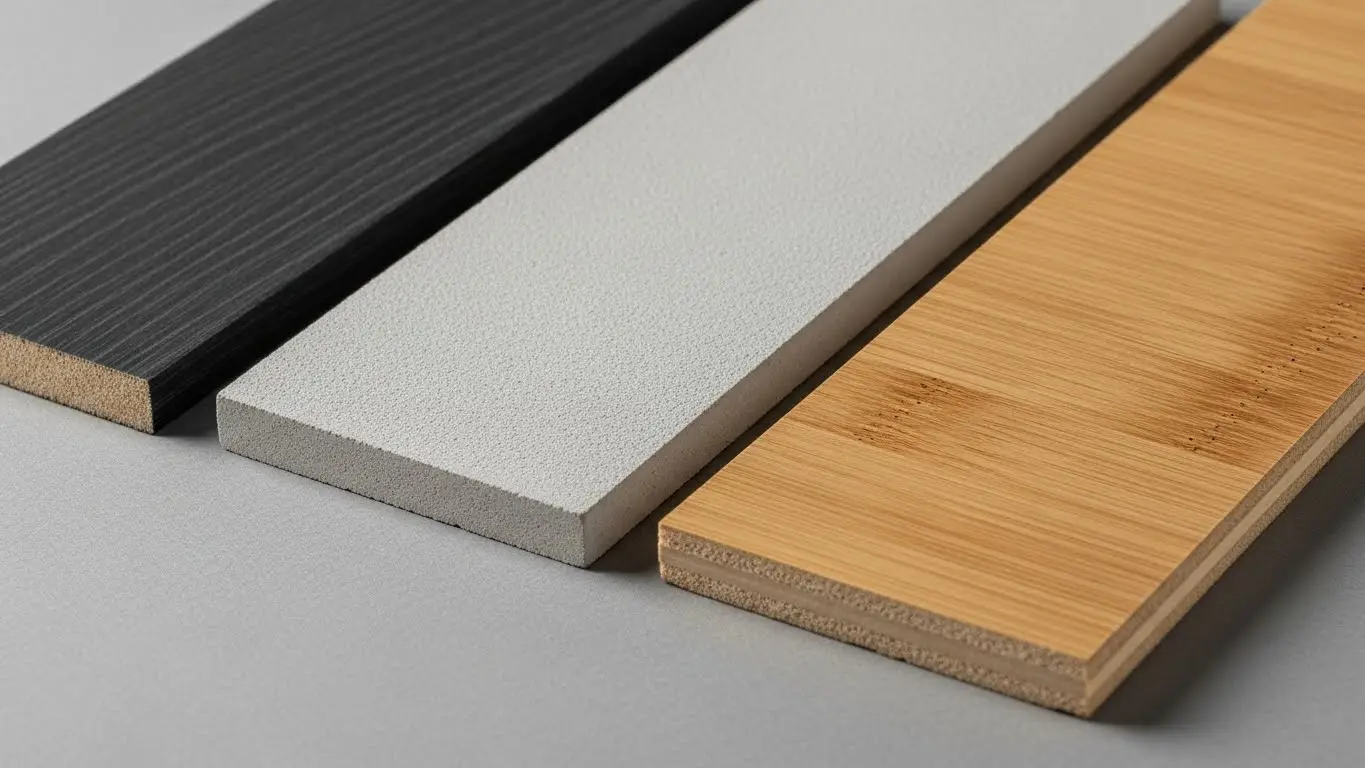
Selecting the right material requires understanding how they perform over a 25-year lifecycle. Below is a snapshot of the leading 2026 cladding technologies.
| Feature | WPC (Wood-Plastic) | Fiber Cement | Bamboo Fiber (Engineered) |
| Durability | High (Rot/Insect Proof) | Very High (Impact Resistant) | High (High Density) |
| Eco-Score | Moderate-High (Recycled) | Moderate | Very High (Renewable) |
| Maintenance | Ultra-Low (No Sanding) | Low (Periodic Paint) | Low (UV-Resistant) |
| Fire Rating | Varies (Class B common) | Class A (Non-combustible) | Class B/C (needs verification) |
| Est. Cost | $12–$22 per sq. ft. | $8–$15 per sq. ft. | $15–$28 per sq. ft. |
| (Note: Prices are market averages and need verification based on your specific region and order volume.) |
Export to Sheets
Common Mistakes to Avoid:
- Ignoring Thermal Expansion: Composite materials like WPC expand and contract with temperature changes. Failing to leave the recommended "gap" at joints will cause the panels to buckle or "snake" over time.
- Assuming All Are Fire-Rated: While fiber cement is naturally non-combustible, many composites require specific additives to reach Class A or B fire ratings. Always verify the specific batch test results for your project type.
Visual Trends: The 2026 Color Palette
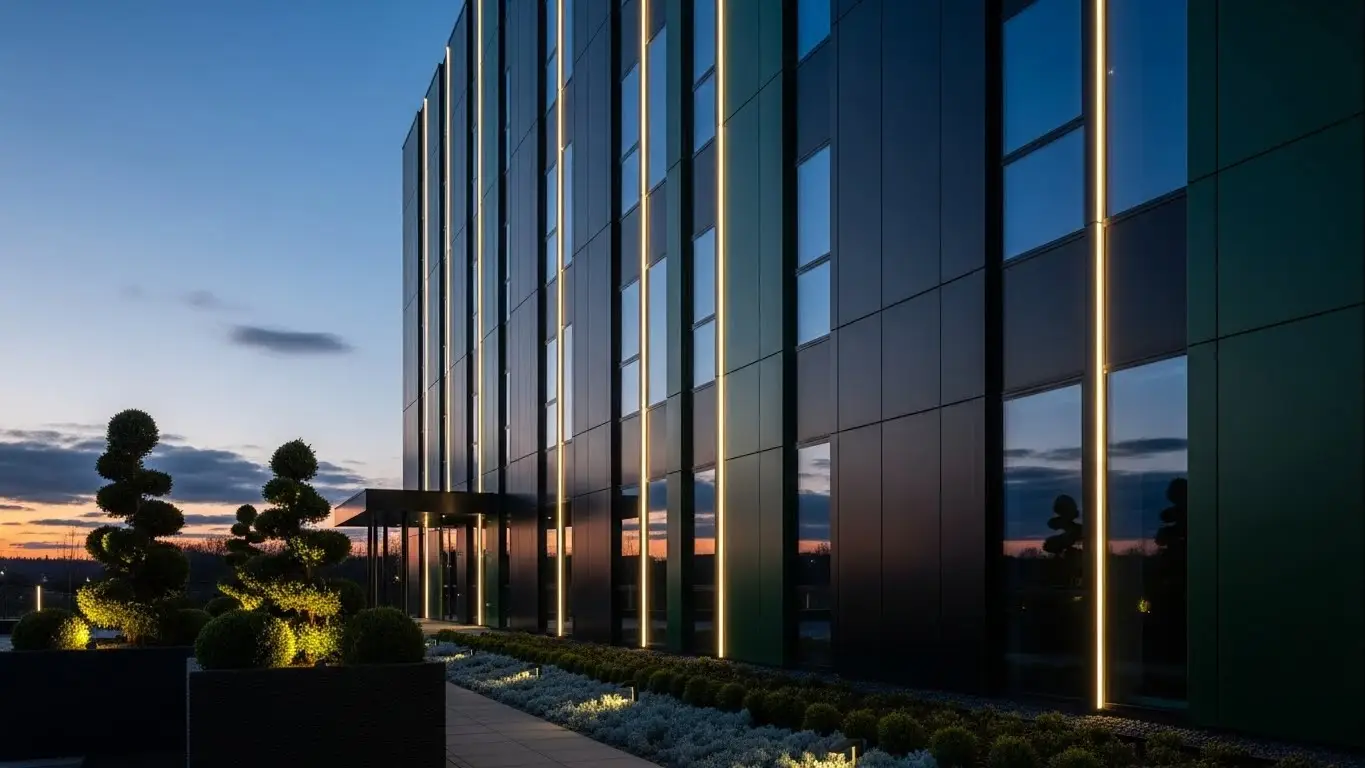
Color choices in 2026 have moved toward "Nature-Integrated" tones. The goal is to make the structure look like an extension of the landscape rather than an imposition upon it.
- Moody Hues: Deep forest greens and charcoal greys dominate the luxury market. These colors are often paired with light stone accents to create high-contrast visual interest.
- Warm Earth: Terracotta, caramel, and "Muted Oak" are the go-to choices for residential renovations. These tones provide a sense of warmth and "home" that grey-scale palettes lack.
Pro Tip: When choosing dark colors, ensure the panels have high UV-reflectance technology. Darker panels absorb more heat, which can lead to higher cooling costs if the cladding doesn't have a proper ventilated rainscreen behind it.
Climate Resilience: Picking Panels for Your Zone
In 2026, "future-proofing" means building for the climate you will have in ten years, not just the one you have today.
High-UV and Heat Zones
In regions with intense sun exposure, color fading and material degradation are the primary concerns. Look for panels with "Co-extrusion" technology—an outer protective layer that shields the core material from UV rays.
Coastal and High-Moisture Zones
Salt air is incredibly corrosive to metal fasteners and certain stone finishes. For coastal properties, high-density WPC or bamboo fiber panels are ideal because they do not absorb moisture or corrode.
Technical Standard Note: Ensure your installation uses Grade 316 stainless steel clips and screws in these environments to prevent "rust bleeding" down your beautiful new facade.
Installation & Cost Guide for 2026
While material costs have stabilized, labor and specialized hardware remain significant factors in your total budget.
- Preparation: Ensure the substrate (the wall behind the cladding) is waterproofed with a high-quality weather-resistive barrier (WRB).
- Ventilation: Most modern panels require a "Rainscreen" installation. This involves creating a 19mm to 38mm air gap between the wall and the panel to allow moisture to escape.
- Fastening: Hidden fastening systems are the 2026 standard. They provide a clean, screw-free aesthetic while allowing for the natural movement of the panels.
Common Pitfall: DIY-ing fire-rated panels without professional flashing. Incorrect flashing around windows and doors is the #1 cause of water damage in cladding projects. Even the best panel will fail if the water cannot drain away from the structure.
FAQ: Common Exterior Cladding Questions
Is WPC cladding fire-rated?
WPC cladding fire ratings vary significantly by manufacturer. While many standard panels are Class B or C, high-end versions are engineered with flame retardants to meet stricter safety codes. Always request a certified test report.
How long does 2026 composite cladding last?
High-quality composite cladding in 2026 is typically designed for a lifespan of 25 to 30 years. Most premium manufacturers offer warranties ranging from 15 to 25 years against fading, staining, and structural failure.
What is the best exterior wall cladding for extreme heat?
Fiber cement and co-extruded WPC are the best options for extreme heat. Fiber cement is dimensionally stable and won't warp, while co-extruded WPC features UV-resistant capping that prevents the material from becoming brittle.
Does bamboo fiber cladding require oiling?
Engineered bamboo fiber panels for exterior use are usually pre-treated and capped, requiring no annual oiling or staining. This makes them a much lower-maintenance alternative to traditional timber cladding.
What is the average cost of exterior wall cladding per sq. ft. in 2026?
Expect to pay between $10 and $35 per square foot for materials and professional installation (needs verification). Pricing depends heavily on the material density and the complexity of the hidden fastening system used.
Can I install exterior panels over existing brick?
Yes, you can install cladding over brick by using a furring strip (batten) system. This creates a level surface and the necessary air gap for ventilation, though it requires specific masonry anchors.
Conclusion
Choosing the best exterior wall cladding panels in 2026 comes down to balancing the "Soft Modernist" aesthetic with high-performance materials like WPC or Bamboo Fiber. By focusing on sustainability and climate-specific resilience, you ensure your project remains beautiful and structural sound for decades.
Ready to upgrade your facade? Contact HSCS Decor today to request a sample kit of our 2026 bamboo fiber and WPC panel collections.


