


Contents
HSCS
Best wall cladding materials
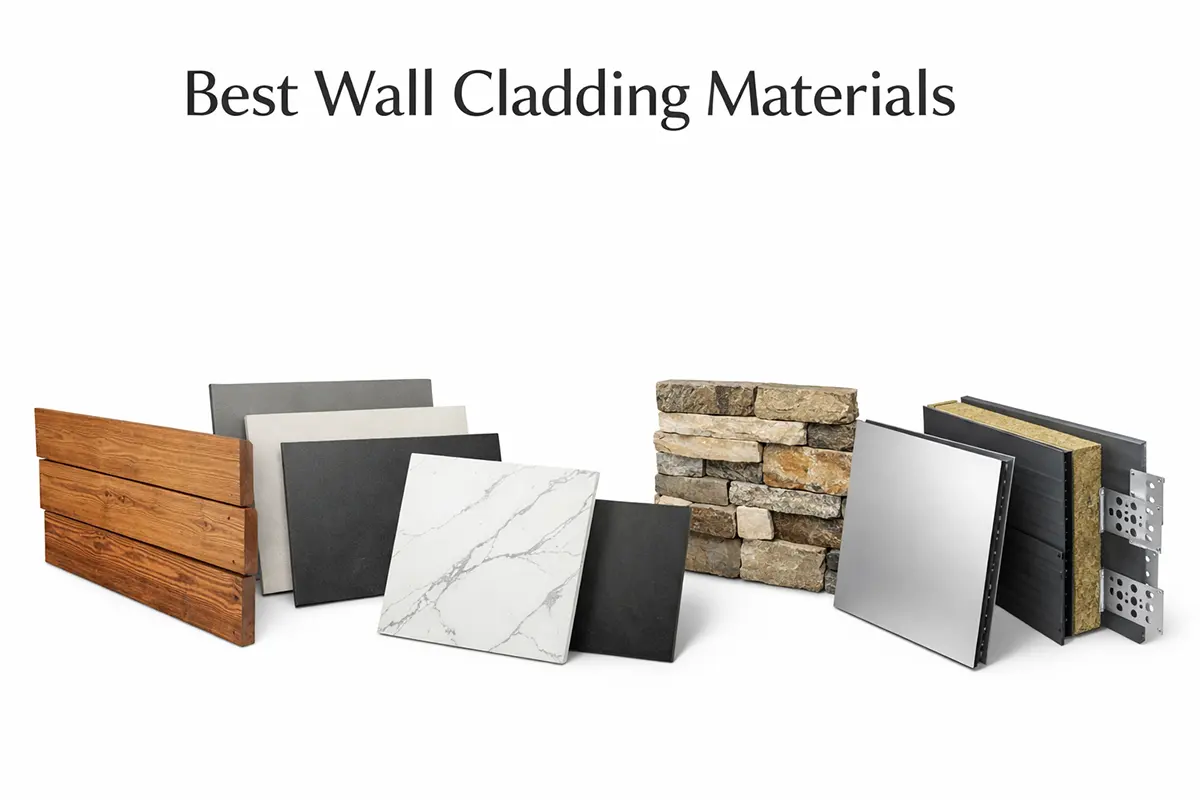
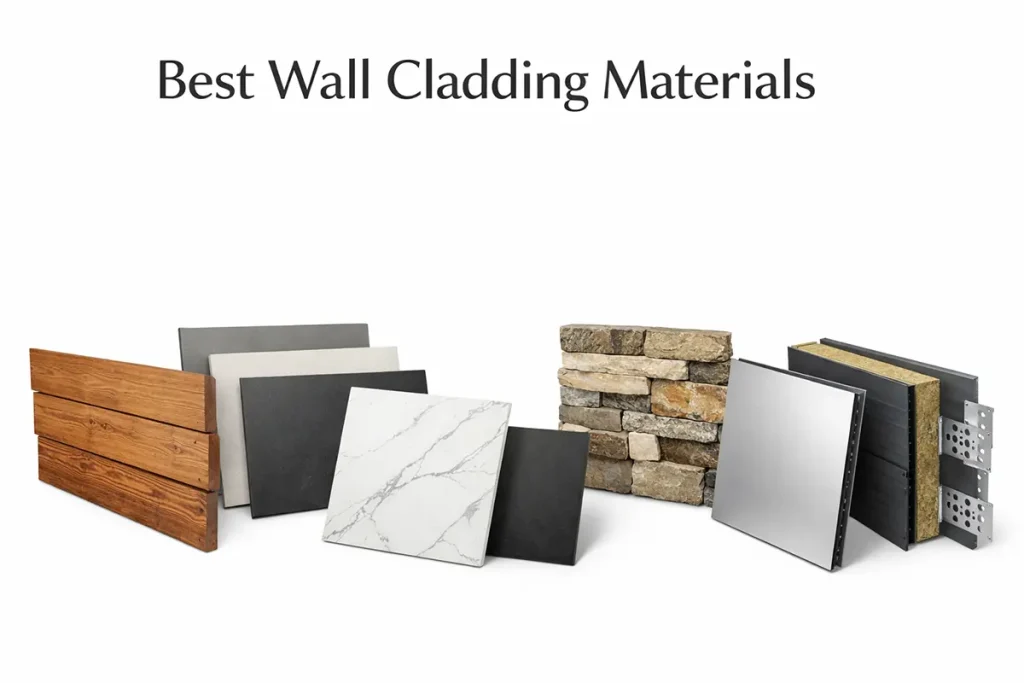
Wall cladding is not merely a nice veneer. The appropriate material could enhance the weather protection, decrease maintenance, and increase the perceived value of a building. The incorrect one may fade, break, entrap water or be more expensive to fix than it would have been initially. The following will be a practical guide on the most acceptable Best wall cladding materials, which they are best at and how to make a choice on what to use, depending on the actual project needs.
1) Fiber Cement Panels: Clean, Good Performance
Fiber cement coating is considered one of the most moderate options of contemporary exterior. It is composed of cement, sand and cellulose fibers created in the form of boards or panels. Designers like it as it produces sharp edges and uniform finishes without the quite plastic appearance of some composites.
Why it’s a top pick:
- Works effectively in extreme sunlight, downpour and changing climates
- Non-combustible solutions are usual (significant to the code requirements)
- Keeps paint or factory finish well to keep the colors long
- Has a contemporary, architectural look at an affordable price
Watch-outs:
Fiber cement is not the lightest option, thus quality of installation is an issue. Dust is also generated during cutting and therefore correct tools and precaution measures are required. This is a solid bet in case you desire a powerful, clean exterior, and want less drama in the long term.
2) Metal Cladding (Aluminum or Steel): Smooth Engineering and Strength Long Life
Best wall cladding materials is widely used in commercial buildings, industrial projects and modern houses. Smooth surfaces and large-format designs may be made using aluminum composite panels (ACP) as well as solid aluminum panels. Steel choices introduce additional toughness, but they might require additional care in regard to corrosion protection in regards to the setting.
Why it works:
- Glossy, premium architectural finish
- Applicable in high ventilated facade assembly and wide exterior surfaces
- Has long-term durability and rightful surface protection
- Its weight on the building not as heavy as masonry
Watch-outs:
Dents may appear on metal surfaces on which they are impacted and lower grade systems may oil-can (visual waviness). Areas close to and near the coast or high humidity need to be coated carefully with the right choice of coating and the details should be well done in order to prevent corrosion.
3) Natural Stone Veneer: Luxurious, Classical, and Costly
Stone cladding is a quality at first glance. It is applied on feature walls, high-end residential, hospitality, and entrances.Alternatives include granite, slate, limestone and quartzite as well as a complete depth stone and lightweight veneer systems.
Why people choose it:
- Good high-end look which matures
- Very strong durability and weather resistant
- Increases the property value and generates a good image
Watch-outs:
Stone is more typically more expensive and heavier, and therefore structural support and installation issues should be considered. Stone is difficult to resist should you wish to have a traditional, luxurious finish, on a limited budget.
4) Brick Veneer: Conventional Personality, Performance over Time
The use of brick cladding is not a new thing. The brick wall is not always structural as modern systems have been using brick veneer. The Brick can be used in both the conventional and modern design with much ease, particularly when it is combined with clean windows detailing.
Why it’s great:
- Constructed to be very long lasting and require little maintenance
- Fireproof and durable in terrible weather conditions
- Possesses its color and look decades
Watch-outs:
It weighs more and is not as easy to install as the panel systems. Describing flashing and weep holes is very important to handle the moisture. Brick is a sure investment as long as you desire classic curb appeal and a long-term feeling of security.
5) Best wall cladding materials Cladding: Natural and Design Warmth
Cladding with wood adds some warmth that cannot be offered by many of the so-called industrial materials. Woods that are thermally modified, cedar, and larch are typical. It is effective in house work, commercial boutique designs and feature walls.
Why it’s loved:
- Natural texture and warmth
- Adjustable designing (vertical, horizontal, slatted)
- Even simple shapes look premium to him
Watch-outs:
Wood requires a plan of maintenance. Finishes can be faded by UV light and detailing with moisture is essential. Provided you like the appearance, select a lasting species, place in a ventilated cavity and arrange a periodical re-coating.
6) Engineered Wood (HPL or Wood-Composite Cladding): Refined Image, Less Maintenance
High-pressure laminate (HPL), and engineered composite choices are a dependable and smooth look of wood.HPL is popular among many architects since it is stable, modern, and offered in the greatest variety of color and texture.
Why it’s practical:
- Uniform looks and general design decisions
- Offers less maintenance requirement as compared to natural wood cladding
- Does not paint poorly in contemporary rainscreens
Watch-outs:
Quality of the product depends on the manufacturer. Inquire of warranties, UV performance, and fire rating requirements of your type of building and your area.
7) Vinyl / uPVC Cladding: Easy and Low-Cost
Vinyl coating is still popular among residential works when economy is an issue. It is not heavy and it can be installed fast and it comes in a variety of colors.
Why it’s chosen:
- Economical during the first acquisition phase
- Installation is fast which saves man-hours
- Unaffected by rot or pests
Watch-outs:
The Vinyl will look cheaper when viewed closely and it will even distort when incorrectly fitted or in an environment of high heat. It suits well with cost-sensitive projects where good performance is good enough.
8) Best wall cladding materials: Beautiful Luxury, Made to Last.
Facade system made of porcelain is gaining popularity in high quality buildings. They have high color stability, scratch resistance and durability.With these systems, there is the design of a ventilated rainscreen.
Why it stands out:
- Maintains its original look and is not much changed
- High weather, UV and staining resistance
- Modern, high-end, clean interior
Watch-outs:
Needs more capital and professional installation teams.This is a good choice when you are creating a signature facade and would like to have long-lasting functionality and little visual decay.
The Practical Checklist: How to Select the Most appropriate wall cladding materials
1) Climate and exposure
Performance is affected by hot sun, freeze-thaw, heavy rain as well as salt air and pollution. Corrosion resistance and detailing are usually required to be stronger in coastal projects.
2) Performance- Fire and code compliance
This is non-negotiable. Early check of local requirements particularly in a multi story building and commercial projects.
3) Maintenance expectations
When the owner desires to have it installed and forgotten, prefer fiber cement, brick, stone, porcelain or well-coated metal. Wood may be ideal when they are fond of natural aging and they can do it.
4) Budget: upfront vs lifecycle
ess expensive materials may prove to be expensive since they fade away, warp, or leak in 10 years or more.See past the cost of purchase and look at service life, warranty coverage and reflects on maintenance.
5) Visual goals
Contemporary minimalism is inclined to the large-format panels (fiber cement, metal, porcelain, HPL). The conventional projects are normally glowing with brick or stone.
6) SSystem detailing: the hidden success factor
The finest panel may fail in case of improper designing of flashing, ventilation gaps, fasteners, and moisture barriers. Many materials are often enhanced with the performance of a good rainscreen approach.
Best Picks (Quick Recommendations) in All-Rounders
- Most balanced: Fiber cement panels
- Most lightweight + modern: Aluminum cladding (quality coating needed)
- The majority of premium + timeless: Natural stone veneer
- Most timeless and long lasting: Brick veneer
- Best natural and natural appearance: Timber that lasts long with the help of the maintenance policy
- Most set and forget premium: porcelain facade panels