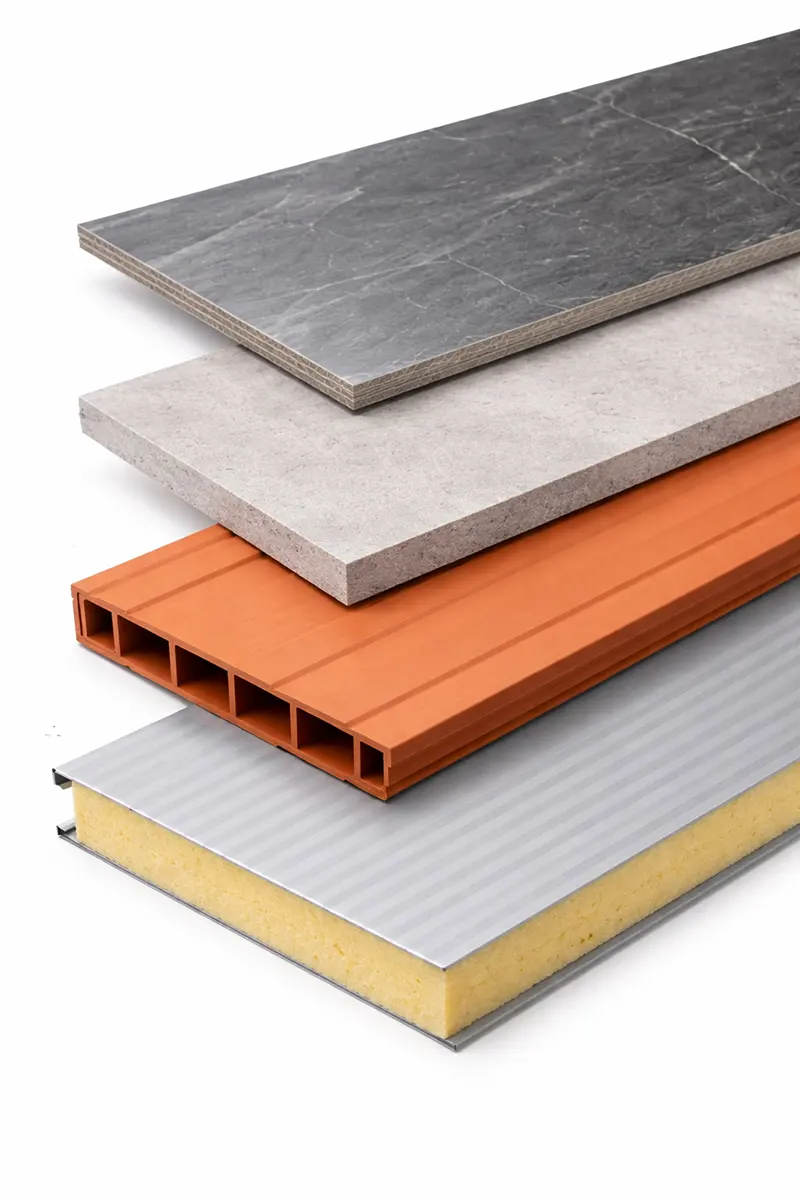



Best Wall Cladding Panels in 2026, What to Specify (and Why)
Best Wall Cladding Panels in 2026 might not be the ones that appear to be pretty in drawings. The finest systems are those that remain flat, remain clean, and satisfy the fire requirements, and remain water-free, including years of UV, freeze-thaw cycles, and maintenance shortcuts. This is why the market continues to move to tested rainscreen systems, non-combustible finishes and panel systems that build up quickly but age gradually. (The growth of Rainscreen is also being monitored as a long-term trend within a variety of market perspectives.)
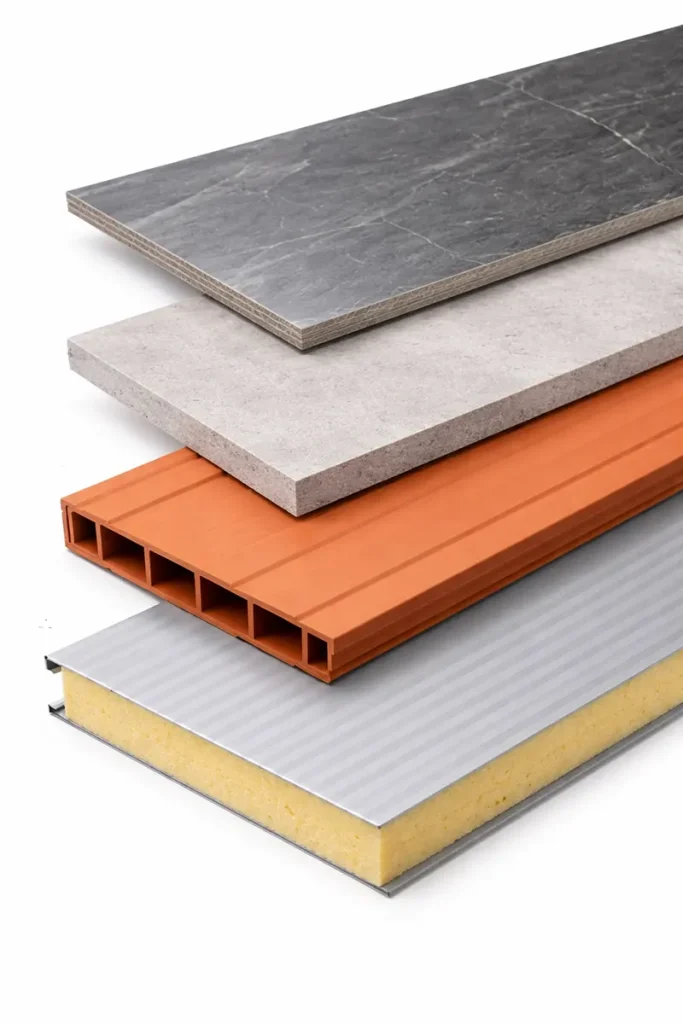
An example 2026 centered reference to the current high-end wall cladding panels is as follows: When to use each type of system and how to avoid the initial cost-saving becoming an expensive liability over time.
What “Best” Means in 2026
Performance factors currently driving specs Shortlist the following performance factors before selection of a panel material:
- Fire performance and documentation: Greater numbers of owners and authorities would prefer the demonstration to be at the assembly level and not marketing statements. NFPA 285 is commonly used to assess fire spreading of exterior wall systems that comprise of combustible material.
- Moisture management: Ventilated rainscreen systems allow to manage the rain penetration and drying - particularly in tall facades and wet climates.
- Durability + maintenance realism: When a panel is said to need care once year, it is assumed that it does not occur on most buildings.
- Embodied carbon and lifecycle planning: Increasing specifications are now looking at verified EPD information and material recovery and recycling at the end of life of service.
- Installation speed and man-power: Systems which can withstand real site conditions get bids.
The 2026 Wall Cladding Panels to use
1) Porcelain and Ceramic Rainscreen Panels: High Level of Dimensional Stability and Low Maintenance
The reasons why they will be highly rated in 2026: Porcelain is hard, UV-stable and colorfast to the maximum. It is a good choice when you desire high-quality appearance and low maintenance- especially on business front and high visibility projects.
Where it performs best
- Healthcare facilities, education facilities and civic buildings
- Large-surface facades in high-traffic cities, such as places that have to be cleaned frequently
- The projects where regular finish is important (no undulating weathering)
Watch-outs
- Heavy material: must be properly subframed
- Expert installation is an issue of flatness and the quality of joints
Many (of the guidance pieces on facades also) point out porcelain, and some metal alternatives, in case fire-safety is a significant concern.
2) Best all-around balance Fiber Cement Panels
Fiber cement will continue to be a workhorse in 2026 since it is dimensionally stable, a commodity is widely available, and simple to achieve good fire performance when properly combined with the appropriate wall build-up.
Where it performs best
- Light commercial, multi-family, education
- Budgets that should last long without the appearance of luxury
- Sharp geometry and non-gloss subdued finishes designs
Watch-outs
- Edge sealing and detailing cannot be compromised as it is necessary
- Select a system that has been proven to be fastened + movement controlled (avoid differentiating)
3) Metal Facade Panels: Clean, Modern Design And High Recyclable
The reason why the metal panels are popular in the year 2026 is that it is lightweight, consistent, and may be recycled frequently. They also fit in the high speed installation and clean architectural lines.
Where it performs best
- The industrial and logistic buildings
- Modern commercial facades
- Renovation projects in which the load limit in structures is an important factor
Watch-outs
- Marine and coastal environment needs a clear strategy of corrosion, such as appropriate alloys, finishes, and details
- Dents/oil-canning danger when the panel design is not designed correctly
4) Terracotta Rainscreen Panels: a high-end natural warm approach to the facade
Terracotta has a good architectural image and it complements ventilated rainscreen design. It is commonly chosen when the exterior requires the coziness of wood but the upkeep level is prohibitive.
Where it performs best
- Museums, civil buildings, high-end residential
- Patterns in which tactile texture, shadows and long-term patina are designed to be used.
Watch-outs
- Complexity of the system and the lead times
- According to the authors, skilled installers are necessary to ensure the correct positioning and minimize the possibility of destruction
5) HPL Compact Laminate Panels: Beware of Specification and Attention to Tested Assemblies
There is much liking HPL due to its slickness, uniformity and the variety of finishes (including wood appearance). However, there is greater fire compliance inspection in 2026, following years of safety attention on cladding in the UK and other countries.
If you’re considering HPL:
- Do not make it a panel rating decision, treat it as an assembly decision
- Demand tested wall build-ups and records
- NFPA 285 is an evaluation of a complete wall assembly, rather than that of individual products
Best use cases
- Low-to-mid rise projects in which the complete system is well outlined and tested
- Where design flexibility is important, feature facades
6) Composite (wood-effect system) WPC / engineered wood look panels
The 2026 demand has wood aesthetics but most of the projects desire the look of wood without the maintenance.Wood-plastic composites and the likes offer a more consistent look and could decrease the time of installation.
Where it performs best
- Residential statement walls and design accents of mixed use
- Projects of the type that want a cozy look with dependable and consistent color as time goes by
Watch-outs
- Details of the thermal movement and expansion
- Certify that there is compliance with fire performance requirements based on the type of building and local code requirements
7) Insulated Sandwich Panels (The best solution in terms of speed and thermal performance in envelopes of industry)
In the case of factories, cold storage and logistics, the cold storage insulated metal panels are still among the most economical cladding + envelope.
Where it performs best
- Warehouses, data adjacent support buildings
- Quick-track construction in which time is of the essence
Watch-outs
- Penetration detailing and the life of air/water barrier seals
- Fire and code compliance Fire is based on the material of the core and the entire assembly and therefore should be checked out in the initial stages of the design
Introduction to How to Select the Right Cladding Panels (2026 Checklist)
1) begin with building risk profile code +
You should have that as the first filter in case your building type provides exterior wall assembly (or local lessening of combustible materials). The trend of the movement all over the world is apparent: increased scrutiny, increased paperwork, and a reduction in the number of words that say trust us.
2) Indicate a rainscreen strategy when there is an exposure to the risk of moisture
Ventilated rainscreen Ventilated rainscreen system can be of great benefit in areas with high moisture risk, such as taller buildings, or those where the construction of the jointing is complex.
3) One should base decisions on cost performance (long term) and not initial panel cost
Question: How much will it cost to maintain this facade in acceptable appearance in year 8? Porcelain, fiber cement and most of the metals usually win due to the predictability of cleaning and repairs.
4)Not the demand system brochures, but details
Success depends on subframes, fasteners, movement joints, corners and penetrations.
5) Find a match with the visual wear that your site produces
Cities blacken the air, seawater salts, freeze-thaw, glare of the sun-all are settings that torment some infirmity.
QRapid Terminal Recommendations by Project Type
- More rigid control with high-rise use porcelain and terracotta panels are also powerful options, along with strong system of metals, where compliance is fully documented.
- Mid-rise multifamily buildings: Fiber cement is a cost-effective and performance choice, porcelain is better-positioned, and metal is the choice to use in modern buildings on a constrained timeline.
- Industrial and logistics buildings: "Metal rainscreen and insulated metal panels: A strong solution to rapid construction and the creation of high-performance building envelopes.
- Warm "wood" appearance but without maintenance of wood: Engineered wood-like panels, being installed with some fines and inspections.
Best Wall Cladding Panels in 2026
TThe most desirable wall cladding panels in 2026 will be those, which are a combination of verified safety, rainscreen moisture control, realistic maintenance and repeated quality of installation.When the most secure way out is required, try to put on porcelain, fiber cement, and engineered metal veneer, before considering either terracotta or a wood-imitation.