



A Complete Guide to Composite Wall Panels in Jeddah – From ACP to WPC to Sandwich Panels
Revolutionary design and construction methods across the world, and in Jeddah specifically, use Composite Wall Panels. Composite Wall Panels can help combat Jeddah's unique challenges as Saudi Arabia's second-largest city and an important commercial center along the Red Sea. Those challenges include extreme summer heat, high humidity, and frequent sandstorms. Composite Wall Panels are lightweight, easily insulate, can be aesthetically pleasing, and are durable and adaptable to any climate.
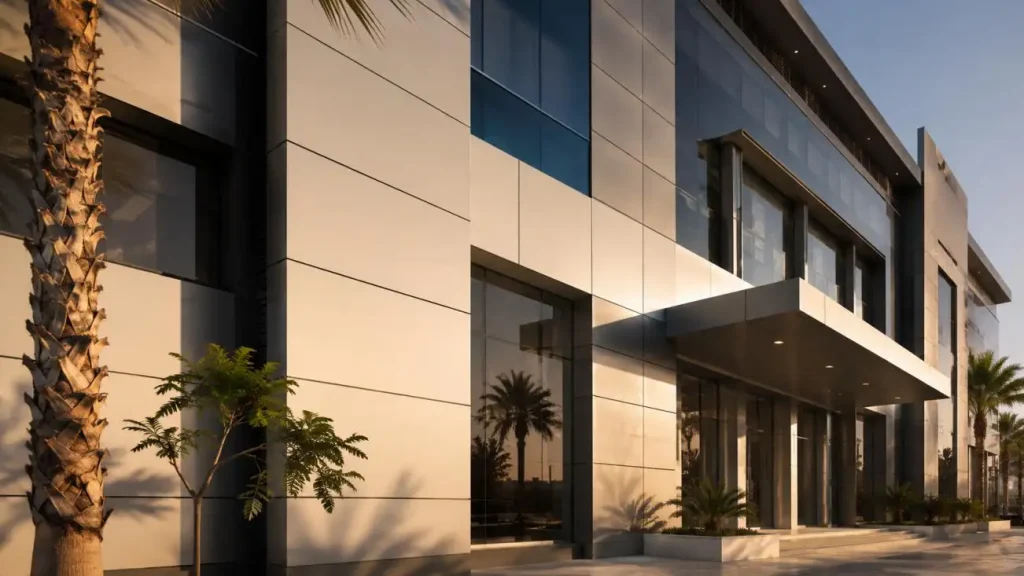
In this guide, we will detail the three types of Composite Wall Panels in Jeddah: Aluminum Composite Panels (ACP), Wood-Plastic Composite (WPC) Panels, and Insulated Sandwich Panels. These three types are very different from each other, and as a result so are the functions they serve.
What Are Composite Wall Panels?
Composite Wall Panels are a construction material that fuse to or surround a core of another construction material, and result in a construction material that is more effective, stronger, more durable, and more resilient than the construction materials used to build the wall panel.
The advantages of Composite Wall Panels in Jeddah are listed below:
•Combination of lightweight and strength: Compared to solid materials, they are significantly easy to transport and set
•Thermal Efficiency: Insulates and reduces the cooling load from Jeddah's sweltering climate
•Moisture Resistant: Mold and rot resistant, they are a necessity in Jeddah's humid, coastal climate
•Fire Resistant Alternatives: Critical to satisfy the Saudi Building Code
•Reduced Maintenance: Compared to conventional materials, they suffer less deterioration and require little upkeep
•Aesthetics: Available in a wide range of colors, textures, and finishes
1. Aluminum Composite Panels (ACP) – The Modern Façade Solution
Aluminum Composite Panels are one of the most widely used Composite Wall Panels in Jeddah used for exterior cladding and other architectural activities.
What are ACPs?
ACPs comprise of two Aluminum sheets and a core which is neither Aluminum nor a core of a polymer. A low density polyethylene core, or a fire-retardant mineral-filled core may be used to make ACPs. With the sandwich structure of the core and the sheets, ACPs are made lightweight, yet are very strong and durable.
Key features of ACPs:
•Ability to maintain exceptional flatness and rigidity even on large facades
•PVDF coated and UV resistant ACPs are available for use in regions of extreme solar exposure
•FR-ACPs that comply with GSO 2808:2025
•Long track record of excellent performance (25-30 years of excellent performance for some selected installations)
•Unlimited customization to meet client needs with respect to color and finish
Applications in Jeddah:
•Used for multiple exterior building facades and wall cladding
•Corporate identity signage and branding
•Decorative wall panels and interior design
•Wall panels for high rise building envelopes
Why ACPs are ideal for Jeddah:
Jeddah has the highest number of Cooling Degree Days (CDDs) in Saudi Arabia with 6,587 CDDs/year. ACP cladding systems with rainscreen technology have an air cavity in between the external façade and the internal wall. This provides a shield to wall against rain with the cavity allowing the air to flow thereby facilitating the active building heat control. This design of the cladding system is intended to minimize the energy use for cooling, passive measures for improved cooling loads and the special coatings to maximize the solar reflectance.
Regulatory compliance: Saudi Arabia launched the "Saudi Building Code (SBC), Part 7: Fire Protection, 2023." It requires high-rise building fire-resistant cladding. ACPs used in Saudi Arabia need to face the severities of the sun, sand, wind, and heat, while also being safe from fire and efficient in thermal design. The GSO 2808:2025 standard deals with the fire-retardant aluminum composite panels for external cladding.
2. Eco-Friendly Wood-Plastic Composite Panels
If you prefer Composite Wall Panels in Jeddah with a more natural product that is still durable, Wood-Plastic Composite Panels are a great choice.
What are WPC Panels?
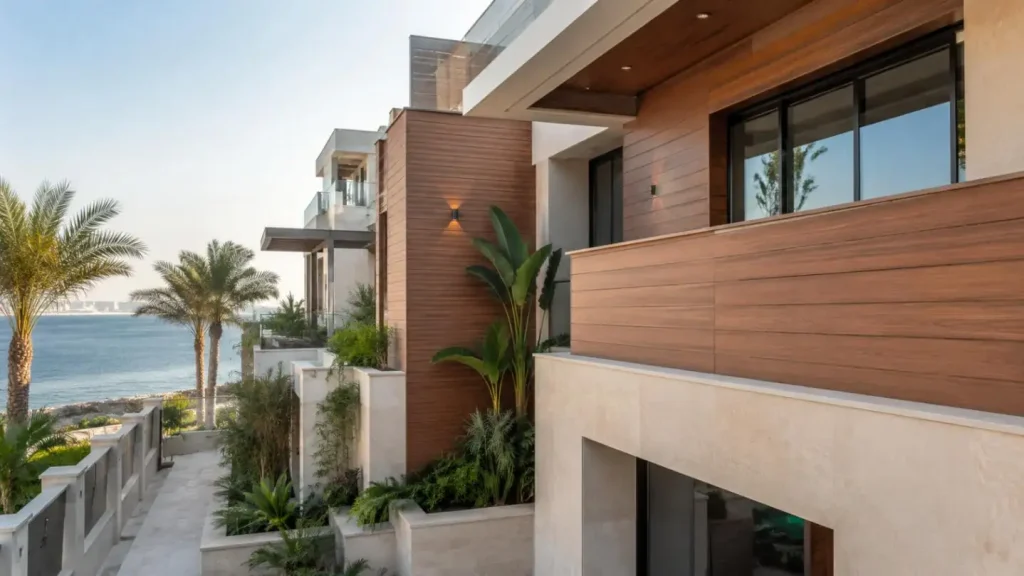
WPC panels are wood fiber composites bound in a thermoplastic. This gives the material the appearance of wood; however, it has the added advantages of the plastic in that it can resist moisture and and is more durable. The added benefit of the plastic is that the cladding requires no additional treatment throughout the life of the product.
WPC panels have many great features for humid climates, like:
•Waterproof and humidity-proof
•WPC's resistance to UV light and anti-aging properties provides WPC with a much longer lifespan of several decades.
•Thermal decay and pest resistance
•Color remains constant and no painting is necessary
•May be rated as European Class B for fire safety.
•Can remain in great condition for up to thirty years
•Improves the performance of sound insulation and building heat
Applications for WPC in Jeddah:
•Wall decoration
•Natural wood provides a great appearance and a lot of strength and durability for balcony cladding
•Interior wall decoration and furniture
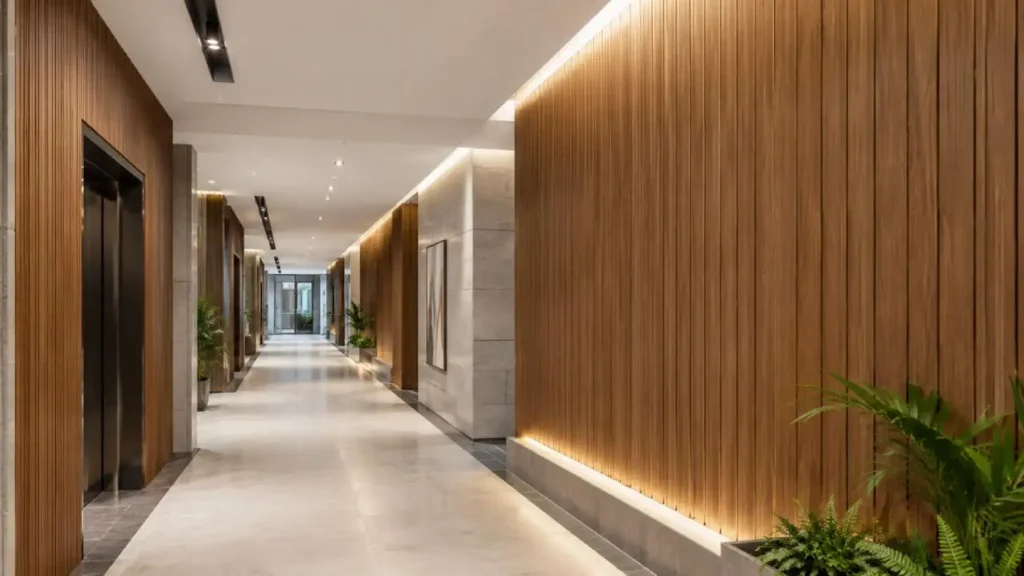
•Corridors in hospitals, hotels, and schools
Reasons for the increased demand of WPC in Jeddah:
•WPC is made of wood and plastic polymers, which is a great combination to provide a natural wood appearance with the strength and durability of plastics.
•WPC's multi-polymer composition provides stability and durability in temperature fluctuations.
•Compared to other products, WPC is more sustainable and remains plastic, which is a great eco-friendly and sustainable building product.
3. Insulated Sandwich Panels – The Workhorse of Industry and Commerce
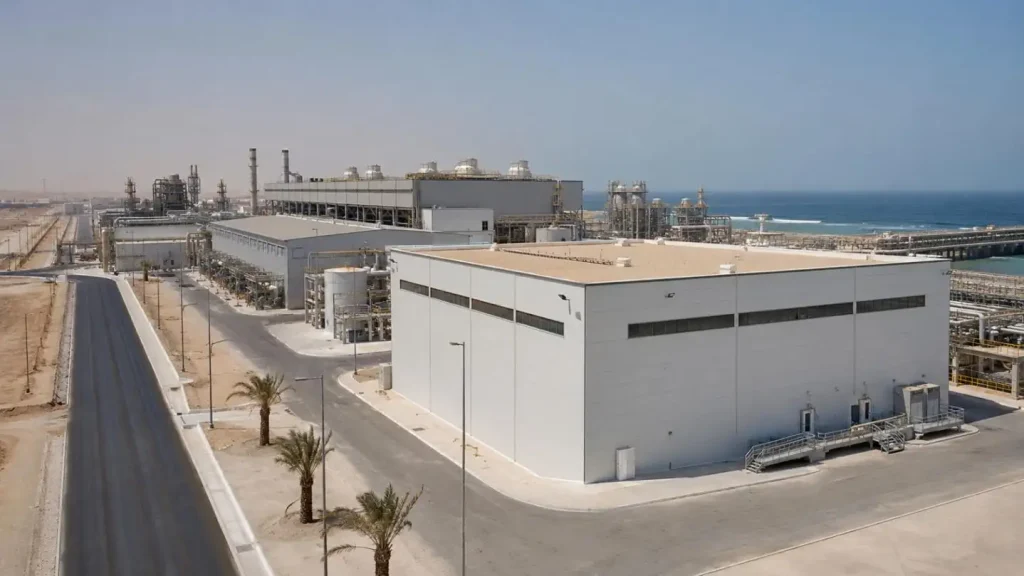
Insulated sandwich panels make up the third major category of Composite Wall Panels Jeddah, and are a popular product choice for industrial, commercial and infrastructure developments.
Sandwich Panels
Sandwich panels comprise an insulating core sandwiched by two metal sheets, which are usually aluminum and steel. Among the several core materials are rigid polyurethane (PUR), expanded (EPS), extruded (XPS) polystyrene, phenolic foam, cellular glass, and mineral wool.
Key aspects of sandwich panels:
•Self-supporting structure with a minimal supporting frame required
•Excellent thermal insulation with a U-value between 0.49 and 0.10 W/m²·°C
•Long spanning capability with a span of 5 meters from a 55mm panel
•Fire tested panels available that meet the German DIN Standard BI Classification
•Life expectancy of 35 years plus with no maintenance required
•Can be manufactured at any length with the longest in the world at 25 meters in Jeddah
Uses in Jeddah:
•Desalination and power plants. Since 1981, Hesco has sold to almost every plant in Saudi Arabia.
•These include government offices, factories, cold storage, and warehouses.
•These also include hospitals and housing colonies.
•They can be used for roofs, walls, partitions, and fascias.
Choosing Composite Wall Panels in Jeddah
| Application | Preferred Type | Reason |
| High-rise building façades | ACP (Fire-retardant) | SBC compliance, design flexibility |
| Residential exterior cladding | WPC or ACP | Low upkeep, naturally or modern finished |
| Industrial buildings and warehouses | Sandwich Panels | Economically beneficial, long spanning, superb insulation |
| Interior wall décor | WPC or ACP | Low installed cost and flexibility of design |
| Power and desalination plants | Sandwich Panels (Varifoam) | Previous proven ability for severe conditions |
| Coastal luxury homes and villas | ACP or WPC | Designed for moisture and humidity |
Final Words
In Jeddah, with the Wall Modular Systems, Composite Wall Panels are becoming increasingly popular. With Saudi Arabia's Vision 2030, and with tough building regulations, Composite Wall Systems are becoming critical to urban development. For extreme weather, choose weatherproof ACP, Fiber Cement, or PVC Panels from China HENGSU. These panels are UV/fireproof, tailored to your needs, and ISO certified. Reach out for a quote or a sample!
FAQs
Q1: What are composite wall panels?
A: They are advanced panels bonded with two or more materials (metal, plastics, wood fibers, etc.) and are stronger and more durable with superior insulation compared to panels made with single materials.
Q2: Which composite panels are the most suitable for Jeddah's hot and humid weather?
A: All three will suffice, but sandwich panels with core polyurethane and ACP with UV-coating will offer the best insulation and moisture protection in coastal climates.
Q3: Are composite wall panels fire-resistant?
A: Yes, fire-retardant ACP (FR-ACP) and sandwich panels with minerals and wool are compliant with the Saudi Building Code. Also, it is good practice to check the product's fire-rating (Class B1 and above).
Q4: Can I install composite panels on top of existing concrete or brick walls?
A: Yes. They will work with most substrates, but proper fastening systems and framing will be required for proper and long-lasting attachment.
Q5: What is the expected lifespan of composite wall panels?
A: With good quality and proper maintenance and installation, they can last between 25-35 years, even with Jeddah's extreme conditions of sun and sandstorms.


