


Decorative Wall panels Exterior: Practical guide to material, systems and long term performance
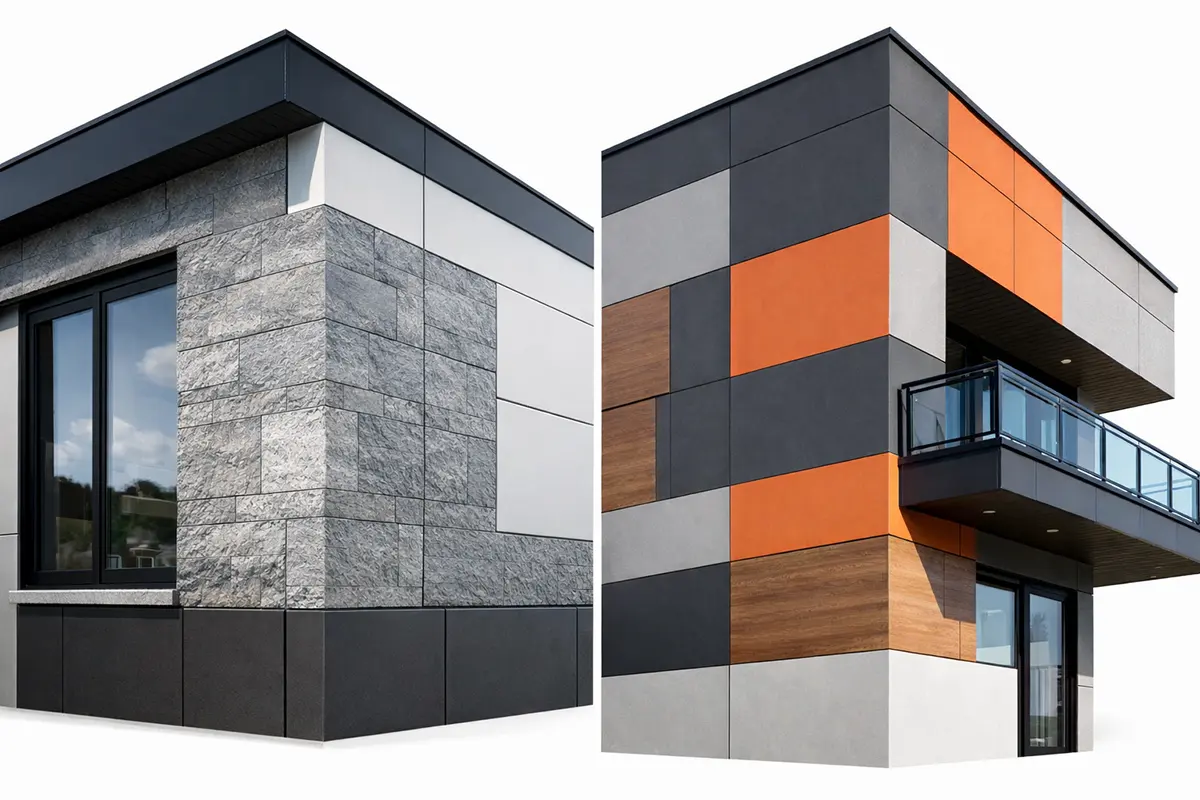
Ornamental exterior wall paneling has emerged as a popular fix to the contemporary walls in that they provide a clean architectural appearance, as well as enhance the protection of the building envelope. Retail storefront feature bands, multi-family accent volumes and commercial facades can all be heavily impacted visually with exterior decorative panels, on the condition that the system is engineered to cope with weather, movement, and durability.
It will take this guide down to what the term decorative wall panels outside actually entails, what the most popular types of panels are and how to choose the system that will not only be attractive the day it is installed but will also function years down the line.
1) Defining exterior decorative wall panels
Facade-facing products are exterior decorative wall panels that are placed on the exterior of a building to form a complete appearance. They may be installed as:
- Facade panel is rainscreen clad and has a ventilated cavity behind the facade panel
- Direct-fixed cladding where a small air gap is used, or adhesive-bonded systems on particular occasions
- Retrofit overcladding systems that are fitted on the substrates in place and are used to upgrade the facade
A rainscreen approach is the decorative facade used in most high-performing buildings today since it can handle water: the panel shed.
2) The reasons why ornamental panels are so much used on exterior walls
Wall paneling on the outside is not only a matter of style. The rightly designed cladding system can provide:
- Flexibility of design: huge scale panels, no joint lines, and modern surface texture
- Wide opportunities of finishing, such as solid coloring, metallic effects, stone or wood-like designs
- Better performance in wet seasons: The gaps in the rainscreen permit the moisture to escape and quicker drying
- Less difficult facade reclad: most of the systems can be added as retrofit cladding.
- Performance benefits can be achieved: combined with insulation, the system can be used to increase thermal efficiency and acoustic control, depending on the design of the assembly
The trick is to keep in mind that the notion of decorative does not imply the non-technical. The exterior panels are a part of the building envelope--and the envelope should be able to deal with the wind, the sun, the rain, temperature fluctuations and movement.
3) Walls Typical exterior decorative panel materials
Various materials are used in diverse budgets, height of the building, weather and construction objectives.
Metal panels on the facade such as aluminum, steel, zinc
Metal covers are capable of producing smooth contemporary fronts, which are tough in the case of proper coating and decoration. It is also light compared to some of the alternatives and it has numerous profiles and finishes. Nevertheless, metal will creep, and skins are easily oiled-canned when they are thin and poorly engineered and fitted.
Applicable to: contemporary commercial elevation, elements of architectural features, and lightweight upgrades of the facade.
Fiber cement panels
Fiber cement exterior facades are highly demanded because of their dimensional stability, resistance to weather and reliable long term performance. It can be applicable to mid-rise projects in which a solid, code-oriented solution is desirable.
Best: residential and multi-family facades, education, residential mid-rise.
High-pressure laminate (HPL) panels of exterior grade
HPW Exterior grade HPL can be used to offer wood-like appearance and rich colors. Since HPL is a layered product, one needs to select it based on exterior-rated performance, UV stability, and system approvals to your building type.
Its uses recommended include accent areas, facades that are driven architecturally and a mixed-material elevation.
Porcelain / ceramic panels
Porcelain and ceramic paneling systems provide a prestigious look and stability over the long run, yet may usually need customized fixing techniques and proper structural load checking.Quality of detail and installation is very important.
Most suitable: high quality retail, signature, and reliable high-traffic exterior.
Composite aluminum panels (ACP)
ACP features polished finishes and good levels of flatness which is suited to the modern style. The fire and code requirements are different in different locations and types of buildings, and therefore the core type and system testing is an issue.
Suggested in retail store fronts, signage/brand bands and modern facade features, subject to the allowance of the relevant regulations.
4) System design matters more than the panel
In the case of exterior decorative panels, the most popular cause of project failure is itself not the panel, but the system details.
The cladding system comprises mostly of::
- Panel
- Subframe (rails/brackets)
- Membrane Water-resistive barrier (WRB)
- Elective insulation component, which is mostly part of the system
- An air gap that is well drained and ventilated
- Fixings and joint seals
- Revealing information at facade junctions and openings
- Expansion / movement joints allowances.
Provided that some of these elements are absent or incompatible, you may acquire leaks, staining, rattling, premature fading, corrosion or cracking.
5) Exterior decorative panel facade water management strategy
Outside walls are not necessarily a closed box, particularly in the open-joint designs. The most capable facades presuppose that some water will be behind the panel and handle the latter by:
- An intermittent WRB behind the cladding
- A downward and outward facing drainage plane
- Flashings of windows and doors, at parapets and at the bottom of the wall
- Smooth edges, drip details, etc
- Wipe off the cavity by ventilation
Rainscreen detailing will tend to be a safer course of action to use in case you desire a clean modern appearance with little exposed sealant. Syst-only strategies would be effective in certain situations.
6) Aesthetics of fire: it is not an option6) Fire performance: don’t treat it as optional
Fire performance has become one of the major drivers of specifications in many projects, particularly multi-family, and commercial projects. The most important principle: the behavior of facade fires is not affected only by the outer skin, but by the whole assembly.
Pay attention to:
- Classification and certification papers of the panel
- Selection of insulation which can be very important to overall performance
- membrane properties
- methods Tapes: membrane tape properties
- Detailed attention on the borders of floors and at the window
High-rise or mid-rise buildings The test evidence in the system level and satisfactory detailing of the building can be as important as beauty.
7) Climate durability: UV, heat, moisture and movement
Outside ornamental paneling has to take your weather.
- In warm climates, UV-resistant finishes and the possibility of thermal expansion should be emphasized, and finishes with high chalking resistance should be made.
- In cold areas, use materials that can withstand freezing-thawing, avoid the formation of trapped water, and a powerful membrane and flashings.
- Climates along the coastlines: corrosion resistance is of decisive essence- select suitable metals, coating and fixings.
Movement is a big deal. Panels are swelling and shrinking as well as subframes. A facade styled to look ideal in a mild climate may well hump or break when the season extremes occur--unless expansion allowances are planned in at the very beginning.
8) Pick and choose checklist: what to ensure before you make a purchase
Following are the checklist to be used in the choice of exterior decorative wall panels:
- Decide on the correct type of facade system- rainscreen or direct-fixed according to climatic conditions and the performance requirements of the building.
- Reported exterior performance: reference, test reports, track record on other comparable projects.
- Finish durability: examine UV durability, the quality of the color hold, and warranty (what and what does not).
- Ensure full rain-control strategy- WRB compatibility, correctly drawn flashings and unobstructed drainage/weep paths to ensure that the water flows safely.
- Subframe and fixings: structural strength, corrosiveness and spacing requirements.
- Fire requirements: ensure that the entire system is appropriate in regard to your type of building and your local requirements.
- Maintenance: establish regular cleaning periods, check the sealants on a regular basis and ensure that you know the parts that can be changed.
9) Installation tips which guard the final output
It does not matter that the products are great--they will appear bad or fail, in case the installation is sloppy. Practical best practices:
- Cavities should be maintained clean because the materials that may be stored can hold moisture and promote fire
- Ensure that the joints are aligned and fit well with little spaces between
- Only the nominated membrane products and tape must be installed to ensure compatibility and performance of the system
- Install specified terminations and flashings where there is a change of materials and a change of a facade
- Before close-up, critical waterproofing and cavity barrier stage should be accomplished
Conclusion: Not image but performance of the system is eternal
The exterior ornamental wall panels have potential to change the appearance of any building and improve the perceived value but it is only when the system is engineered to be a complete envelope system. Treatment of facade as complete build-up - panel, support structure, waterproofing, airflow/drainage design and well-thought-out details at edges and openings give the best results.. Once they combine, you end up with a facade that appears sharp, is able to handle water and withstands over time.