



Contents
HSCS
Hardwood Slatted Wall Panels vs Paint: Which Wins in 2026?
By 2026, better spaces demand better performance: Hardwood Slatted Wall Panels create quieter, more refined environments with durable value, while paint remains the swift, cost-effective alternative. The decision is not only visual. It touches comfort, health, and longevity. Our review will measure the gap. Keep reading.
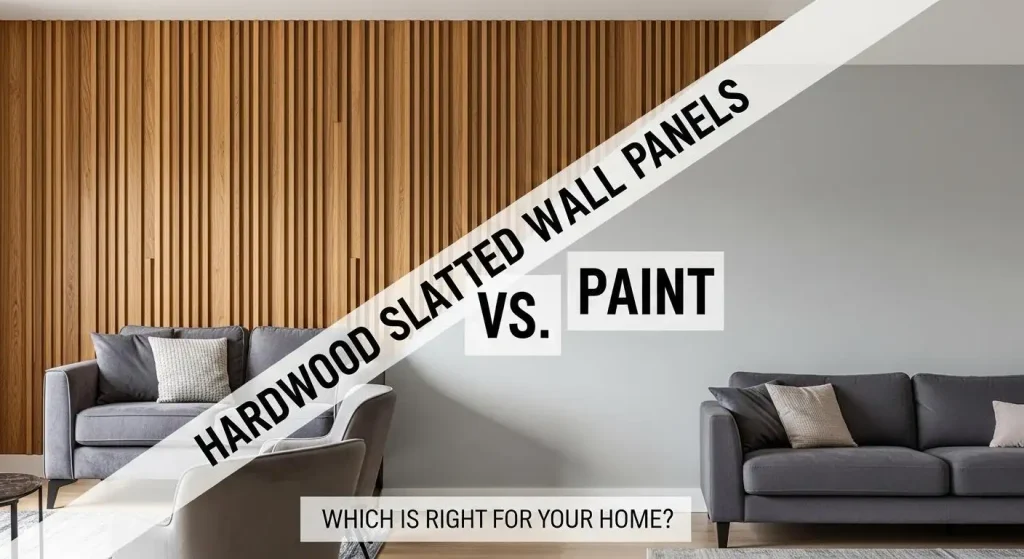
Panels Vs Paint - The 2026 Snapshot
Paint remains the quick fix. In 2026, the question isn't color - it's comfort. How a room sounds, feels, and ages. Hardwood Slatted Wall Panels redefine the upgrade with absorption, texture, and real-wood presence.
• Paint gives speed and uniformity; it also reflects sound and lacks depth.
• Panels bring shadow, rhythm, and quieter interiors thanks to an acoustic felt core, plus authentic wood that connects people to nature.
• For hybrid work, wellness living, and elevated hospitality, they enhance sight, sound, and touch in one move.
In 2026, acoustic comfort, low-VOC materials, and biophilic design have moved from "nice to have" to "baseline." Panels address all three in one system.
Acoustic Performance - NRC You Can Actually Hear
Noise Reduction Coefficient (NRC) indicates how much sound a surface absorbs, from 0 (reflective) to 1 (highly absorbent). Painted drywall typically sits around 0.05 - 0.10, which is effectively reflective. NRC in the 0.55 - 0.75 range is standard with felt; add mineral wool behind the assembly to reach ~0.85 in many tests.
• What changes: Rooms quiet down, speech intelligibility improves, and flutter echo is controlled.
• Why it matters: Clear sound reduces listening effort and stress - no need for bulky baffles.
• Where to place: Focus treatment on first reflections - media walls, opposite workstations, corridors, and both sides of meeting tables.
• Small room tip: Treating just 15 - 30% of wall area with Hardwood Slatted Wall Panels often produces a noticeable improvement without over-damping the space.
Design and Mood - Texture, Warmth, and Light
Paint plays with sheen; panels play with light. The alternating faces of slats catch daylight and ambient light, creating shadow and rhythm that a flat wall simply can't. Go with oak, walnut, ash, or similar hardwoods to weave in natural grain and hue variation that strengthens biophilic intent for 2026 interiors.
• Style fit: Profile, spacing, and module width can read minimalist, Scandi, mid-century, or boutique hospitality.
• Versatile applications: Wrap features, define quiet work zones, soften hallways, and add presence to reception areas.
• Visual comfort: Relief adds visual depth and tames brightness for calmer, more usable rooms.
• Branding advantage: Consistent brand language across lobbies, corridors, and meeting spaces - with discreet NRC.
• Health & sustainability - Smarter choices: Avoid repeated on-site finishing. Factory finishes (UV-cured oils) deliver durable, low-VOC performance. Acoustic felt backers are commonly recycled PET; choosing FSC-certified hardwood supports responsible forestry.
• Better install experience: Reduced installation odor and fewer lingering fumes in occupied spaces.
• Lower maintenance burden: Panels keep their look with light cleaning; no repeated paint jobs every few years.
• Circular thinking: Panels can be removed and reused during a remodel or relocation, extending their lifecycle beyond a single tenancy.
• Certification pathways: In workplace and hospitality projects, combining certified timber and recycled content felt can contribute toward LEED and WELL targets.
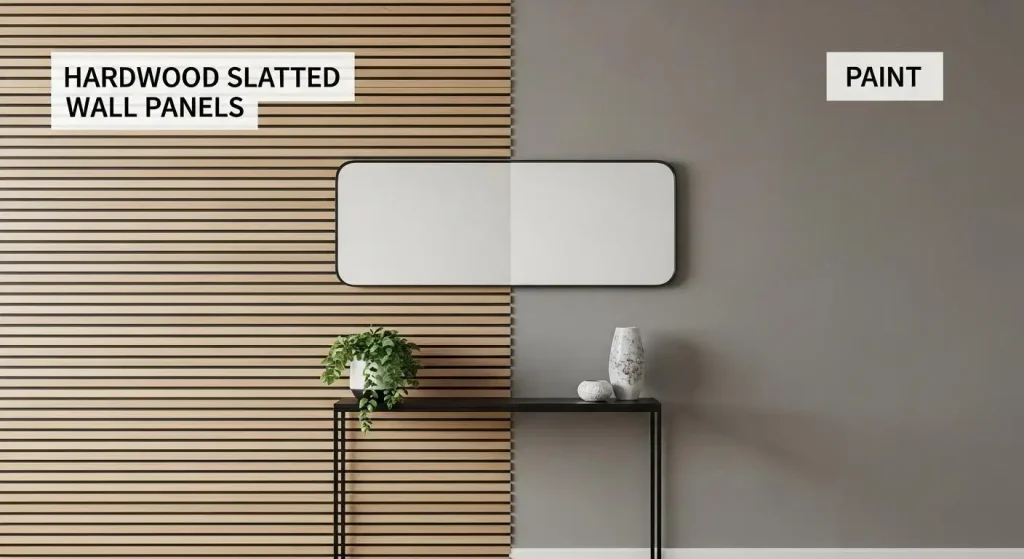
Cost and Maintenance - Upfront Vs Lifetime Value
The upfront cost of paint is hard to beat. Materials and labor typically run around 2 - 6 dollars per square foot depending on market rates and finish. Hardwood Slatted Wall Panels cost more at the start: DIY kits often begin near 10 - 20 dollars per square foot for materials, with professionally installed systems typically ranging from 20 - 40 dollars per square foot based on species, backing, and detailing. The calculus changes when you consider long-term performance and dual function.
• Durability: Wood slats stand up to everyday scuffs better than painted drywall; light cleaning keeps them looking sharp.
• Long-term durability: Paint recoat cycles run 3 - 5 years; panels deliver decades of service with occasional touch-ups.
• One install, two outcomes: Design impact + acoustic performance, potentially minimizing extra acoustic purchases.
• Hassle-free care: Regular dusting, bristle-vac, and mild soap spot-cleaning; steer clear of harsh chemicals.
• Repair friendly: Many systems enable single-slat or sectional swaps, keeping downtime and costs low. Over time, wood develops a richer patina rather than looking tired.
Installation - From Plan to Panels With Confidence
Paint is "patch, prime, roll." Even so, modern slatted systems are well within reach for competent DIYers and efficient for pro crews. Most Hardwood Slatted Wall Panels arrive pre-mounted on an acoustic felt backer; you measure, find studs, and fasten with screws or clips. Make outlet and switch cutouts with a fine-tooth saw, then finish edges with matching trim.
• Timeline: A living-room feature wall can be installed in a few hours; larger spaces typically span a weekend. Commercial fit-outs mount panels to battens, leaving room for cable runs and service access.
• Core tools: Level, stud finder, drill/driver, fine-tooth saw, tape measure, safety glasses, and hearing protection.
• Substrate guidance: Mount to studs or solid masonry; use appropriate anchors for each wall type.
• Planning essentials: Order roughly 10% extra to cover cuts and onsite adjustments. Acclimate wood panels for 48 hours in the installation space to stabilize moisture content.
• Finish details: Align slat seams, maintain consistent reveals, and choose trim that complements flooring and casework for a cohesive look.
Which Wins in 2026?
If speed and the lowest initial spend are the priorities, paint still wins the short race. But if the goal is a quieter room, natural texture, healthier materials, and better long-term value, Hardwood Slatted Wall Panels take the lead.
• In homes: Create restful, sound-smart spaces for living, learning, and relaxing.
• In offices: Calmer rooms = clearer thinking, better calls, stronger teams.
• In hospitality: Boost guest comfort and brand perception - without adding visual noise.
• For families: Softer sound in shared spaces, from breakfast to bedtime.
• For professionals: NRC-backed performance for meetings that sound as good as they look.
• For hospitality & retail: Design-forward walls that keep conversations comfortable.
Call to Action - Upgrade the Way Your Walls Work
Request finishes, samples, and an acoustic spec today. Request a sample kit of our Hardwood Slatted Wall Panels, book a 15-minute design consult, or ask for a fast quote using your room dimensions. We'll help you choose species, slat spacing, and backing to meet your NRC target, budget, and style. Make 2026 the year your walls do more than look good - they support comfort, clarity, and lasting value.
Not Next


