



Benefits of Using Stone Effect Wall Cladding for Exterior Walls
For centuries, a stone exterior has been the mark of a durable, high-end home.1 It is a timeless look. But, as a builder or designer, I can tell you that using real stone is a slow, heavy, and extremely expensive process. This is why the benefits of using stone effect wall cladding for exteriors are so compelling.
Modern stone effect cladding gives you the exact look and texture of natural stone. It does this without the weight, cost, or installation nightmares. It is a high-performance, lightweight, and weather-resistant solution.
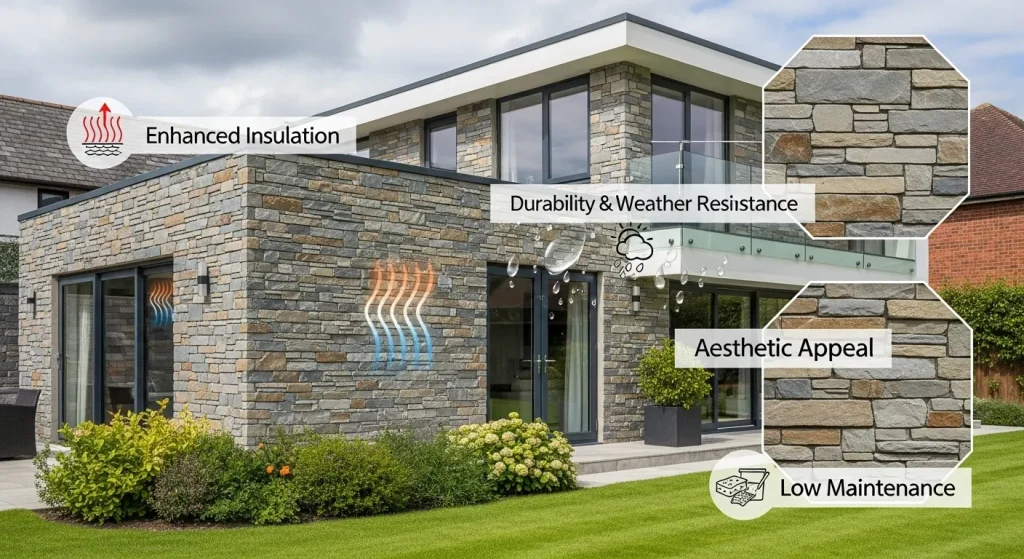
This guide explores the top benefits of using faux stone for your home's exterior. We will cover how it saves you money, resists the elements, and adds real curb appeal to your property.
What Is Stone Effect Wall Cladding?
Stone effect wall cladding is a lightweight, man-made paneling system.2 It is engineered to perfectly mimic the look and texture of real stone.3 The panels are cast in molds made from actual stones, which captures every detail.4
These panels are not the cheap, soft "peel-and-stick" foam tiles. They are a high-performance building material. They are most often made from high-density polyurethane (HDP). This creates a durable, 100% waterproof, and very realistic-looking panel. You can learn more in our full guide, what is stone effect wall cladding.
What Are the Main Benefits of Exterior Stone Effect Cladding?
The main benefits are its extremely light weight, low cost, and fast, DIY-friendly installation.5 For exterior use, it is also 100% waterproof. It will not rot, crack in a freeze, or fade in the sun. This makes it a durable, low-maintenance way to get a high-end stone look.
This material solves every major problem of real stone. It has become a key part of modern architectural wall-cladding trends for this reason.
Benefit 1: How Does Its Light Weight Impact an Exterior Project?
The light weight of faux stone is its single greatest advantage. A polyurethane stone panel is 10-15 times lighter than real stone. This means you do not need structural reinforcement, concrete footings, or heavy-duty wall ties.
This is a game-changer.
- Real Stone Veneer: 15-30 lbs. per square foot.
- Stone Effect Panel: 1-2 lbs. per square foot.
A 200-square-foot exterior wall would weigh over 4,000 lbs in real stone. The same wall in faux stone would weigh about 300 lbs.
Why No "Footing" Is a Huge Benefit
As a professional, this is the benefit that matters most to me. To install heavy, real stone on an exterior, you must have a "brick-ledge" or "footing." This is a solid concrete foundation poured specifically to hold the weight of the stone.
If your home was not built with one, you must pay thousands to have one dug and poured.
Faux stone needs none of this. It is so light, you can attach it directly to your existing wall sheathing. It is a "self-supporting" finish. This saves a massive amount of time, mess, and money. It makes it perfect for renovation projects.
Benefit 2: Is Stone Effect Cladding Cheaper Than Real Stone?
Yes, it is significantly cheaper. The material cost is lower, but the real savings are in the labor. Installing stone effect cladding is a simple carpentry job. Installing real stone is a slow, expensive masonry job.6
The "all-in" cost of a real stone project is often 3 to 5 times higher than a stone effect project.
Let's look at the numbers for a 150-square-foot accent wall (a common size for an entryway).
| Cost Factor | Real Stone Veneer (Pro-Installed) | Stone Effect Cladding (Pro-Installed) |
| Material | $15 - $30 per sq. ft. | $8 - $20 per sq. ft. |
| Labor (Mason) | $30 - $50 per sq. ft. | (Not needed) |
| Labor (Carpenter) | (Not needed) | $5 - $10 per sq. ft. |
| Total | $45 - $80 per sq. ft. | **$13 - $30 per sq. ft.** |
The Final Tally:
- Real Stone Wall: 150 sq. ft. x $60 (avg) = **$9,000**
- Faux Stone Wall: 150 sq. ft. x $25 (avg) = **$3,750**
You get the same visual impact and save thousands. Plus, if you have basic carpentry skills, you can make the labor cost $0 and do it yourself.
Benefit 3: How Easy Is It to Install on an Exterior Wall?
Stone effect cladding is very easy to install. It is a "dry-stack" system. This means you use screws and construction adhesive. You do not use messy mortar, grout, or a wet-saw.
This clean, fast process is a huge benefit.
The Real Stone Process ("Wet-Set")
- Attach a moisture barrier to the wall.
- Nail a metal lath (a wire mesh) over the barrier.
- Apply a 1/2-inch "scratch coat" of mortar. This is messy and must dry for 24 hours.
- Apply mortar to the back of each individual, heavy stone.
- Press them to the wall, one by one.
- After another 24 hours, mix grout and fill all the joints.
- Clean the stone haze off the wall.This is a 3-5 day job that requires a skilled mason.
The Stone Effect Process ("Dry-Set")
- Find and mark your wall studs.
- Cut your first lightweight panel with a regular wood saw.
- Apply a bead of construction adhesive to the back.
- Press it to the wall and drive screws through the "flange" into the studs.
- The next panel interlocks and hides the screws.This is a one-day job that you can do with tools you already own.
Benefit 4: Is Stone Effect Cladding Durable in Bad Weather?
Yes. High-quality stone effect panels are built to withstand the worst exterior conditions. They are 100% waterproof. They are made from a "closed-cell" high-density polyurethane (HDP). This material is inert. It cannot absorb water.
This is a massive benefit, especially in cold or wet climates.
How It Handles the "Freeze-Thaw" Cycle
The biggest enemy of exterior masonry is the "freeze-thaw" cycle.
- With Real Stone: Water (rain) soaks into the porous mortar grout.
- At night, the temperature drops, and this water freezes.
- Water expands when it freezes.7 This expansion cracks the grout.
- This cycle repeats, destroying the mortar and making stones fall off the wall.
Stone effect cladding is immune to this.
- The HDP material is "closed-cell." It cannot absorb water.
- There is no grout. The panels interlock.
A faux stone wall will not crack, chip, or spall from freezing. It is a perfect solution for cold climates.
How It Handles Rain and Wind
The panels are 100% waterproof. Rain just runs off. It cannot cause rot, mold, or warping. The panels are also rated for high winds, often up to 150+ MPH. They are a secure, weather-tight system.
Benefit 5: Will Stone Effect Cladding Fade in the Sun?
No. High-quality, exterior-grade panels are made with UV inhibitors and a protective topcoat.8 This finish is chemically bonded and designed to resist fading for decades.
This is a common and valid concern. We have all seen cheap plastic siding turn chalky and faded.
This is not that. The manufacturing process for exterior stone effect panels is very advanced.9
- UV Inhibitors: The polyurethane material itself is mixed with UV-stabilizing additives.
- Multi-Layer Finish: The artistic painting process is sealed with a UV-blocking clear coat. This is like a permanent, automotive-grade "sunscreen" for your wall.
- Warranties: Most top brands offer warranties of 25, 30, or even 50 years against fading, chipping, and peeling.
Benefit 6: How Does It Improve a Home's Curb Appeal and Resale Value?
Stone effect cladding adds a high-end, textured, and custom look to your home. This "curb appeal" is one of the fastest ways to increase your home's resale value.
According to Remodeling Magazine's "Cost vs. Value" report (a key industry benchmark), manufactured stone veneer is one of the top 3 exterior renovations for return on investment. It often provides a 90% to 95% ROI.
Because high-quality faux stone looks identical to real stone from the curb, it provides the exact same visual benefit.10 It makes a home look more substantial, custom, and expensive.
Benefit 7: Is Stone Effect Cladding Low Maintenance?
Yes. This is one of the top benefits. Maintenance is almost zero. It requires no painting, sealing, or re-grouting. You can clean it with a simple garden hose.
- Real Stone: Must be re-sealed every few years. The grout can stain or grow moss/algae.
- Wood Siding: Must be re-painted or re-stained every 5-7 years. Can rot or warp.
- Stone Effect Cladding: You do... nothing. If it gets dirty, you can spray it with a garden hose. For a tough spot, use a mild soap and a soft-bristle brush. It is a "fit-it-and-forget-it" system.
How Does It Compare to Other Exterior Cladding?
Stone effect cladding is more durable and waterproof than wood or WPC. It is lighter and cheaper than real stone. It offers a 3D texture that vinyl siding lacks.
- vs. Real Stone: Faux stone is lighter, cheaper, and easier to install.11
- vs. WPC Slat Panels: This is a good comparison. Both are modern, lightweight, and waterproof composites. The choice is 100% about style. WPC gives you a linear, modern "wood" look.12 Faux stone gives you a rustic, organic "stone" look. Our guide stone effect vs. WPC wall panels explores this.
- vs. Vinyl Siding: Faux stone is a major premium upgrade. It offers deep, 3D texture and a high-end feel that flat vinyl cannot.
- vs. Wood Siding: Faux stone is 100% waterproof and will never rot, warp, or be eaten by insects.
What Are the Best Uses for Exterior Stone Effect Cladding?
The best uses are for "accent" areas where you want high impact. It is a great way to add character without the cost of a full-stone home.
- Foundation Walls (Skirt): This is my favorite use. It covers the ugly, exposed concrete foundation. It "anchors" the house to the ground.
- Porch Columns: A perfect way to make a "skinny" porch post look like a substantial, custom-built stone column.
- Entryway Gables: The "triangle" part of a roof over the front door. This creates a grand, high-end entrance.
- Chimney Chases: A classic look.
- Outdoor Kitchens: The panels are waterproof and easy to clean, making them perfect for this.
What Are the Downsides or Limitations?
This is a trustworthy guide, so we must be honest.
- It Is Not "Real" Stone: For a purist, this is the main issue. It does not have the "cold-to-the-touch" feel. It is a very, very good copy.
- Fire Rating: This is an important limitation. Polyurethane is combustible (Class C). You cannot use it in an area that requires a non-combustible (Class A) material. (For a fire-safe, non-combustible option, you would need to use a much-heavier, harder-to-install fiber-cement stone panel).
- Quality Varies: You must buy a high-quality brand. The cheap, thin "peel-and-stick" foam brick looks fake. High-quality, high-density polyurethane (HDP) stone decorative-wall-cladding looks real.
Is Stone Effect Wall Cladding a Good Choice for an Exterior?
Yes. It is an excellent, high-performance, and cost-effective choice. It solves all the problems of real stone while delivering the same (or better) curb appeal and weather performance.
The benefits are clear. It is a lightweight, easy-to-install, 100% waterproof, and maintenance-free system. It adds huge curb appeal and real value to your home for a fraction of the cost of real stone.


