



Sustainable PVC Wall Paneling Options for Eco-Friendly Projects
Let's start with an honest, direct conversation about sustainable PVC wall paneling options for eco-friendly projects. The terms "sustainable" and "PVC" are often seen as opposites. PVC (Polyvinyl Chloride) is a plastic.1 It is derived from petrochemicals, and its manufacturing process has a history of environmental concern.2
So, is "sustainable PVC" just marketing spin?
The answer is complex. No, PVC is not "green" in the same way as reclaimed wood or bamboo. But in building science, "sustainability" is not just about the source of the material. It is about the product's entire life cycle.
A product's sustainability is judged on its durability, its maintenance needs, its impact on indoor air quality, and what happens to it at the end of its life.
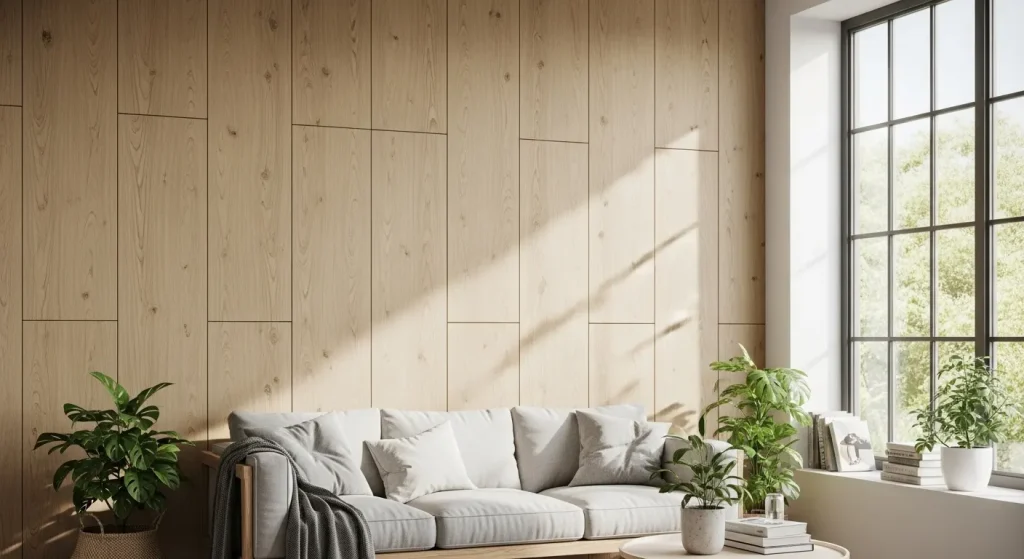
In this context, the argument for PVC panels becomes much stronger. This guide explains the real challenges and the real options for using PVC in a truly eco-friendly project.
What Are PVC Wall Panels?
PVC wall panels are lightweight, waterproof sheets used for covering interior walls and ceilings.3 They are made from 100% Polyvinyl Chloride plastic. Most panels have a hollow-core design and lock together with a tongue-and-groove system. This creates a grout-free, mold-proof, and easy-to-clean surface.
These panels are a modern alternative to tile and drywall.4 They are most common in high-moisture areas like bathrooms, basements, and commercial kitchens. You can learn more about the basics in our guide, what are PVC wall panels. Their core identity is a 100% plastic, waterproof, utility-first wall covering.
Let's Be Honest: Is PVC "Eco-Friendly"?
No. In the traditional sense, PVC is not an "eco-friendly" material. It is a man-made polymer (a plastic) derived from fossil fuels (natural gas or petroleum). Its manufacturing process is energy-intensive. It is not biodegradable and can release harmful chemicals (like dioxins) if burned.
We must be clear about this to build trust. Any article claiming PVC is "green" is not giving you the full story.
But this is where the conversation gets interesting. An "eco-friendly project" is about reducing total impact. And the single biggest source of waste in construction is product failure.
Think about a poorly waterproofed drywall shower. It grows black mold in 5-7 years. The entire wall must be torn out, thrown in a landfill, and rebuilt. That is a massive amount of waste.
Now, what if a 100% waterproof PVC panel lasts in that same shower for 30+ years? It uses no water, no grout, and no new materials for three decades. Which product is really more sustainable in the long run? The answer is the one that lasts.
This is the core of the sustainable PVC argument: Extreme durability is a powerful form of sustainability.
What Makes a PVC Wall Panel a More Sustainable Option?
A "sustainable" PVC panel is one that minimizes its environmental footprint. This is achieved through four key areas: high recycled content, 100% recyclability, low-VOCs for air quality, and an extremely long and durable lifespan.
These are the "options" you are looking for. You are looking for a panel that addresses the material's traditional weaknesses.
Option 1: Panels with High Recycled Content
Look for panels that are made from pre-consumer or post-consumer recycled PVC. This reduces the amount of new, "virgin" plastic created. It also diverts existing plastic from landfills.
- Pre-consumer recycled content: This is (often) internal factory waste. For example, the scraps and cut-offs from making one panel are melted down and put back into the next panel.
- Post-consumer recycled content: This is the better, more impactful option. This is when old PVC products (like old panels, pipes, or vinyl siding) are collected from the public, cleaned, ground up, and used as the raw material for new panels.8
A panel made from 80% recycled content has a much smaller "new" footprint than one made from 100% virgin plastic.
Option 2: 100% Recyclability (End-of-Life)
Choose panels that are 100% recyclable at the end of their life. This "closes the loop" on the material. A truly sustainable panel can be removed, sent back to a facility, ground up, and turned into a new panel.
This is a major challenge. The problem is not the panel; it is the installation. If you cover a panel in construction adhesive, you have contaminated it. It is now a composite material (PVC and glue) that cannot be recycled.
This is why a truly eco-friendly project must also think about a sustainable installation, which we will cover later.
Option 3: Low-VOC and Phthalate-Free Panels
This is a critical, and often overlooked, part of "eco-friendly." A sustainable building must be healthy for the people inside it. PVC panels can release "Volatile Organic Compounds" (VOCs) into the air.9
- VOCs: These are chemicals that "off-gas" from building materials.10 They can cause headaches, eye irritation, and contribute to poor indoor air quality.
- Phthalates: These are chemical softeners often used in plastics.11 There are growing concerns about their health effects.
A sustainable PVC panel option must be Low-VOC or Zero-VOC. It should also be advertised as Phthalate-Free. This is non-negotiable for a healthy indoor environment.
Option 4: Exceptional Durability and Lifespan (The Strongest Argument)
This is the most powerful sustainable feature of PVC. The material is inert. It does not rot, rust, or grow mold.12 It does not care about moisture. This means it lasts.
A cheap, painted drywall wall in a commercial restroom might need to be repainted every two years. It will be scuffed, damaged, and eventually replaced in 10 years.
A PVC panel wall will look the same in 10, 20, or even 30 years. It will never need paint.
When you calculate the "life-cycle" waste of a product, you must include all the repainting, re-grouting, and eventual replacement.
- Drywall: 5 repainting cycles (paint, rollers, trays) + 1 replacement (new drywall, studs, tape, mud) = High Waste.
- PVC Panel: 0 replacements, 0 repainting cycles = Low Waste.
This is the key. A durable product that does its job for decades is, by its nature, a sustainable choice because it reduces consumption.
How to Find and Identify Sustainable PVC Paneling Options
You cannot trust the marketing on the front of the box. "Eco-Friendly" is a marketing term. You must become a "green-washing" detective and look for proof.
What Is Greenwashing?
Greenwashing is when a company spends more time and money on marketing itself as "green" than on actually minimizing its environmental impact.14 It is using vague terms like "eco-friendly," "natural," or "green" without any proof.15
As a specifier, I have seen this for years. A product will have a picture of a leaf on it but will have zero recycled content and high VOCs.
How to Find the Truth: Read the Technical Data
You must skip the pretty brochure and find the technical documents. Look for these two files on the manufacturer's website:
- Technical Data Sheet (TDS): This shows the product's makeup.16
- Material Safety Data Sheet (MSDS): This shows its chemical properties and health data.17
In these documents, look for specific numbers, not vague words.
- Bad: "Made with recycled content."
- Good: "Contains 40% post-consumer recycled content."
- Bad: "Low-VOC."
- Good: "VOC emissions: < 0.5 mg/m³ (meets GreenGuard Gold standard)."
Key Certifications to Look For
Third-party certifications are your best friend. They are independent labs that test a company's claims. When you see these logos, you can trust them.
| Certification | What It Means |
| GreenGuard Gold | (The big one). Tests for low-VOC emissions. Certifies that a product is safe for schools and healthcare. |
| FloorScore® | Similar to GreenGuard, but specifically for flooring. It is a good sign for indoor air quality. |
| UL Environment | Verifies specific claims, like "80% Recycled Content." |
| ISO 14001 | This is a certification for the factory, not the product. It means the manufacturer has a system to manage and reduce its environmental impact. |
| HPD (Health Product Dec.) | A document that lists 100% of a product's chemical ingredients. This is for extreme transparency. |
If a panel has GreenGuard Gold and a high recycled content, you have found a genuinely sustainable option.
How Does Sustainable PVC Compare to WPC?
This is a critical comparison. WPC (Wood-Plastic Composite) is often a more sustainable choice than pure PVC. WPC panels have a core made from recycled wood fibers (a renewable resource) mixed with recycled plastics.
This is a key difference. WPC "bulks up" its core by using a waste product (sawdust). This means it uses far less new plastic than a PVC panel.
Our guide, PVC vs. WPC wall panels, explores this in depth. But from a sustainability view, here is the breakdown:
- PVC: Sustainability comes from its 100% waterproof performance and long life.
- WPC: Sustainability comes from its 100% waterproof performance, long life, and its eco-friendly core material (recycled wood and plastic).
For many eco-friendly projects, WPC is a better starting point because its very composition is rooted in recycling and waste reduction.21
The Role of Installation in Sustainability
You can buy the "greenest" panel in the world, but if you install it with toxic, high-VOC adhesive, you have failed your "eco-friendly" goal. The installation method is part of the sustainable system.
Option 1: Low-VOC Adhesives
You must use a Zero-VOC or Low-VOC construction adhesive. This is non-negotiable for indoor air quality. Using a high-solvent adhesive can fill the room with harmful fumes that "off-gas" for months.
Look for adhesives that are GreenGuard Gold certified, just like the panels.
Option 2: Designing for "Disassembly" (The Pro Method)
This is an advanced-level concept that true sustainable-building experts use. It means installing the panels in a way that allows them to be removed cleanly at their end-of-life.23
- Bad (Standard) Method: Gluing the panel to the wall. This contaminates the panel (it is now "PVC + glue + drywall paper") and sends it to the landfill.
- Good (Sustainable) Method: Installing the panels with mechanical fasteners (screws, clips) onto furring strips.24
This method is amazing for two reasons:
- Air Quality: It creates an air gap behind the panel, which is great for moisture management in basements.
- End-of-Life: In 30 years, you can unscrew the panels. They are perfectly clean. They can be sent directly to a recycling plant to be ground up and made into new products.
Designing for disassembly is the final, most important step in a truly sustainable PVC panel project.
The Final Verdict: Is PVC a Good Choice for an Eco-Friendly Project?
Yes, but with conditions. PVC is a good choice if your project's main goal is long-term durability, waste reduction, and water management.
In a damp basement where moldy drywall is the alternative, a low-VOC, high-recycled-content PVC panel is a fantastic sustainable choice. It solves a problem permanently.
Do not choose PVC because it is "green." It is not.
Choose PVC because it is durable. And durability, over a 30-year lifespan, is one of the most powerful forms of sustainability there is.
How to Choose Your Sustainable PVC Option:
- Prioritize Performance: Is this a wet area? Do you need a 30-year, zero-maintenance solution?
- Hunt for Proof: Ignore marketing. Look for GreenGuard Gold (for air quality) and specific recycled content percentages.
- Check the Alternative: Ask yourself if a WPC panel, with its recycled-wood core, might be an even better fit.
- Plan the Install: Commit to using Low-VOC adhesive or, even better, a mechanical fastener system.
By following this path, you are not just buying a product. You are designing a high-performance, long-lasting, and genuinely sustainable system. For more on the material itself, see our PVC Wall Panels Explained guide.


