



Vinyl Balcony Flooring Compared for Balcony Projects
Vinyl Balcony Flooring is a layered, engineered surface built for outdoor and semi-outdoor zones. It usually combines a stable core with a protective, textured top layer. The goal is straightforward: deliver a floor that stays flat, safe, and attractive through heat, cold, and moisture.
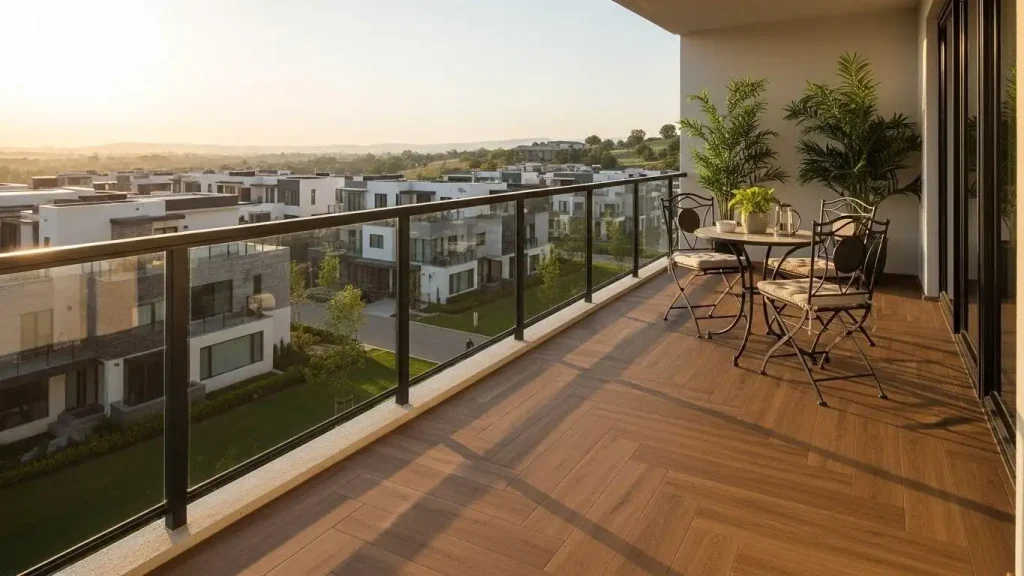
Balconies have become real living spaces. Residents want them to feel like an extension of the living room, not a rough leftover area. Hotels and mixed-use buildings also want finishes that install quickly, reduce noise to neighbors below, and are easy to refresh between tenants or renovation cycles.
You will now see Vinyl Balcony Flooring on private apartment balconies, hotel terraces, shared roof decks, and semi-open corridors where designers want an "indoor” look with genuine outdoor performance.
What Balcony Floors Really Need to Survive
Balconies experience much tougher conditions than most interior rooms. They handle direct sun, wind-driven rain, dust, and rapid temperature swings within a single day.
✅Weather and temperature movement
A balcony floor must expand and contract without curling or cracking. Vinyl Balcony Flooring with a rigid, dimensionally stable core is better able to cope with hot afternoons and cool nights than many traditional materials.
✅Moisture, rainwater, and drainage
Water must leave the surface instead of getting trapped. A well-designed system works with the existing slope and drain positions. Quality Vinyl Balcony Flooring does not swell or deform when small puddles remain after a storm.
✅UV exposure and fading
Balconies often receive strong sunlight. Outdoor Vinyl Balcony Flooring is built with UV-blocking films and durable topcoats so that decorative wood and stone visuals stay crisp and the shades do not wash out easily under strong sunlight.
✅Everyday slip protection
Because balconies are exposed to rain and condensation, they need extra grip. Embossed profiles combined with anti-slip finishes improve underfoot stability, helping protect families, guests, and older users.
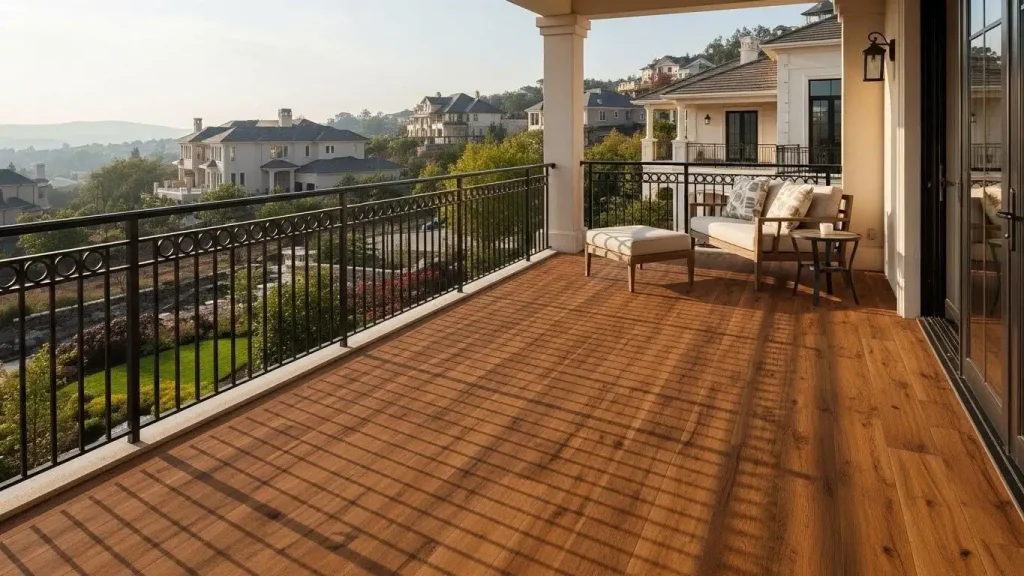
Inside the Structure: How Hengsu Designs Vinyl Balcony Flooring
From Hengsu's manufacturing viewpoint, the core of Vinyl Balcony Flooring is where long-term performance begins. We adjust the structure depending on project needs and climate.
SPC (stone-plastic composite) cores use mineral fillers to deliver high rigidity and good impact resistance. They support furniture, planters, and heavy foot pressure without feeling soft or hollow. PVC-based vinyl cores remain slightly more forgiving and can help manage minor unevenness in the balcony slab.
Above the core, decorative films create wood-look, stone-look, or clean minimalist finishes. These are sealed under a transparent wear layer that combines scratch resistance, UV protection, and slip-resistant texture in one surface. Interlocking edge designs allow floating installation, so boards click together securely and can be replaced individually if damaged.
Design and Aesthetic Freedom on Balconies
Balconies are often compact, but they are highly visible from inside the home and from the street. Vinyl Balcony Flooring makes it easier to treat them like part of the interior design rather than a separate technical zone.
Wood-look patterns help transform a small balcony into a deck-like retreat without complex joists or pedestals. Stone-look variants are widely used in hotels and resorts that want a relaxed spa mood. Muted grey, beige, and charcoal shades complement sharp contemporary façades, glass guards, and dark metal railings.
Aligning the balcony's Vinyl Balcony Flooring with indoor floor finishes and façade colors makes the building feel more cohesive and upmarket. The sliding door threshold reads as part of the same surface, not as a separate, disconnected zone.
Installation, Subfloors, and Common Pitfalls
Most balconies start with concrete or screed, often with existing waterproofing layers that cannot be damaged. Hengsu's Vinyl Balcony Flooring systems are designed to cooperate with this reality.
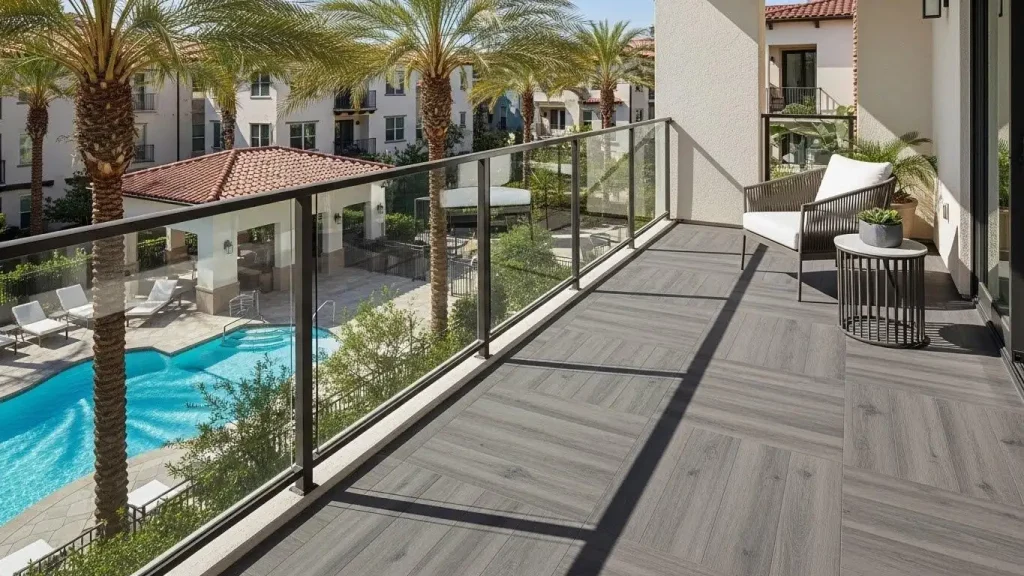
Floating systems with click edges are usually preferred. They sit above the waterproofing rather than being glued through it. Glue-down methods are possible, but only when the whole build-up is coordinated with the waterproofing designer.
Before installation, professional crews should always check:
✅Balcony slope directs water to drains, and drains are not blocked
✅Expansion gaps are left at walls and structural elements
✅Local depressions and soft spots are corrected or leveled
Many post-handover issues come from small shortcuts: covering outlets, working over cracked or crumbling screed, or not respecting expansion space. Correct preparation lets Vinyl Balcony Flooring show its full performance.
Durability, Seasons, and Everyday Life
In practice, balconies are active spaces. People drag chairs, move tables, store bikes, and place heavy planters in corners that stay damp. Hengsu designs Vinyl Balcony Flooring to withstand this kind of usage.
The dense, closed surface helps resist water, mold, and mildew, which is especially valuable in coastal or rainy regions. Scratch and impact resistance protect against chair legs and dropped objects. Through hot summers and cold winters, a quality core prevents excessive movement or brittleness, so the floor keeps its shape and comfort.
Maintenance, Cleaning, and Whole-Life Cost
One of the biggest reasons developers choose Vinyl Balcony Flooring is the predictable maintenance profile. Cleaning usually involves simple sweeping and occasional mopping with neutral cleaners. There is no sealing, re-grouting, or sanding.
Compared with tiles, you avoid grout lines that gradually darken or crack. Compared with timber decking, there is no scheduled oiling, staining, or board replacement due to rot. Across hundreds of balconies in a residential tower or hotel, these savings in labor, materials, and downtime can be substantial.
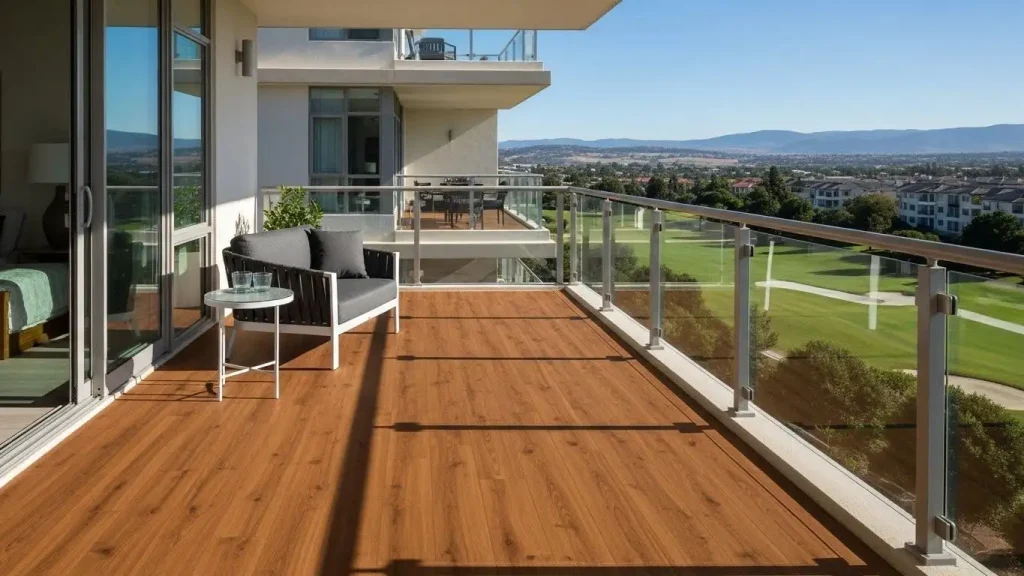
How Vinyl Balcony Flooring Compares to Other Choices
Versus tiles: Ceramic and porcelain tiles are strong but heavy and unforgiving. For traditional balcony tiles, success depends on perfect leveling and grout that can withstand movement. Seasonal freeze–thaw, minor shifts, and tiny cracks often lead to hollow spots or broken pieces. Vinyl Balcony Flooring, by contrast, is lighter, introduces gentle underfoot resilience, and allows straightforward spot repairs.
Versus wood or WPC decking: Wood and WPC boards look authentic and warm, yet they depend on subframes, collect dirt between gaps, and require continuous care to prevent fading and weathering.
Versus outdoor carpets: Textile surfaces feel soft but often hold moisture and dirt. Colors can fade quickly in strong UV. With Vinyl Balcony Flooring you keep a firm, easy-to-mop surface that still feels comfortable with the right texture and color choice.
Sustainability and The Hengsu Approach
Hengsu is committed to developing new, eco-conscious building materials. For Vinyl Balcony Flooring, this means focusing on material efficiency, low-VOC formulations for indoor–outdoor transitions, and structures that do not need frequent replacement.
Longevity is a key sustainability factor. A balcony floor that stays stable for years with minimal maintenance does more than save time; it also reduces environmental impact. Fewer rip-outs, fewer truckloads of new material, and fewer site visits all contribute to more sustainable building use.
Practical Criteria for Selecting Vinyl Balcony Flooring
When choosing Vinyl Balcony Flooring, design and construction teams should focus on technical suitability, not only style.
✅Real climate exposure: harsh sun, coastal wind, heavy rain, or winter ice
✅Function: private outdoor room, hotel balcony, rooftop lounge, or shared deck
✅Safety performance: slip resistance that works when the surface is wet or dirty
✅System build-up: thickness, density, and wear layer designed for daily use and cleaning methods
With a manufacturer like Hengsu, these factors can be mapped to the right profiles, accessories, and maintenance plans so the balcony system supports both comfort and sustainability.
For Hengsu, Vinyl Balcony Flooring is not just another finish. It is a practical way to combine design freedom, solid performance, and simple maintenance on every balcony. Whether you are designing a new project or refurbishing older balconies, the Hengsu team can provide technical guidance, product samples, and customized Vinyl Balcony Flooring systems aligned with your aesthetic goals and cost targets.


