



Contents
HSCS
2026 Waterproof Balcony Floor Tiles Buying Tips: Materials, Ratings, Care
A balcony should feel like a retreat, not a repair project. The surface you choose is the difference between a space that shrugs off storms and one that traps moisture, stains, and risk. In 2026, expectations have moved on from "pretty when new." Homeowners and buyers want materials that stand up to weather, resist slips, and cut cleaning time. That's exactly where Waterproof Balcony Floor Tiles earn their place: a proven, durable finish that looks good and works hard all year.
Why Waterproof Balcony Floor Tiles Matter in 2026
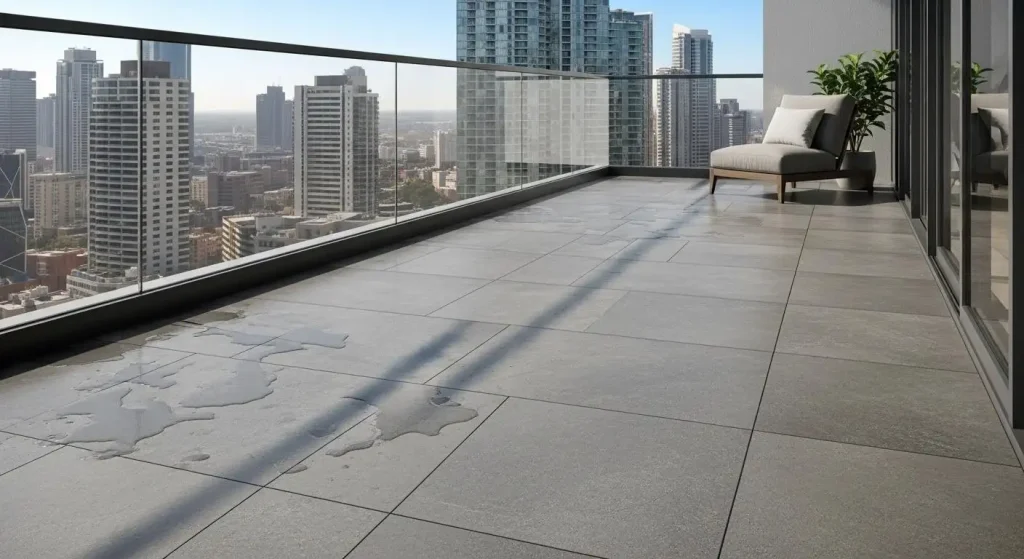
Balconies live outside the comfort zone. Rain and dew, midday sun and winter chill, plus daily foot traffic - all of it attacks weak surfaces. When water penetrates, it finds the slab, swells metals, stains grout, and feeds mildew. Think of them as your balcony's raincoat - water runs off, your footing stays sure, and the colors stay true in the sunshine. The result is practical: fewer maintenance cycles, safer steps when it's wet, and a cleaner look with less effort. In 2026, this performance focus isn't a luxury; it's the baseline for outdoor upgrades that protect value and your family.
Material Choices and Water Absorption: Put Porcelain First
Your balcony's behavior in wet weather is 80% about material. Not all "tiles" are built for the elements, and water absorption is the key spec to watch.
• Porcelain (≤0.5% water absorption): The gold standard for outdoors. Dense, low-porosity, and stable through freeze - thaw cycles. If you need Waterproof Balcony Floor Tiles that simply cope with rain, porcelain should top the list.
• Glazed Porcelain: All the mechanical strength of porcelain with protective glazes and design variety - from stone and terrazzo looks to subtle concrete effects. Quality glazes make cleaning straightforward and protect printed patterns.
• Standard Ceramic Wall Tiles: Higher absorption means higher risk outdoors. Beautiful indoors, but the wrong tool for exposed balconies.
• Natural Stone: Timeless character but higher maintenance. Many stones need sealing, careful cleaner selection, and periodic resealing to keep water and stains out. If you go this route, verify slip rating and sealing schedules up front.
Prefer a crisp, modern look? Choose rectified edges. These factory-squared edges allow tighter joints and cleaner lines, which can visually enlarge smaller balconies. Planning a pedestal or raised system? Look for 20 mm (approximately 3/4 in) thick outdoor porcelain pavers engineered for point loads and easy removal. In bonded installations, pair porcelain with an exterior-grade adhesive and primer system designed for low absorption bodies.
Understanding Slip Resistance Ratings for Wet Conditions
Safety in the rain is non-negotiable, especially where kids, pets, or older family members use the space. Rather than guessing by feel, use standardized slip ratings to compare Waterproof Balcony Floor Tiles on equal terms.
• R Rating (DIN 51130): R11 - R12 is a dependable range for wet or lightly inclined surfaces.
• Pendulum Test Value (PTV): PTV ≥36 wet is widely accepted for pedestrian safety.
• DCOF (ANSI A326.3): DCOF ≥0.42 wet is a common threshold for interior wet areas and a useful reference outdoors; for exposed balconies, aim at or above this number with an outdoor-rated finish.
Texture matters as much as numbers. Micro-textured porcelain can reach R11 - R12 without feeling harsh on bare feet, while matte finishes reduce glare and help maintain grip in standing water. If your balcony is shaded and stays damp longer, or if you hose it down often, lean toward a higher slip class. Always ask for the lab test report - not just a catalog icon - so you know the rating was achieved on the exact finish you are buying.
Thickness, Format, and Drainage: Design the Whole System
A balcony is more than tile. Performance depends on the entire assembly: substrate, slope, waterproofing, adhesive, tile, grout, and edge details. Get these right, and your Waterproof Balcony Floor Tiles will do their job for years.
• Thickness And Weight: Bonded porcelain tiles in the 8 - 11 mm range are common; for pedestal systems, 20 mm outdoor pavers resist point loads and allow easy access to drains and cables beneath.
• Format And Flatness: Large-format slabs minimize joints and deliver a contemporary look, but they demand a flatter substrate and disciplined handling. Smaller formats are forgiving around thresholds, drains, and edges, and they follow falls more easily.
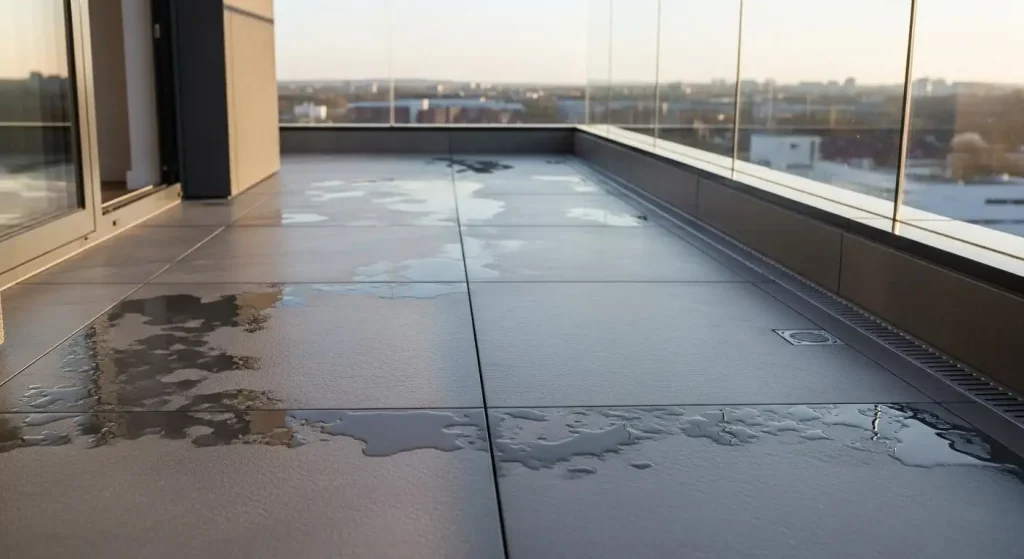
• Slope And Water Path: Plan a fall of 1 - 2% away from door thresholds and toward the edge or drain. This gentle pitch moves water without feeling steep. Confirm that edge trims, scuppers, or linear drains can handle peak rainfall for your area.
• Waterproofing And Movement: Use a continuous exterior-rated membrane beneath tiles, integrate it with door flashings and upstands, and never bridge structural joints with rigid grout. Add them at edges and where surfaces change to handle temperature swings and building shifts.
• Raised setups: Let water pass under pavers to the drain; check pedestal spacing, wind lift protection, and how the perimeter is secured.
A quick site assessment pays off. Measure existing falls, confirm minimum threshold heights, and identify any ponding after rain before you set an installation schedule.
Durability, PEI, Grout, UV Stability, and Day-to-Day Care
Outdoors is unforgiving. Choose balcony porcelain that looks refined and performs relentlessly.
• Enduring surface: For glazed tiles, select higher PEI ratings to withstand heavy circulation. For the ultimate in wear integrity, opt for through-body or color-bodied porcelain with pigment running deep.
• Color that lasts: Porcelain resists the elements, but ensure inks and glazes have proven UV stability. Request exposure results or a written outdoor color warranty.
• Thoughtful joints: Exterior polymer-modified or epoxy grouts elevate stain resistance. Keep movement joints elastic with UV-stable sealants - honor the joint design.
• Effortless care: A quick sweep, a pH-neutral wash, a soft brush - no harsh acids or unapproved oil-based sealers. Tiles rarely need sealing; sealing grout lines curbs stubborn stains.
• Discreet protections: Felt pads under legs, no metal planters soaking in water, a handsome doormat to capture grit. Winter tools: plastic shovels and porcelain-friendly de-icers.
With these choices, waterproof balcony tiles fulfill their promise: minimal upkeep, year-round resilience, everyday elegance.
Warranty, Compliance, and Your Next Step
Strong warranties signal confidence - and help you compare offers. For balcony applications, look for coverage that clearly references outdoor use, low water absorption, slip resistance, and color stability under UV. Ask suppliers for the product data sheet and independent test results for R rating, PTV, and DCOF on the exact finish you plan to buy. Just as important, check the whole system: tile, membrane, adhesive, grout, and sealants should be compatible and comply with local codes for balconies and terraces. If sustainability matters to you, request EPDs or information on recycled content for your shortlisted products.
Ready to see how this comes together on your own balcony? Get hands-on


