



Waterproof Foam Wall Boards for Bathrooms and Kitchens: The Complete Guide
For decades, building a bathroom or kitchen wall meant one thing: a battle against water. The standard was drywall or "green board," which are just paper-faced mold food. Or it was cement board, a heavy, dusty, and difficult material. This guide explores the modern solution: waterproof foam wall boards for bathrooms and kitchens.
As a professional installer, I have seen the failures of old methods. I have torn out countless showers where water seeped through grout, turned the drywall behind it into mush, and caused thousands in rot damage. Foam boards are the game-changer. They are light, easy to work with, and, most important, 100% waterproof.
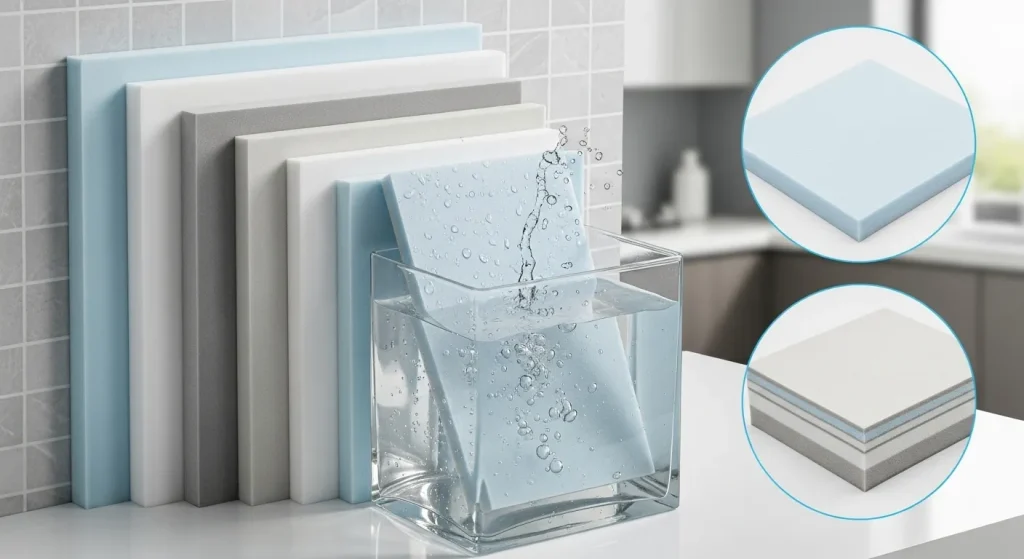
But "foam board" is a vague term. There are two very different types. One is a professional-grade tile backer. The other is a decorative, peel-and-stick panel. Using the wrong one for the job will lead to a costly failure. This guide is a deep dive based on my field experience. We will explore the types, the pros, the cons, and the exact how and where to use them.
What Are Waterproof Foam Wall Boards?
Waterproof foam wall boards are engineered panels made from high-density, closed-cell foam. This "closed-cell" structure means the foam is not a sponge. It is a solid, non-porous material that water cannot penetrate. These panels are lightweight and provide thermal insulation.
These are not structural panels. They do not replace your wall studs. They are a "skin" or "substrate" that you install onto your studs or existing wall. Their purpose is to create a 100% waterproof, warm, and stable surface. This makes them one of the best lightweight foam wall panels available.
What Are the Main Types of Waterproof Foam Boards?
There are two main types of foam boards, and they are not interchangeable. The first is a rigid, structural foam designed to be a tile backer. The second is a soft, flexible foam designed to be a final, decorative finish.
Type 1: Foam Tile Backer Boards (The "Pro" Solution)
This is the product I use in all my professional shower and bathroom builds.
- What It Is: A rigid, high-density extruded polystyrene (XPS) foam core. This core is sandwiched between two layers of a reinforced, waterproof-facing. This facing is usually a cement-like slurry or a fiberglass mesh.
- Common Brands: You have likely heard of brands like Schluter Kerdi-Board, Wedi Board, or Johns Manville GoBoard.
- Its Purpose: It is a substrate. It is designed to replace drywall and cement board. You install this board, and then you apply tile directly on top of it.
- The System: These are not just panels. They are a complete "system" that includes waterproof screws, washers, and seam sealants. When installed correctly, the entire shower stall becomes a single, watertight, seamless "box."
Type 2: 3D Decorative PE Foam Panels (The "Quick Fix")
This is the product you see in DIY videos. It is soft, flexible, and often comes in a peel-and-stick roll or tile.
- What It Is: A soft, squishy, closed-cell polyethylene (PE) foam.
- Its Purpose: It is a final finish. It is not designed to be tiled over. It is a fast, cheap, and decorative way to cover an existing wall.
- The Look: It is almost always molded into a 3D texture, most commonly a "fake brick" or "stone" pattern.
Comparison: Tile Backer vs. Decorative Foam
This table is critical. Choosing the wrong panel for your job will lead to failure.
| Feature | Foam Tile Backer Board (XPS) | 3D Decorative Foam (PE) |
| Primary Use | Tile Substrate (in showers, etc.) | Final Finish (accent walls) |
| Structure | Rigid, Hard, Structural | Flexible, Soft, Squishy |
| Installation | Screws & Sealant (Pro) | Peel-and-Stick (DIY) |
| Waterproof? | 100% System. Rated for showers. | Surface is waterproof. Adhesive is not. |
| Durability | Very High. | Low. Can be dented/punctured easily. |
| Heat Resistant? | No. (Must be covered) | No. (Will melt) |
What Are the Core Advantages of Using Foam Boards?
The core advantages are that they are 100% waterproof, incredibly lightweight, easy to install, and provide thermal insulation. This combination is unmatched by any other wall panel.
Advantage 1: Are They Truly 100% Waterproof?
Yes, closed-cell foam is 100% waterproof. The material itself is non-porous. Water cannot pass through it or be absorbed by it. This is the main reason you use it.
This is a huge leap forward from old materials:
- Drywall: Is paper and gypsum.3 Water turns it to mush.
- "Green" Drywall: Is just drywall with a waxy paper.4 It is water-resistant, not waterproof. It is a food source for mold. It is no longer allowed by code inside a shower.
- Cement Board: This is the big one.
Advantage 2: How Easy Are They to Install?
Foam panels are unbelievably easy to install. This saves time, labor, and your body.
- Weight: This is the "character" of the install. A 3x5-foot sheet of 1/2-inch foam backer board weighs about 8 pounds. A 3x5-foot sheet of cement board weighs over 50 pounds. I can carry five foam boards at once.
- Cutting: This is the best part.
- Speed: Because it is so light and easy to cut, I can waterproof an entire shower in about an hour. That same job with cement board and a roll-on membrane would take half a day.
- This is all covered in our how to install foam wall panels guide.
Advantage 3: Do They Provide Insulation?
Yes, foam is an excellent insulator.6 This is a huge benefit for bathrooms and kitchens, which are often on "outside" walls.
- R-Value: A 1/2-inch foam board has an R-value of about R-3. A 2-inch board has an R-value of R-10. Drywall and cement board have an R-value of almost zero.
- Why this matters:
- A Warmer Shower: When you tile over a cold cement board, the tile is cold. In a shower, the tile is always sucking the heat out of the air. When you tile over a foam board, the foam reflects the heat. The tile feels warmer to the touch. Your shower heats up faster and stays warmer.
- Stops Condensation: In a kitchen or bathroom, a cold outside wall can lead to condensation, which leads to mold. An insulated foam panel keeps the wall surface "warm," which stops condensation from forming.
- This is the core of foam wall panels insulation benefits.
Advantage 4: Do They Prevent Mold and Mildew?
Yes. Mold needs two things to grow: moisture and an organic food source.
- Foam board is 100% waterproof. (No moisture).
- Foam board is plastic and fiberglass/cement. (No food).
- Drywall is paper-faced. It is a perfect, delicious food source for mold.
- By using a foam board, you are building a wall that is 100% mold-proof.
How to Use Waterproof Foam Boards in a Bathroom
This is the number one use for these panels. But you must use the right panel in the right place.
Can You Use Foam Boards Inside a Shower?
Yes, but ONLY foam tile backer board. This is what it is built for.
- Critical Warning: You cannot use the 3D peel-and-stick (PE) foam panels in a shower.7 I have seen this fail. The adhesive on the back is not rated for constant water. It will fail. The seams are not waterproof. Water will get behind them, and you will have a moldy, falling-apart mess in months.
- The Pro Method: For a shower, you use foam tile backer board.8 You attach it to the studs with special screws and washers. You seal all the seams between the boards with the manufacturer's waterproof sealant (a special caulk or band). This creates a single, sealed "box." You then apply your tile directly to the board's surface.
Can You Use Foam Boards on Bathroom Walls (Outside the Shower)?
Yes, and both types of panels are great here.
- For Tiled Wainscoting: Use the 1/2-inch foam tile backer board.9 It is a fast, waterproof, and warm substrate for the tile.
- For an Accent Wall: This is a good spot for the 3D PE foam panels. It is a "splash zone," not a "wet zone." The panel is waterproof, so splashes from the sink will not hurt it. It adds a fast, textured look.
How to Use Waterproof Foam Boards in a Kitchen
This is a great application, but it comes with one massive, non-negotiable warning: HEAT.
Can You Use Foam Panels as a Kitchen Backsplash?
Yes, BUT... Foam is plastic. Plastic melts.
- The Critical Rule: You CANNOT install a foam panel (either type) directly behind a gas stove or a high-output electric range. It is a fire hazard and will melt. I have seen photos of 3D foam brick melted into a wavy, charred mess.
- The Safe Way:
- Behind Sinks/Counters: This is a perfect use. It is a high-splash zone, and the foam is waterproof.
- Behind an Induction Cooktop: This is usually fine, as all the heat goes into the pan, not the wall.
- Behind a Gas Stove: You must install a non-combustible panel in this "hot zone." My pro-tip is to install a stainless steel or glass sheet directly behind the stove. You can then run your foam panels up to the edges of that sheet.
Can You Use Foam Panels on a Kitchen Island?
Yes. This is a perfect use for the 3D decorative PE foam panels.
- Why it works: It is a low-impact area, far from heat. It is a great way to add texture.
- My Take: I love this for families. The front of an island gets kicked by feet at the bar stools. A painted drywall wall gets scuffed and dirty. The 3D foam is durable, easy to wipe, and soft. It actually feels better to sit at.
What Are the Disadvantages and Problems with Foam Panels?
They are not a perfect product. As an installer, I have to be honest about their two weaknesses: low durability and fire risk.
Disadvantage 1: Durability and Strength
Foam is soft.
- 3D PE Panels: You can easily press your thumbnail into them. They are not a "hard" surface.
- Foam Tile Backer: The board itself is rigid, but it is not as strong as cement board. You can punch a hole in it.
- You Cannot Hang Heavy Things From It: This is a common question. You cannot hang a heavy glass shower door or a cabinet from the foam. The foam has no structural strength.
- The Solution: You must anchor heavy items to the wall studs behind the foam. This requires planning. Before I install the foam, I add extra 2x4 "blocking" in the wall where I know the shower door or grab bar will go. Then I screw through the foam and into that solid wood.
Disadvantage 2: Fire Safety (The Non-Negotiable Rule)
Foam is a plastic.10 It is combustible. It must be covered.
- The Code: All building codes state that foam insulation cannot be left exposed in an interior living space. It must be covered by a 15-minute thermal barrier.
- What this means:
- In a basement, you must cover your foam panels with 1/2-inch drywall.
- In a bathroom, the tile and mortar are the thermal barrier. This is why foam tile backer is safe to use.
- You cannot, for example, install rigid XPS foam on your wall and then just paint it. This is a major fire hazard.
- This is a key reason these panels are used in commercial use, where fire codes are even stricter.
How Do Foam Panels Compare to Other Waterproof Materials?
This is where the choice becomes clear.
Foam Panels vs. PVC Panels
This is the most common comparison. Both are plastic and waterproof.
- The Difference: Foam is soft and insulating. PVC is a hard, dense, durable panel.
- The Verdict: This is the foam vs pvc wall panels choice.
- Use Foam Tile Backer if you want to install tile.
- Use PVC Panels if you want a finished wall panel that looks like tile or marble, with no thinset or grout.13
- Use 3D PE Foam if you want a cheap, soft, 3D accent wall.
Here is the comprehensive, high-authority article, written to your specifications.


