



How to Properly Install Composite Decking on Stairs: Step-by-Step Guide and Practical Tips
When designing outdoor spaces, stairs are not only a functional structure that connects different heights, but also an important element of overall aesthetics and durability. Composite decking has become a top choice for stair treads because it combines the natural texture of wood with the lasting performance of engineered materials, significantly reducing maintenance and withstanding outdoor environmental stress.
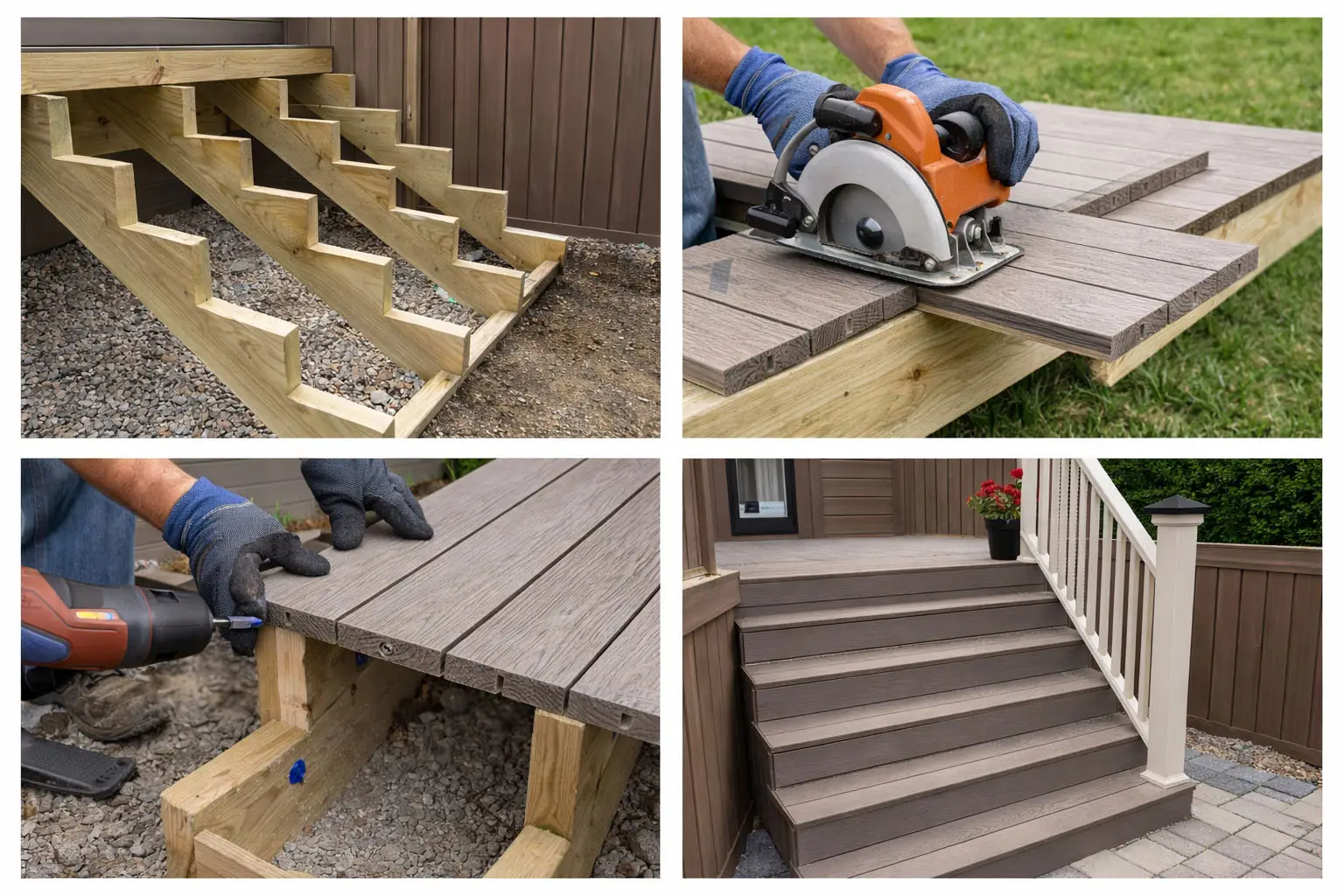
This guide will walk you through the proper steps for installing composite decking on stairs, from initial planning and framing to decking installation and finishing touches, helping you create outdoor stairs that are both beautiful and durable.
Why Choose Composite Decking for Stairs
Compared to traditional wood, composite decking offers several distinct advantages:
-
Durable and weather-resistant: Resistant to moisture, rot, and pests, and does not warp or crack.
-
Low maintenance: Requires no regular painting or treatment, making cleaning simple.
-
Safety and comfort: Non-slip surface designs suitable for wet conditions, increasing safety.
-
Variety of looks: Available in a range of colors and woodgrain finishes, which can match with deck or exterior wall finishes.
These features make composite decking the ideal material for stair treads and platforms, especially in patios, terraces, and backyard spaces.
Preparation Before Installation
The successful installation of composite decking stairs starts with thorough planning and preparation. Proper project planning can prevent installation errors and ensure durability and structural stability.
1. Measure Stair Dimensions
Start by determining the total rise (height) and riser height for each step. The height of the stairs will affect the number of steps and the height of each riser. Ideally, each step height should remain consistent for comfort. Typically, riser heights are around 7 inches (approximately 180mm).
To calculate, divide the total height of the stairs by the ideal riser height, and adjust the step count accordingly to meet building codes.
2. Select Materials and Tools
You will need the following basic materials and tools for installing composite decking stairs:
-
Composite decking boards (for treads and risers)
-
Wood or metal stair frame materials
-
Screws and fasteners designed for composite materials
-
Power drill, circular saw, jigsaw, level, etc.
-
Safety gear (goggles, gloves)
Ensure that all tools are in good working order and have the appropriate screws and spacers ready for expansion and contraction of the decking material.
Step-by-Step Installation of Composite Decking Stairs
The following is the standard procedure for installing composite decking stairs, guiding you step by step through the process.
Step 1: Build the Stair Frame
The first step is to build a strong stair frame. The stair frame typically consists of stringers, support beams, and framing boards:
-
Install stringers: Stringers are the framework that supports the treads and must be made of durable material such as treated lumber or other weather-resistant options. The stringers should be spaced approximately 12 inches (about 300mm) apart for even load distribution.
-
Check for level and plumb: Use a level to ensure that the stringers are level and properly aligned.
A flat and sturdy frame is key to avoiding future instability or sagging in your stairs.
Step 2: Cut and Install the Treads
Once the frame is built, begin cutting the decking boards to the correct dimensions for the treads:
-
Cut the decking boards: Use a circular saw or jigsaw to cut the composite decking boards to fit the tread dimensions. Be sure the cuts are clean to ensure even spacing between boards.
-
Leave a gap: Maintain a small gap (typically a few millimeters) between the boards for drainage and thermal expansion.
-
Secure the boards: Fasten the boards using screws or hidden fastener systems designed for composite materials, ensuring that the boards are securely attached to the stringers. The front of the top tread should overhang the stringers by approximately 1 inch (25mm) to create a safe, non-slip edge.
Ensure that each tread is firmly attached, and avoid over-tightening the screws, which could damage the boards.
Step 3: Install the Risers and Fascia
After the treads are in place, install the risers and fascia to finish the stairs:
-
Risers: Install risers to cover the vertical space between each step, ensuring a clean and unified look.
-
Fascia: Attach fascia boards around the perimeter of the frame for a polished look and to cover any exposed edges.
Composite risers and fascia can be matched with the decking material for a cohesive appearance.
Step 4: Install the Handrails and Finishing Touches
Handrails are essential for safety, as well as adding aesthetic value to the stairs:
-
Install handrail posts and make sure they are securely fastened
-
Cut handrail balusters to the correct length
-
Add any additional trim or decorative features, such as post caps or rail lights, for extra style and safety at night
Optional details like handrail lights or non-slip strips can enhance the safety and usability of your stairs.
Post-Installation Inspection and Maintenance Tips
After installation, conduct a thorough inspection to ensure everything is secure and functional:
-
Check that all screws are tightened properly
-
Make sure the treads are level and there is no wobbling
-
Inspect for any loose pieces or sharp edges that might cause injury
For daily maintenance, composite decking stairs require minimal care:
-
Regularly sweep to remove debris
-
Clean the surface with mild soapy water
-
Avoid using high-pressure washers that may damage the surface
Since composite materials are UV-resistant and moisture-proof, they don’t require painting or sealing like traditional wood, making maintenance much simpler.
Conclusion: Create Safe, Durable Stair Spaces
Installing composite decking stairs is an excellent way to enhance both the functionality and aesthetics of your outdoor space. By following proper planning, precise measurements, and careful installation, you can create a safe, durable, and low-maintenance stair system. Whether it’s for garden steps, terrace connections, or entryway stairs, composite decking offers long-lasting performance and comfort.
For professional advice and custom composite decking solutions, feel free to explore our products and services.


