



Best Materials for Non-Slip Balcony Flooring: Your Complete Guide
Finding the best materials for non-slip balcony flooring is not just about style; it is the most important choice you will make for your outdoor space. A balcony should be a personal oasis. It's a place for a morning coffee or relaxing at the end of the day. But the first time it rains, that oasis can become a serious hazard.
I have seen far too many balconies that are dangerously slick. A client once told me they "zoned off" their beautiful balcony for half the year, fearing a fall. The problem was not the weather; it was their choice of smooth, glossy tile.
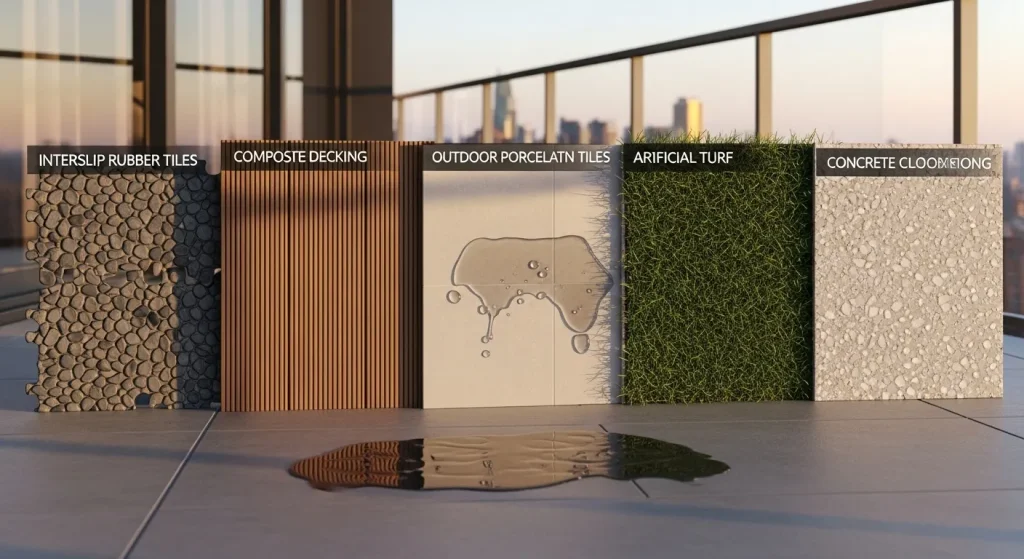
Your balcony floor needs to do many jobs. It must be a weather-resistant balcony flooring option, look great, and fit your budget. But its primary job is safety. This guide breaks down every safe, non-slip option. We will cover the pros, the cons, the costs, and the real-world performance of each material.
What Exactly Makes a Balcony Floor "Non-Slip"?
A non-slip floor is all about texture and friction.1 The material must be able to maintain grip even when it is wet. The technical term for this is its "Coefficient of Friction" (COF). A higher COF means more grip.2 For any outdoor flooring, you want a high COF.
Think of it like the tires on your car. Smooth racing slicks are useless in the rain. You need tires with deep treads to channel water away and grip the road.3 Your balcony floor is the same. Texture is the most important feature. This can be a brushed finish, a deep embossing, or a naturally gritty surface.
Industry standards, such as those from the Americans with Disabilities Act (ADA), recommend a dynamic COF of 0.42 or higher for level floors. For outdoor ramps or sloped areas, you want even more.
What Are the Best Materials for Non-Slip Balcony Flooring?
The best materials are composite (WPC) decking, textured porcelain tiles, and rubber tiles. Artificial grass and concrete with a grip-finish are also excellent choices. These materials combine texture, durability, and water-shedding properties to provide the safest footing.
Choosing the right one depends on your budget, style, and climate. Here is a quick look at the top contenders.
Quick Comparison of Non-Slip Flooring Materials
| Material | Avg. Slip Resistance | Maintenance | Avg. Cost (per sq. ft.) |
| Capped Composite (WPC) | High | Low | Moderate - High |
| Textured Porcelain Tile | Very High | Low | Moderate - High |
| Rubber Tiles | Highest | Low | Moderate |
| Artificial Grass | High (when dry/damp) | Medium | Low - Moderate |
| Broom-Finish Concrete | High | Low | Low |
| Interlocking Deck Tiles | Medium - High | Low | Low - Moderate |
Is Composite (WPC) Decking a Good Non-Slip Option?
Yes, high-quality composite or WPC balcony floor panels are an excellent choice for slip resistance. Modern "capped" composites have a durable polymer shell.4 This shell is embossed with a deep wood-grain texture that provides secure grip, even when wet.
Let's break this down. "WPC" stands for Wood-Plastic Composite.5 It's made from a mix of recycled wood fibers and plastics.
- Uncapped vs. Capped: First-generation composite was "uncapped." It was porous and could absorb moisture, leading to mold or mildew. This made it very slippery. "Capped" composite is the modern standard. It has a protective plastic shell on all sides. This shell makes it waterproof and stops mold growth.
- The Texture: The non-slip magic is in the finish. Manufacturers emboss a deep wood-grain pattern into this cap. They also add a "brushed" finish. This creates micro-textures that provide grip on a small scale, while the deep grooves channel water away.
I've specified capped composite for many projects, from balconies to pool surrounds. The grip it provides is consistent. Unlike wood, it won't splinter, warp, or grow algae as easily. This makes it a safer long-term choice. It's a key material when comparing wooden vs vinyl balcony flooring, as it offers the look of wood with the safety of vinyl.
- Pros: Low maintenance, won't splinter, fade-resistant, channels water well.
- Cons: Higher upfront cost, can get hot in direct, intense sun.
What About Porcelain or Ceramic Tiles?
Textured porcelain tiles are one of the best non-slip surfaces you can buy.6 The key word is textured. You must choose an unglazed, matte, or "structured" tile. Never use a smooth, glossy tile on a balcony.
Porcelain is a fantastic outdoor material.7 It's a type of ceramic, but it's fired at a much higher temperature. This makes it extremely dense, strong, and non-porous. It will not absorb water. This is why it's a top choice for waterproof balcony floor tiles.
How to Buy the Right Tile:
When you shop, ignore the glossy, smooth tiles. They are dangerous.
- Look for "Structured" or "Textured": These tiles have a 3D surface you can feel. They often mimic the grain of wood or the cleft of natural slate.
- Check the Rating: Look for a slip-resistance rating. In Europe, this is an "R" rating (R11 to R13 are excellent for outdoors). In the US, look for a high Dynamic Coefficient of Friction (DCOF).
- The "Feel" Test: Honestly, just run your hand over it. Does it feel like it has some "bite"? Good. Does it feel like a polished countertop? Walk away.
A client once installed beautiful, glossy black ceramic tiles on their covered balcony. It looked like a mirror. The first time a blowing rain wet the surface, it became a skating rink. They had to pay to have it all ripped out and replaced with a textured, slate-look porcelain. It was an expensive lesson.
- Pros: Incredible durability (will last 50+ years), zero fading, huge range of styles (wood-look, stone-look), easy to clean.
- Cons: Very hard surface if you fall, grout lines can get dirty, professional installation is a must.
Are Rubber Tiles a Safe Choice for Balconies?
Rubber tiles are arguably the safest and most slip-resistant flooring you can put on a balcony. They provide unmatched grip in both wet and dry conditions. They also offer excellent shock absorption, which makes them soft underfoot and safer for children.
These are often made from recycled tires. They come as thick, interlocking tiles that you can lay down yourself. They are heavy, so they tend to stay in place without adhesive.
The best outdoor rubber tiles have built-in drainage. The underside of the tile has channels or "feet" that lift the tile off the concrete. This allows water to flow freely underneath and out toward the balcony drain. This prevents any puddles from forming on top.
- Pros: The best non-slip grip available, very soft and comfortable, cushions falls, excellent for pets or kids, easy DIY installation.
- Cons: Can have a "rubber" smell when new, can fade or degrade in extreme, direct sun over many years, look is more "functional" than "luxury."
Is Artificial Grass a Good Non-Slip Surface?
Yes, artificial grass provides a surprisingly good non-slip surface.8 The "blades" of grass are made from plastic (like polyethylene) which offers a textured grip. The backing is perforated with drainage holes, allowing water to pass straight through.
This is a great option for covering an ugly concrete slab. It instantly turns a sterile space into a "green" yard. For non-slip purposes, the drainage is the most important feature. A quality artificial grass for balconies will have a robust backing that allows water to drain quickly. This prevents puddling on the surface.
For a client in a high-rise, artificial grass was the perfect solution. It made their small concrete box feel like a garden. We built a simple grid of interlocking plastic drainage tiles underneath the grass. This created a half-inch air gap. Water now hits the grass, goes straight through, and flows perfectly to the drain. This is a critical step for a long-lasting, non-slip installation.
- Pros: Soft, natural look, good grip, excellent drainage, great for pets, hides an ugly sub-floor.
- Cons: Can get hot in direct sun, needs to be brushed to keep blades upright, quality varies a lot.
What Other Flooring Materials Should I Consider?
While WPC, porcelain, and rubber are the top-tier choices, you have other good options.
Concrete with a Non-Slip Finish
This is often the most practical and affordable route. If your balcony is already concrete, you don't need to cover it. You just need to treat it.
- Broom Finish: This is the simplest option. When the concrete is poured and still wet, it's brushed with a stiff broom. This creates a fine, rough texture that is very slip-resistant.
- Grip-Additive Sealers: You can paint or roll on a clear concrete sealer that has a non-slip additive.9 This is usually a fine powder, like aluminum oxide. It's mixed into the sealer. It creates a sandpaper-like texture that is very effective.
- The "grit additive" sealer is my go-to fix for slick concrete. It's a fast and cheap way to make a balcony safe. The only downside is that you have to reapply it every few years, as the sealer wears down.
Interlocking Plastic or WPC Deck Tiles
These are the square, 12x12 inch tiles you see everywhere. They have a plastic base with WPC or plastic slats on top. They snap together easily.
Their non-slip quality comes from two things. First, the slats on top are usually textured. Second, the entire system is "floating." Water falls between the slats and flows away underneath. This means the top walking surface is almost always dry and puddle-free. They are a great DIY choice and a solid part of any balcony outdoor flooring guide.
- Pros: Very easy DIY install, great drainage, affordable, easy to remove.
- Cons: Can feel "clacky" or hollow underfoot, plastic can get brittle in extreme cold, not as "premium" looking.
Outdoor Carpet
This is not the shag carpet from your living room. This is marine-grade carpet, similar to what you'd find on a boat. It's made from 100% synthetic fibers (like polypropylene). It will not absorb water, and it's treated to resist mold, mildew, and UV fading.
It provides a soft, textured, and very secure non-slip surface. It's a bit "old-school," but it is very effective and comfortable to walk on.
- Pros: Very slip-resistant, soft and warm underfoot, affordable.
- Cons: Can hold dirt and pollen, needs to be vacuumed and cleaned, style is not for everyone.
What Flooring Materials Should I AVOID on a Balcony?
This is just as important. Choosing the wrong material is a costly and dangerous mistake.
- Glossy, Smooth, or Polished Tiles: This is the #1 offender. This includes glossy ceramic, polished porcelain, and polished stone like marble or granite. They look beautiful in a showroom, but with a tiny bit of moisture, they become incredibly hazardous.
- Smooth, Painted Concrete: Using a standard interior or exterior porch paint (without a grit additive) will create a slick, plastic-like film. This is very dangerous when wet.
- Untreated Wood: While treated wood is okay, untreated pine or fir will absorb water. It will quickly become a breeding ground for algae and bio-film. A layer of green algae on damp wood is one of the most slippery surfaces on earth.
- Indoor Vinyl or Laminate: Never use flooring meant for indoors. The materials, cores (often fiberboard), and adhesives are not waterproof. They will swell, delaminate, and fall apart in a matter of months.
How Do I Maintain My Non-Slip Balcony Floor?
A non-slip floor is only safe if it is clean. The biggest enemy of a safe balcony is not rain; it's bio-film. This is the slimy layer of algae, mold, and mildew that builds up over time in damp, shady areas. This film can make any surface slippery.
- Sweep Regularly: Keep your balcony free of leaves, pollen, and dirt. This debris traps moisture and starts to decompose, which is food for mildew.
- Wash It Down: At least twice a year (spring and fall), give the floor a good scrub. Use a mild detergent (like dish soap) and a medium-bristle brush. Rinse it completely.
- For Composite: Use a composite-specific deck cleaner. Do not use a pressure washer, as it can damage the cap.
- For Porcelain: Soap and water are perfect. A diluted vinegar solution can help cut through any mineral deposits from water.10
- For Rubber: A simple rinse is usually enough. Use a pH-neutral cleaner if it's very dirty.
- For Artificial Grass: Brush it with a stiff broom to fluff up the fibers.11 Rinse it to wash away dust and pollen.
Final Verdict: How to Choose Your Best Option
Choosing the best non-slip balcony flooring comes down to your priorities.
- For Ultimate Safety (especially with Kids):
- Winner: Rubber Tiles. The combination of high grip and soft, shock-absorbing material is unbeatable.
- For the Best Balance of Style and Safety:
- Winner (Tie): Capped Composite (WPC) and Textured Porcelain Tile. Both offer a high-end, modern look with fantastic, built-in slip resistance. WPC is warmer and faster to install. Porcelain is more durable and has more style options.
- For the Best DIY / Budget-Friendly Option:
- Winner (Tie): Interlocking Deck Tiles or a Grit-Additive Sealer on existing concrete. Both are affordable, effective, and can be done in one afternoon.
- For the "Greenest" Look and Feel:
- Winner: Artificial Grass. It's soft, drains well, and provides a good grip, all while making a concrete space feel like a yard.
Your balcony should be a retreat, not a risk. By prioritizing a material with a proven texture and good drainage, you are investing in a space you can enjoy safely for many years to come.


