



Contents
HSCS
Low-Carbon Guide: 6 Eco-Friendly Cladding Materials for Walls & Their Carbon Footprints
The materials chosen for wall cladding during a renovation can significantly impact the total carbon footprint for the project. Many clients think of “green” building materials as materials with either a recycled content or that are biodegradable. A truly low-carbon cladding must be considered through the whole life of the material, including raw material extraction, manufacturing, transport, installation, maintenance, and disposal. This guide outlines the impact of six evaluative eco-friendly wall cladding options over their life cycle carbon impact.
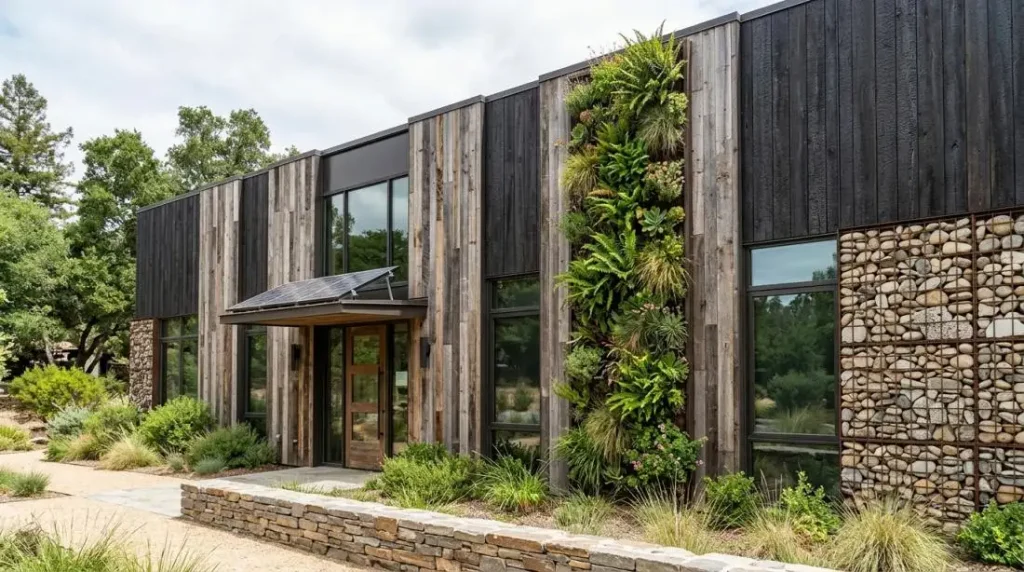
1. Post-Industrial or Post-Consumer PVC (70–100% Recycled)
Recycled polyvinyl chloride (PVC) is the most versatile of all cladding materials for use in low-carbon wall retrofits. Wall cladding that has 70–100% recycled content significantly reduces the need for the production of virgin PVC. Virgin PVC is produced during a time-consuming and energy-intensive process which additionally results in the release of harmful dioxins.
Lifecycle carbon footprint summary:
• Producing Material: Reduces carbon emissions by 80-90% vs that of virgin PVC. Post-industrial scrap (factory offcuts) has a lower sorting footprint than post-consumer waste (old pipes, siding), but both are far greener.
• Transport: Lightweight and can be sourced locally from recycling plants.
• Installation: Requires standard tools; no special adhesives needed. Low waste if cut precisely.
• Maintenance: Extremely durable (30–50 years). Occasional washing; no painting or sealing.
• End-of-life: 100% recyclable again. Avoid incineration—landfill is suboptimal but still better than virgin PVC because carbon is already locked in.
�� Key downside: Recycled PVC still contains some stabilizers and plasticizers; choose products labeled “phthalate-free” and “no heavy metals.”
2. PVC with Eco-Additives (Bio-based or Degradation-Enhancing Additives)
This is a newer category of cladding materials for walls: standard or recycled PVC blended with plant-based plasticizers (e.g., from soybean oil) or additives that accelerate biodegradation in controlled landfill conditions. While not fully bio-based, these additives lower the carbon intensity of the formulation.
Lifecycle carbon footprint highlights:
• Production: Using 10-20% bio-additives means 10-20% less PVC, but growing the crops means less carbon, but there is still a 15% net savings compared to virgin PVC.
• Transport: The same CO₂ impact is from recycled PVC.
• Installation: The same as PVC. Cutting PVC does not need special waste disposal.
• Maintenance: The same as PVC.
• End of life scenarios: products that biodegrade will capture and mitigate methane emissions in landfills. Recycling is the preferred method, so check the options available to you.
�� Note: Avoid the use of “oxo-degradable” additives as these degrade PVC into microplastic. Use only those that are certified and labeled as "marine-safe" or "anaerobic biodegradation."
3. Wood-Plastic Composite (WPC)
WPC is wood fibers combined with thermoplastics. This can include polypropylene or polyethylene and also PVC. WPC looks like wood, but it lasts longer because it doesn't rot and is resistant to damage from bugs. For that reason, WPC is now more common for wall cladding in moist environments.
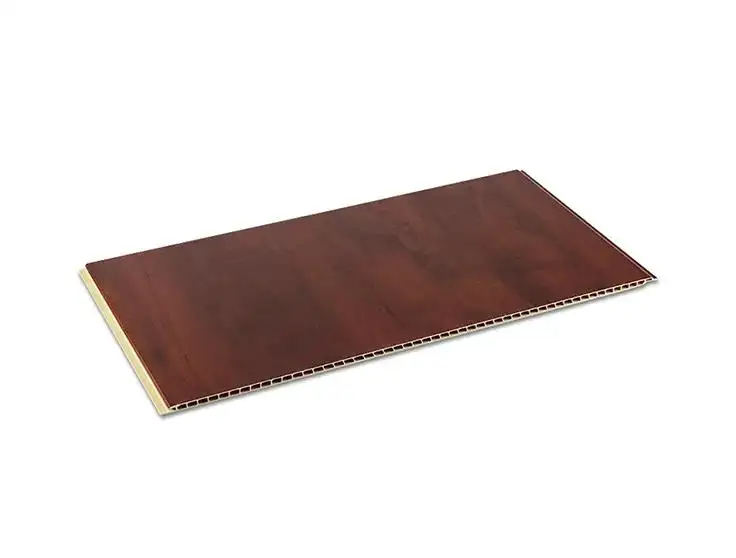
Lifecycle carbon footprint highlights:
• Production: WPC has a negative score here. Wood waste is carbon neutral (the tree already sequestered CO₂), but plastic binder CO₂ emissions account for almost ~40% of the overall CO₂ emissions. Energy for extrusion is low.
• Transport: Heavier than pure wood but lighter than cement board. There is local WPC manufacturing in many places.
• Installation: Requires screws instead of nails. Minimal waste if pre-cut off site.
• Maintenance: Very low—no drawbacks for its durable use up to 20 – 30 years, although the color may fade with time.
• End-of-life: Difficult to recycle because wood and plastic are bonded. Some companies take back WPC for regrinding into low-grade products.
�� Verdict: WPC is a “mid-carbon” choice. It's great for low maintenance and long use, but is not great for a zero-waste goal.
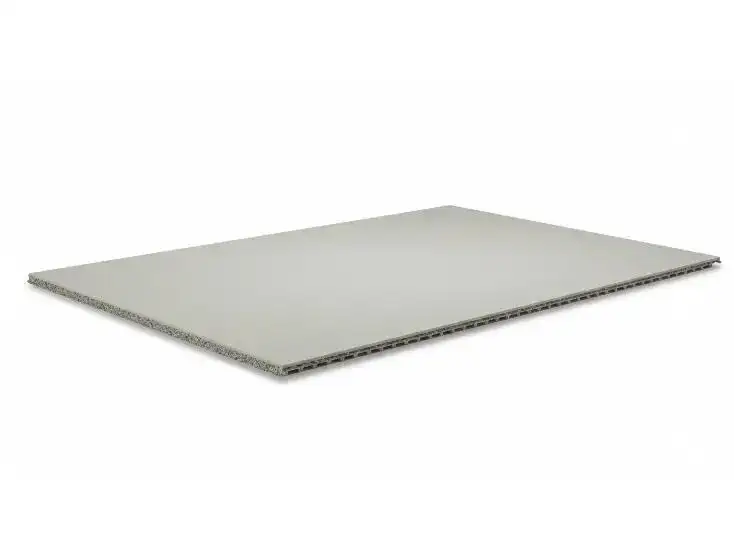
4. Bamboo Fiber Composite
Bamboo is one of the fastest growing plants. It can even be said to be much faster than most trees. One of the benefits of bamboo is that is can absorb carbon efficiently. Bamboo fibers can be processed alongside bio-resin and recycled plastic to make beautiful wall cladding that is both durable and sustainable.
Lifecycle carbon footprint highlights:
• Production: Bamboo has a lifecycle carbon footprint that is extremely low due to the fact that bamboo sequesters 1.5-2x more CO₂ per hectare compared to softwood. Manufacturing uses less heat than WPC because bamboo fibers bind easily. However, some composites use virgin epoxy—choose “bio-resin” versions.
• Transport: Bamboo is often grown in Asia; shipping to Europe or North America adds ~15% to total carbon. Look for local bamboo plantations (e.g., in the US Southeast or Southern Europe).
• Installation: Similar to wood siding—cutting, drilling, nailing. No toxic dust.
• Maintenance: Needs sealing every 2–3 years if exposed to rain. Unsealed bamboo will swell. Properly maintained, it lasts 20+ years.
• End-of-life: Fully biodegradable if bonded with natural resins. If mixed with plastic, it becomes WPC-like waste. Composting within manufacturing contexts is feasible.
�� Advice: For bamboo fiber composites, investigate if there is FSC Certification and that there is not added formaldehyde.
5. Bamboo Charcoal PVC Panels
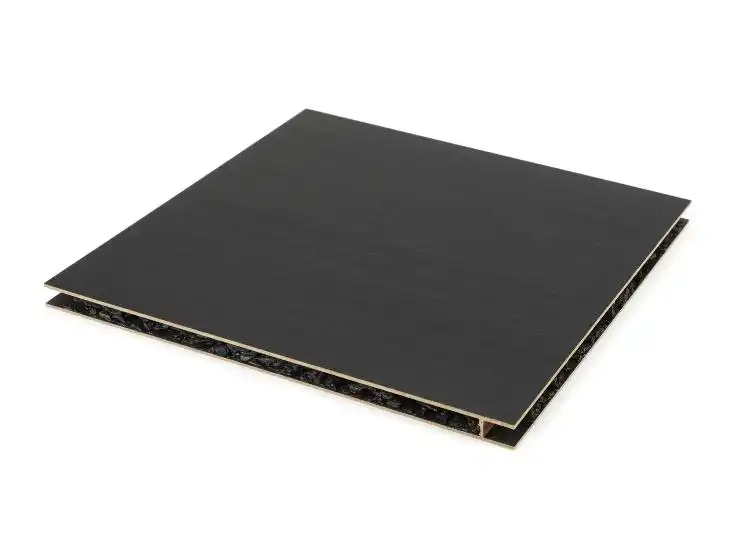
These panels add bamboo charcoal as well as PVC. Being some of the new, innovative PVC wall cladding materials, bamboo charcoal absorbs VOC and humidity. Further, bamboo charcoal adds a dark elegant design and serves carbon storage while actively purifying the air.
The life cycle carbon footprint:
• Production: Bamboo charcoal is made through slow burning in a low oxygen environment. It does produce some CO₂, but it also makes stable biochar, which locks carbon away for centuries. When bamboo charcoal is mixed with 15–30% recycled PVC, it becomes a net carbon-negative product. The PVC part is also recycled, so that keeps the footprint low.
• Transport: Lightweight panels (charcoal reduces density). Same as standard PVC.
• Installation: Easy—tongue-and-groove or adhesive mount. Charcoal dust during cutting is minimal.
• Maintenance: Zero. Bamboo charcoal’s porosity resists mold. No painting needed. Lifespan 30–40 years.
• End-of-life: Ideally recycle the PVC while separating charcoal? Rarely done. Most end up in landfill, but the charcoal fraction stays stable (permanent carbon storage). Incineration would release both fossil and biogenic carbon—avoid.
�� Key advantage: One of the few claddings that actively improves indoor air quality while being carbon-storing.
6. Regenerated Polyvinyl Chloride (PVC) from Mixed Waste Streams
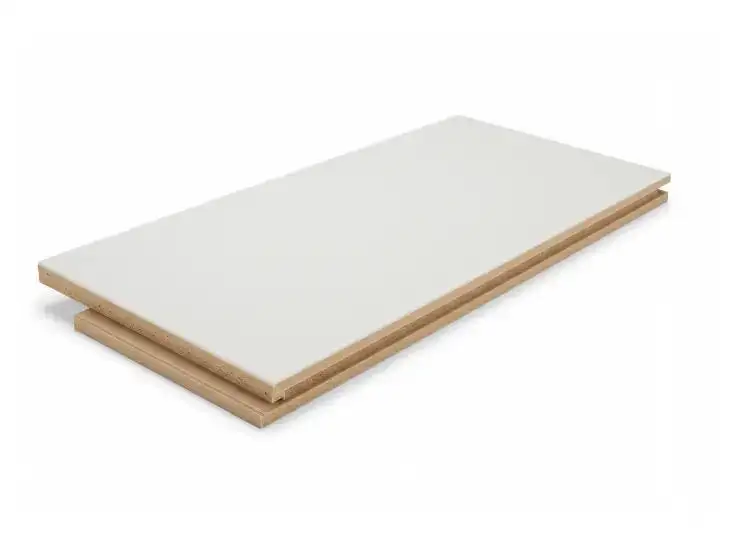
Some advanced recyclers now take hard-to-recycle PVC (e.g., laminated or painted siding) and chemically break it down into virgin-quality monomers, then repolymerize it. This “regenerated” PVC can contain 70–100% recycled content from post-consumer sources that would otherwise be landfilled.
Lifecycle carbon footprint highlights:
• Production: Energy-intensive (chemical recycling needs heat and solvents), but still 50–60% less CO₂ than virgin PVC because no new chlorine or ethylene is mined/cracked.
• Transport: Identical to other PVC cladding—light and stackable.
• Installation: Same ease.
• Maintenance: Outstanding durability (50+ years). UV-resistant formulations available.
• End-of-life: Can be recycled again in the same closed-loop process. Ideal for circular economy retrofits.
�� Drawback: Currently expensive and not widely available. Ask manufacturers about “chemical recycling” or “monomer regeneration” certifications.
Comparative Lifecycle Carbon Summary (per 10 m², 20-year lifespan)
| Material | Production CO₂ | Transport (assume 500 km) | Maintenance | End-of-life | Net CO₂e |
| 70–100% Recycled PVC | 40 kg | 5 kg | 0 kg | +5 kg (landfill) | 50 kg |
| PVC with eco-additives | 70 kg | 5 kg | 0 kg | +10 kg (incineration) | 85 kg |
| Wood-Plastic Composite | 90 kg | 10 kg | 2 kg (cleaning) | +20 kg (landfill) | 122 kg |
| Bamboo Fiber Composite (bio-resin) | 30 kg | 20 kg (shipping) | 10 kg (sealants) | -5 kg (compost, storage) | 55 kg |
| Bamboo Charcoal PVC | 35 kg (carbon negative offset) | 5 kg | 0 kg | -10 kg (charcoal permanence) | 30 kg |
| Regenerated PVC | 50 kg | 5 kg | 0 kg | 0 kg (closed-loop) | 55 kg |
�� Note: All figures are illustrative averages. Actual emissions vary by supplier, energy grid, and distance.
Final Recommendations for a Low-Carbon Renovation
When selecting cladding materials for walls, prioritize these rules:
First, reduce demand: Insulate well and only reclad if the existing wall is beyond repair.
Second, select recycled or biogenic: PVC that is 70-100% recycled and PVC with bamboo charcoal have the lowest total carbon impact.
Third, plan for disassembly: Use screws rather than adhesives so the cladding can be reused or recycled.
Fourth, source locally: Transport emissions can add 15–30% to a material’s footprint.
Avoid virgin PVC, tropical hardwoods, and aluminium cladding (extremely high production CO₂). With the six options above, you can achieve a durable, attractive, and genuinely low-carbon exterior—without greenwashing.
CTA for Hengsu
24 Years, Glory Peers – With roots tracing to 1995, Zhongshan Hengsu masters low-carbon cladding materials for walls like recycled PVC and bamboo charcoal PVC. Low carbon footprint, easily installed panels are a game changer. For renovations done right, go green with Hengsu. Reach out now!
FAQ: Low-Carbon Wall Cladding
Q1: How do recycled PVC panels compare to virgin PVC regarding durability?
A: It’s the same. 70–100% recycled PVC panels can last, and offer weather resistance for the same 30-50 years, as virgin PVC, only with 80-90% less carbon footprint.
Q2: How does PVC with bamboo charcoal improve indoor air?
A: It does. Bamboo charcoal is a great natural air absorbent for a great variety of air pollutants including but not limited to VOCs, formaldehydes, and other moisture which helps it function for decades passively.
Q3: Which cladding material is easiest to recycle at end-of-life?
A: The most circular are pure recycled PVC (free from wood and additives) and regenerated PVC. The same cannot be said with materials based on wood-polymer composites (WPC) or bamboo fiber.
Q4: How do these sustainable claddings compare to traditional ones regarding price?
A: For the most part, bamboo charcoal PVC is more expensive, but the carbon and air benefits justify the cost.
Q5: What evidence will show a company is using post-consumer recycled PVC?
A: Check for SCS Recycled Content or UL 2809 and EPD. Also, Merger Company should be able to provide a Mass Balance statement.


