



South Africa Wall Cladding Panels: Coastal, Highveld & Inland – Your Climate Guide
No single wall cladding panel works for all of South Africa—coastal salt spray, Highveld UV, and inland temperature swings each demand different materials. Choosing wrong leads to fading, cracking, or costly maintenance within seasons.
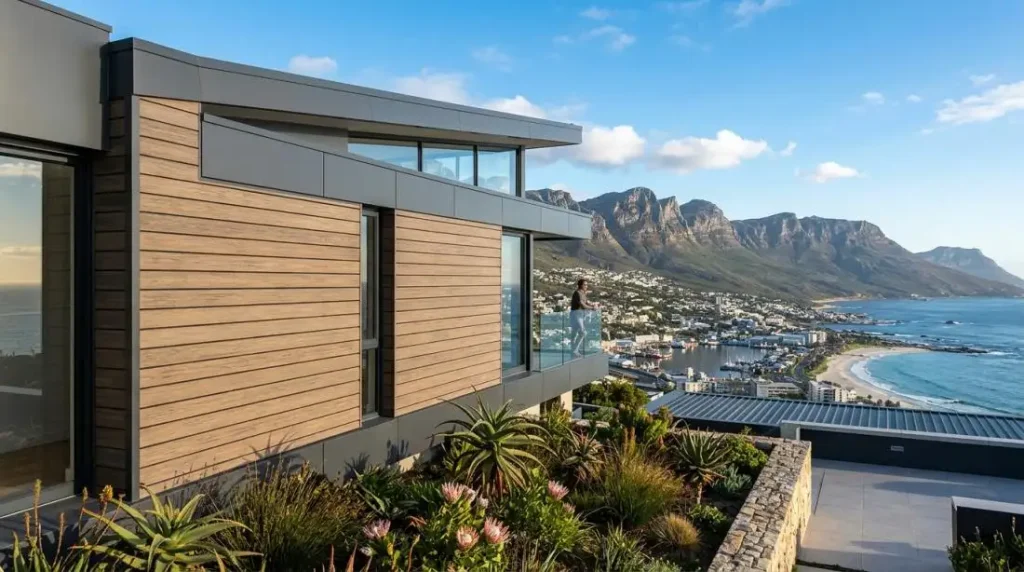
This guide explains what to pick for each zone. The performance of a material after installation is reliant on the exposure that it has to the elements that your particular installation is situated in over its lifespan, and not on its appearance in a display room. In harsh climatic areas, incorrect material selection may lead to building envelope failures, including leaks and the growth of mold. Investing in durable and low maintenance wall cladding for years of protection starts with selecting the best wall cladding panels offered by suppliers in South Africa.
Zone 1: Coastal Areas (Cape Town, Durban, Port Elizabeth, and the Garden Route)
Climatic Issues
These regions can be tough to work with when designing with external building materials:
1.Salt air and sea spray: corrode sub-frames, fixings, and other accessory systems.
2.Mold and rotting of wood due to high humidity
3.Winds in excess of 100 km/h
4.Heavy, intense UV exposure and sunlight year round
5. Intermittent rains and a moist environment
Coastal climates have the combination of elements (dampness, rust, and rot) that are most destructive to steel and wood, the building materials most traditionally used.
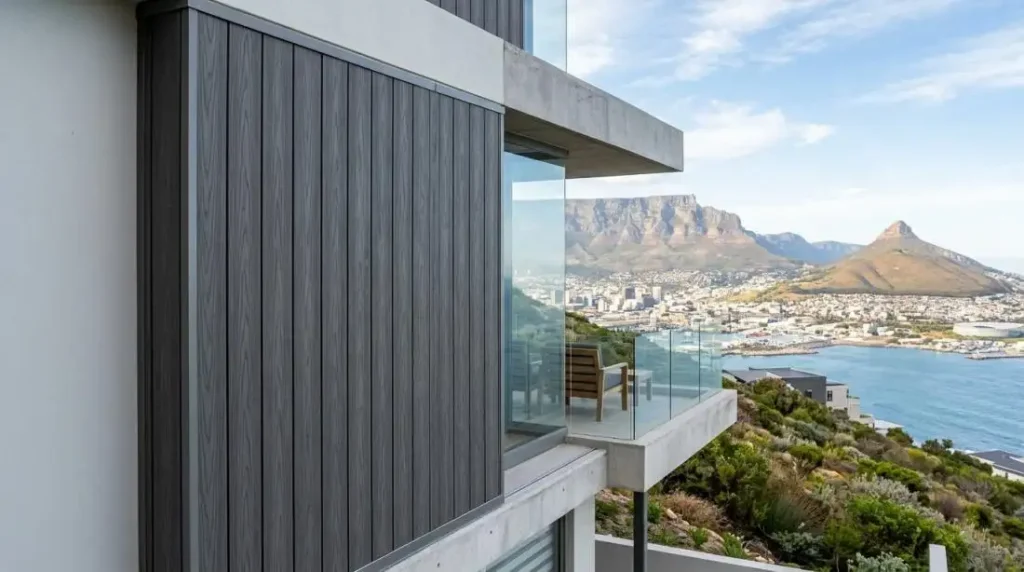
Best Cladding Options for Coastal South Africa
✅ WPC Composite Cladding (Preferred)
This is the preferred cladding in coastal South Africa among suppliers of wall cladding panels in South Africa. These panels are designed with chloride resistance and comply with ISO 9227 (48-hour) salt spray testing, and can safely be used in areas that are in contact with salt air without pitting or causing failed connections.
•Saltwater corrosion resistance: Unlike traditional wood, WPC materials are not susceptible to rot or corrosion from saltwater. The plastic component keeps the saltwater from getting through the material.
•Moisture protection: High humidity and moisture can be damaging to materials. With a volumetric water absorption of under 1 percent, WPC materials are free from the structural swelling and warping caused by high humidity.
•UV Stabilization: The co-extrusion technique incorporates an additional, protective layer that blocks harmful UV rays, which helps maintain both color and structure in the bright coastal sun.
•Termite and Fungus Resistance: ASTM G21 Rating 0 – the non-porous polymer cap prevents wood-decaying fungi from colonizing.
�� Important coastal specification tip: For coastal applications, a smooth or brushed composite surface can retain some moisture on the surface. Textured or grooved profiles allow for better moisture dispersion and should be specified near the coast.
✅ Fibre Cement Cladding
Fibre cement is another option for coastal homes in South Africa. With a mineral composition, fibre cement is resistant to all of the rot, corrosion, and mould, as well as a host of insect and rodent problems. It is also water and weather-resistant. The cladding colors age well with a lovely patina that develops over time, as they use UV-resistant pigments in the manufacturing process.
✅ Metal Cladding with Corrosion Protection
Zincalume panels combine a steel core with a protective zinc-aluminium coating, delivering corrosion resistance that outperforms plain steel. When finished with exterior coatings, they retain colour and form across years of sun and salt spray.
Materials to Avoid in Coastal Areas
•Natural wood that has not been treated: rots, warps, and is prone to termites
•Normal steel without a marine grade coating: speeds up rust in salty air
•Smooth, non-textured composite finishes: can hold moisture against the wall
Zone 2: The Highveld (Gauteng, Johannesburg, Pretoria, Mpumalanga)
Challenges with Climate
For the Highveld, there are other main challenges when it comes to wall cladding that the South African installer has to face:
•Extremely high amounts of UV rays (due to being high up with a high elevation)
•Large differences in temperature (very hot summertime days that can be more than 35 degrees Celsius and very cold wintertime days that can be close to freezing)
•A hailstorm can come with high winds and therefore damage materials that are poorly chosen and are not resilient
These are in addition to dust and dryness from a lack of humidity
Because of all of this, Johannesburg has a unique climate that especially needs to be taken into consideration when choosing wall cladding materials.
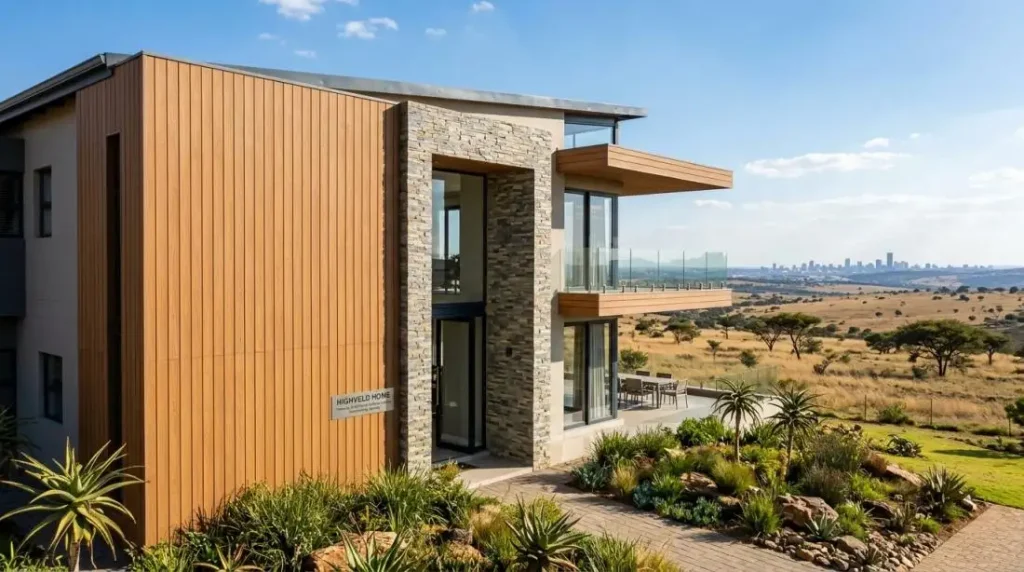
Best Cladding Materials for the Highveld
✅ Cladding that is a WPC Composite that contains UV Stabilizers
Because Johannesburg is so dry and hot (as are most of the regions east of that in South Africa), composite wall cladding planks can be a good option because they are moisture and UV resistant.
•Blocks over 99.8% of UV light when engineered with PMMA-based UV technology
•Resists cracking, swelling, and fading under prolonged UV exposure
•Low thermal expansion rate prevents buckling or warping due to fluctuating temperatures
✅ Fibre Cement Cladding with UV-Resistant Pigments
Fibre cement is UV resistant and keeps its colour and structure even with years of exposure to the sun. With its low thermal expansion, it will not warp or buckle even under changing or extreme heat.
�� Note for Highveld specifiers: While fibre cement performs well, be aware that it requires repainting over time and can become brittle under extreme thermal stress or impact.
✅ Stone Cladding
Stone cladding wall panels offer natural thermal mass – storing the sun‘s heat during the day and releasing it as evening cools. This property is particularly beneficial for the Highveld's dramatic day-night temperature swings. Heavyweight construction with relatively compact forms performs well in this region.
Materials to Approach with Caution
•Unprotected timber: Requires rigorous ongoing maintenance under intense UV
•Standard painted surfaces: Frequent repainting cycles become expensive
•Poorly installed lightweight systems: Can struggle with thermal movement
Zone 3: Inland Arid and Interior Regions (Karoo, Northern Cape, Free State)
Climatic Challenges
South Africa's interior and arid regions present their own distinct demands:
•Extreme diurnal temperature ranges: Hot days to freezing nights
•Low humidity: Accelerates drying and material movement
•Dust and wind-blown sand: Can abrade softer finishes
•Limited rainfall but intense when it comes: Flash flooding can test drainage details
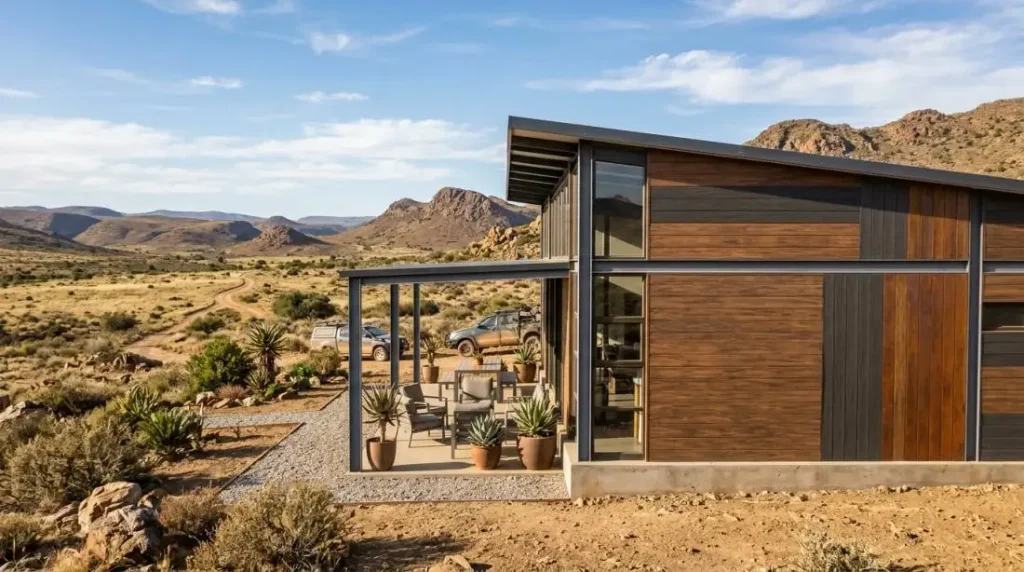
Ideal Cladding Choices for Inland Regions
✅ WPC Composite Cladding with Thermal Stability
The same WPC wall cladding panels South Africa installers use for coastal regions also perform exceptionally well inland. All materials move in response to temperature changes – some significantly more than others. WPC's engineered composition minimises thermal expansion, ensuring stability across extreme temperature swings.
✅ Clay Brick Cladding
Clay brick construction provides superior thermal comfort and has been shown to use less heating energy than lightweight alternatives, particularly in the warm, dry climates of the southwest. For inland arid regions where insulation matters, heavyweight construction with clay brick cladding is a proven performer.
✅ Fibre Cement
Remaining impervious to rot, extreme weather, and moisture, fibre cement has a life expectancy of 40-50 years. It is even more safe due to its fire resistant properties.
Things to Consider for Installing In All Zones
No matter what type of wall cladding panels in South Africa you select, proper installation is of utmost importance.
•Ventilated cavity: There is a continuous airflow behind the cladding to eliminate moisture. This is especially critical in coastal and Highveld regions
•Use corrosion resistant fixings: Coastal areas need fixings with excellent resistance to salt corrosion, like stainless steel Grade 316
•Hidden clip systems: Allow for proper thermal movement while providing a clean, uninterrupted finish
•Professional assessment: While some aspects like the installation of the rainscreen may be done yourself, coastal requirements and the installation of a rainscreen system would require professional input.
Final Thoughts
When choosing wall cladding panels South Africa, one has to think about the requirements of the climate. Coastal areas need WPC panels with texture to combat moisture, Highveld areas need panels with UV protection and inner regions of South Africa need panels with low thermal expansion. A good investment will contribute to the protection of your business for many years to come.
Hengsu is your solution for panels with 24 years of service (since 1995). Eco-friendly WPC and PVC cladding that helps combat UV and moisture and is easy to install and low-maintenance. Reach out to Hengsu today.
Frequently Asked Questions (FAQ's)
1. Can I put up the same wall cladding panels in the Coastal and Highveld regions?
No. Highveld regions put UV rays on panels. Coastal regions need cladding panels that protect from Moisture and salt.
2. How long do the WPC composite cladding panels last in South Africa?
Good WPC panels last between 15 to 25 years with minimal care even with the brutal South African salt and sun.
3. Is fibre cement cladding a good fit for the Highveld?
Yes. Just keep in mind it needs a fresh coat of paint every 5–8 years and high amounts of thermal stress can make it break and be more brittle.
4. Can I get WPC cladding installed myself?
You can as long as you use a hidden clip system. Even with concealed clip systems, vent systems, and WPC and PVC rainscreen cladding, we recommend you hire a professional for coastal systems.
5. Where can I get climate-conscious wall cladding systems in South Africa?
For climate-conscious coastal, Highveld, and inland WPC and PVC wall cladding systems you can reach out directly to Hengsu.


