



2026 Eco-Friendly WPC Wall Boards: Core Materials, Structure & Use
Compared to many conventional wall finishes, Eco-Friendly WPC Wall Boards are emerging in 2026 as a practical alternative that delivers cleaner design lines, steady performance, and simpler upkeep. Instead of relying on natural wood that can shift with humidity, WPC boards are engineered for consistency.
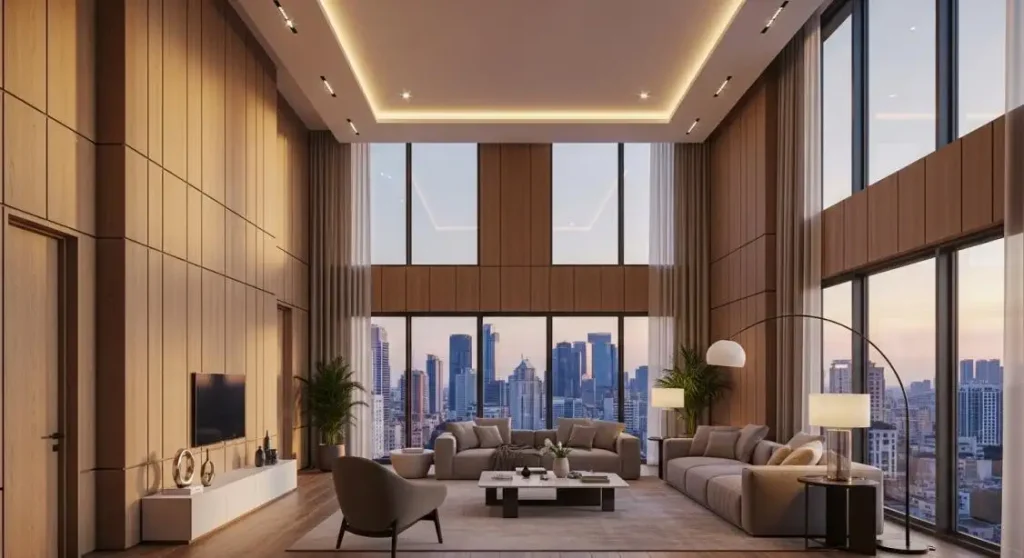
At Hengsu, we manufacture wall board systems for buyers who need an eco-forward material story and predictable results on-site. In real projects, "eco-friendly" only matters if the board installs smoothly, looks consistent across batches, and stays stable after months of daily use.
1) Why Eco-Friendly WPC Wall Boards Matter in 2026
In many markets, "eco-friendly" has moved from a nice-to-have to a procurement requirement. Buyers are now asked to explain material choices, reduce indoor odor and VOC risk, and standardize finishes across multiple sites. That is where Eco-Friendly WPC Wall Boards make sense: they are designed to be repeatable.
From a project perspective, WPC wall systems help solve common pain points:
• More consistent appearance than many natural materials
• Lower risk of warping or uneven joints when installed correctly
• Cleaner maintenance for retail, hospitality, and rental interiors
• Faster renovation speed because panels can be modular
For first-time buyers, the most important mindset is this: WPC wall boards are a system, not a single "board." The material recipe, internal structure, edge profile, and installation method work together. If you only compare surface patterns and ignore structure, you can end up with a product that looks good in photos but behaves poorly on the wall.
2) Core Materials Explained: What "WPC" Actually Refers To
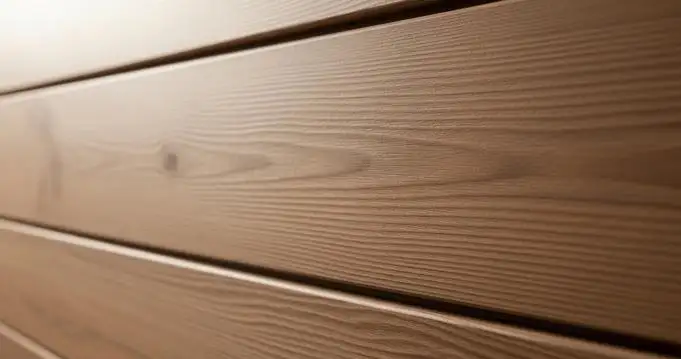
WPC stands for wood-plastic composite, yet that basic description does not reflect differences in structure, formulation, or durability. Two products can both be called WPC while behaving very differently because the formula and processing control are different.
At a beginner-friendly level, Eco-Friendly WPC Wall Boards are usually made from:
• Wood fiber or plant-based filler: helps with rigidity and creates a warmer, more "natural" touch
• Polymer resin (commonly PVC or PE in many markets): improves moisture resistance and manufacturing stability
• Additives (stabilizers, lubricants, impact modifiers, pigments): support processing, reduce brittleness, stabilize color, and improve long-term durability
A common sourcing mistake is assuming "higher wood content = better." In real applications, that is not always true. If the recipe is not balanced, higher filler content can increase moisture sensitivity, raise expansion risk, or weaken surface stability over time.
So how should you evaluate material "eco value" in 2026? Start by defining your use zone:
• Dry interiors (living rooms, bedrooms, hallways)
• Humid interiors (bathrooms in non-direct water areas, laundry rooms)
• Commercial spaces (higher wiping frequency and impact risk)
• Multi-site programs (repeatability and batch control are critical)
At Hengsu, we guide buyers from scenario → material platform → finish method. That approach avoids overspending on features you do not need, while protecting the performance points you do.
3) Board Structure and Profiles: Solid, Hollow, and the "Why"
Solid Vs. Hollow Core: What to Choose
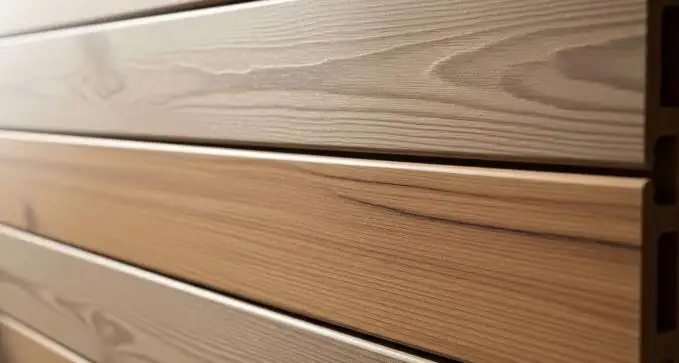
The internal structure affects weight, cost, stiffness, impact resistance, and even the "feel" after installation. Most Eco-Friendly WPC Wall Boards in the market are produced as either solid-core or hollow-core profiles.
• Solid-core boards
Higher rigidity and impact tolerance
Often preferred for commercial corridors, public walls, and high-traffic interiors
Typically feel more "dense" and premium after installation
• Hollow-core boards
Lighter weight and often more cost-efficient
Good for large-area coverage when the wall substrate is flat and controlled
Easier handling for fast renovation programs
A practical screening reference: many interior decorative wall systems commonly fall around 5–10 mm thickness ranges, while stronger profiles can be thicker depending on design and use intensity. Thickness helps with early comparison, but it is not the full story. Two boards with the same thickness can still perform differently because of cell design, resin stability, and profile engineering.
Profiles That Decide Installation Quality
Beyond the core type, edge profile and structure design often decide whether the wall looks clean after installation:
• Tongue-and-groove or click-style edges for alignment and tighter seams
• Hidden-fastener profiles to avoid exposed screws on the surface
• Expansion allowance design to handle temperature-driven movement
All polymer-based composites expand and contract with temperature changes. A reliable program does not "pretend" expansion is not real. It designs for it. If a supplier cannot explain how expansion is handled at joints, corners, and end cuts, the system is not ready for real installation conditions.
4) Surface Finishes and Real-World Durability
Eco-Friendly WPC Wall Boards can create wood tones, marble looks, fabric textures, or matte solid colors. But in real projects, durability is not only about the pattern—it is about how the surface is made.
Common finish routes include:
• Decor film / lamination
Wide design variety and efficient cost control
Performance depends heavily on adhesive quality and process stability
Best for controlled indoor environments with normal cleaning needs
• Co-extrusion cap layer (in some WPC programs)
Stronger stain resistance and easier cleaning
Often used for busier spaces where wiping is frequent
Helps improve surface consistency across repeated use cycles
• Embossing and texture control
Adds realism and helps hide small scratches
Improves "touch feel," especially for wood-grain patterns
For buyers, durability should be judged in daily terms:
• Will it stay clean-looking after repeated wiping?
• Does it resist common stains (coffee, fingerprints, light scuffs)?
• Will the color stay stable across batches and future orders?
• Does the finish peel or bubble under heat/humidity stress?
In 2026, indoor air quality is also a bigger discussion than before. If you are installing Eco-Friendly WPC Wall Boards in apartments, clinics, schools, or offices, ask for compliance support aligned with your market requirements (often VOC-related). A professional manufacturer should have a clear documentation pathway and material traceability, not vague statements.
5) Where to Use Eco-Friendly WPC Wall Boards
Buyers usually make the fastest progress once they stop thinking in generic terms and start matching the board system to the space.
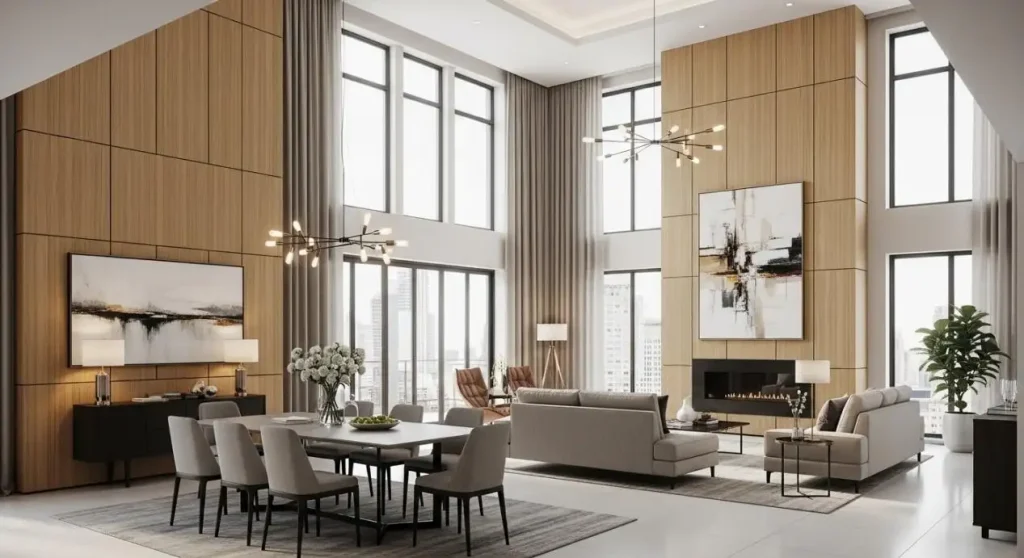
Eco-Friendly WPC Wall Boards are commonly used in:
• Residential interiors: feature walls, TV walls, hallways, bedrooms
• Commercial upgrades: shops, offices, gyms, cafés—especially fast renovation projects
• Moisture-prone areas: bathrooms (non-direct water zones), laundry rooms, basements with controlled ventilation
• Hospitality: lobbies, corridors, guest room feature walls (easy cleaning matters)
One important reminder: even moisture-resistant boards still require correct detailing. Corners, end cuts, and transitions must be finished properly, and the substrate wall must be dry and stable. A "water-resistant board" does not solve a wet wall. If the wall is damp, you are installing a finish on top of a problem.
6) Buying Checklist and Hengsu CTA: How to Source With Confidence
New buyers often ask a practical question: "What should I send the factory so you can recommend the right model quickly?" The best answer is a simple checklist that prevents wrong quoting and avoids sample mismatches later.
• Share installation-site photos and confirm the wall substrate (painted, cement, gypsum/board)
• Define the application scenario (dry interiors, humid areas, commercial traffic level)
• Choose your finish direction (wood tones, marble look, matte solid colors)
• Confirm target panel size and estimated order volume
• Align packaging and shipping plan (single destination or multi-site rollout)
When we receive these details, we can recommend a realistic structure and finishing route based on actual use conditions—rather than guessing from a single pattern photo.
CTA:
Have a specific look in mind for 2026? Contact Hengsu about Eco-Friendly WPC Wall Boards. We’ll match your wood tone, marble look, or matte color with samples, then propose a reliable structure that keeps the wall clean and consistent.


