


Exterior Wall Cladding Panels: Guide to Modern and Durable Facades
Exterior wall cladding panels now stand as one of the most requested facade products to use in homes, commercial buildings, and even renovated buildings. They do not only alter the appearance of a building, but they also help to preserve the building against sun, rain, humidity, wind, and pollution, as well as enhance its durability and minimise its maintenance. With smooth modern construction designs or closer to the woods, exterior cladding panels provide a versatile means to accomplish the performance objectives as well as aesthetics.
This blog discusses the exterior wall cladding panels, the purpose of the panels, the most important material choices, the main benefits of the panels, and the factors that must be considered when selecting a system.
Learning about exterior wall cladding panels
Exterior wall cladding panels are walls or decorative layers, which are placed over an exterior wall surface. Rather than using paint or render alone, cladding provides a second layer, which is a covering to the building envelope. Dependent on the system, the panels can be attached directly to a subframe, or mounted as an element of a rainscreen facade, and they can be included as an air cavity behind the panels.
The solution is a cleaner/more engineered facade solution- particularly in buildings requiring greater weather resistance and a durable finish.
The reason behind the popularity of exterior wall cladding
TConventional exterior finishes (paint, plaster, cement render) may appear nice, however, these types of finishes also tend to need frequent repainting, patching and repair. Surface aging is increased in austere environments such as intense sun rays, heavy rainfall, coastal air, and high pollution. The reason why cladding panels are used is that, they allow the buildings to take longer before they lose their appearance and the maintenance cycle is shortened.
They can also be used extensively in renovations since they do not involve full demolition of the existing substrate since they can be used to cover stained walls, cracked or uneven ones.
The main advantages of the exterior wall cladding panels
1) Greater weather resistant properties
Exterior cladding is an other line of protection against rain, UV, a change in temperature, and airborne pollution. This assists to curb surface wear and protects the wall that is held back by the underlying wall against direct confrontation with hostile conditions.
2) Improved control of water and moisture particularly through rainscreen designs
Most recent facade designs rely on a concept of the rainscreen: the panels are mounted with an empty space behind the panel, which allows air to circulate and water to drain. Should there be any water behind the panels, the cavity can assist in drying the water instead of being tightly stuck on the wall. This will help to promote healthier wall performance as well as minimize risks associated with moisture when well outlined.
3) Long lasting and with minimal maintenance
In comparison to the painted finishes which could fade or peel some exterior cladding panel can be designed to be durable outdoors.The outcome is usually a reduced number of touch-ups in the long run and a front which remains aesthetically the same every year.
4) Major design flexibility
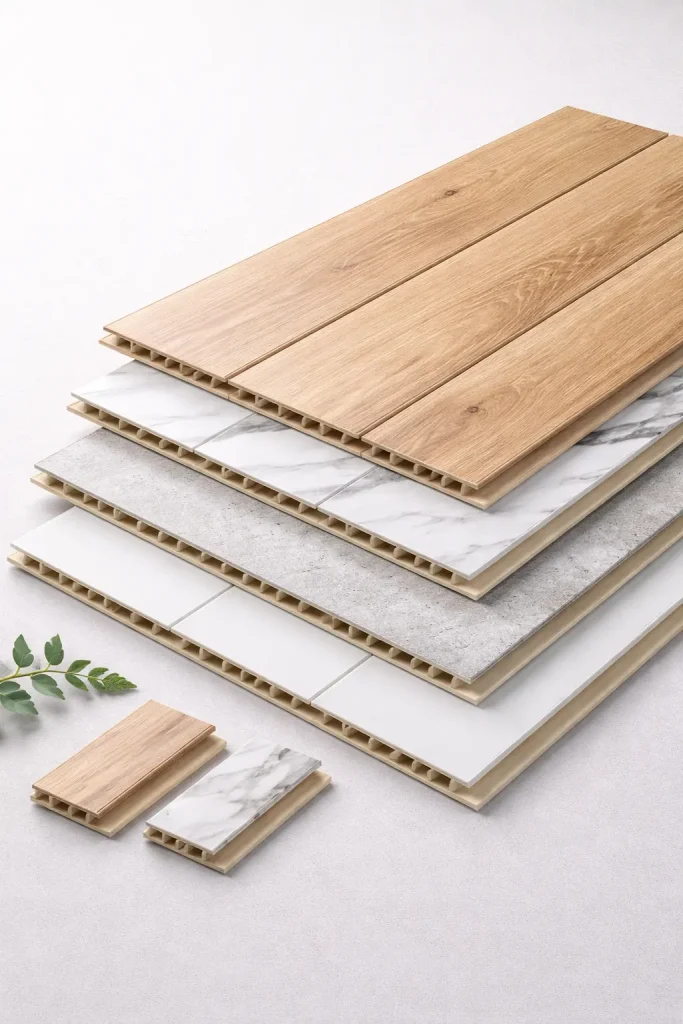
Outside finishing sheets are available in numerous finishes woodgrain, stone appearance, concrete appearance, metallic attires, and modern solid color. This enables the architects and home owners to build bold and modern looking fronts or more natural and upscale fronts without using heavy or labor intensive materials.
The modern box-style architecture can be easily attained with the right panel choice and feature areas (as entrances or balcony walls) with emphasis or contrast with two finishes.
5) Faster renovation upgrades
One of the renovation solutions that can be effective is the cladding of panels, since they can easily be installed compared to re-creating a wall finish that is damaged. In case of commercial properties, it can minimize down time. In the residential projects, it might reduce the duration of the entire project and ensure that the area of work remains cleaner.
Popular exterior wall veneer panel materials
The panels of exterior cladding can be of various families of materials and all these have their own benefits. The most suitable one will be based on climate, design objectives, performance, and the budget.
High-pressure Laminated Wall Cladding
HPL façade panels are common in the rainscreen systems because of their durable surfaces and stability. They are found on contemporary business premises, schools and multi-storey developments where having a long lasting finish is required.
Fiber Cement Panels
Fiber cement is reputed to be strong and suitable in the outdoors. One of the applications of it is the exterior of residential and commercial buildings because it is stable and can withstand weather conditions.
Metal Composite Panels (ACP/Aluminum Composite)
Metal composite panels provide clean and modern appearance which is popular in commercial fronts. They are able to produce an architectural finish which is sharp and has powerful visual lines.
WPC and Composite Cladding
Decorative exterior areas are commonly done with wood-plastic composite, particularly where the appearance of a natural timber is needed with less maintenance. Suits on product are based on the conditions of exposure and system design.
Stone and Faux Stone Panels
Stone provides a premium and high-end look. Composite or faux stone panels will be able to save weight and hasten the erection process without compromising appearance.
Exterior cladding panels are commonly found where cladding is concerned
Whether it is a building or not, exterior wall cladding is not confined to the type of building.Rubber stamps of all kinds are used in the following fields:
- Entrance feature wall and house facade
- Usable apartments and mixed-use
- Leisure spaces, patios and balconies
- Exteriors and branding areas of the shops
- Hotels and hospitality exterior
- Business and office buildings
- Renovation works involving old or deteriorated exterior walls
Cladding is applied selectively many designs apply cladding only on feature sections.
Considerations to make before adopting exterior cladding system
Exterior cladding must be selected like a system rather than a surface finish to achieve the best results. The following are the key considerations to be made:
1) Climate and exposure
Does the project lie in a humid, coastal, rainy or sunny place? Depending on the panel type, UV stability, moisture resistance and salt-air performance can be factors that influence the most appropriate type.
2) Wall structure and subframe
A majority of exterior panel systems need an appropriate under-structure (battens or metal frame). Wall condition, load bearing capacity and the way of installing this panel must be consistent with the panel that is selected.
3) Waterproofing details
Even the so-called water-resistance panels must be properly detailed. Make sure that flashings, panel edges, corners, joints and all window and door openings are well detailed.
4) Local compliance and fire performance
The requirements of the exterior facade may differ according to the country and kind of project. Early fire rating, smoke performance, and code compliance are to be verified, particularly when it comes to high-rise or people structures.
5) Uniformity in color and guarantee of its products
In case the building gets intense exposure to the sun, it is worth selecting panels that are tested to perform well in the UV and with a good warranty. Stability of color is important in large facades since disproportionate fading is highly evident.
Conclusion: where the exterior protection is combined with modern design
The exterior wall cladding panels are popular as they provide a unique service of having a combination of strong weather protection and long-term durability, flexible aesthetics, and less maintenance. Cladding panels will also be an effective solution, whether it is a new construction or a refurbishment of an older structure (modern facade), yet it will not only look high-end and premium but also practical.