



What Are Wall Cladding Panels? The Practical Guide to Homeowners, Designers and Builders.
Wall cladding panels are decorative and protective covers that are mounted on the surface of a wall- either inside or outside. Consider them as a sort of a skin on a building: they can be better looking, provide protection against bad weather, and better insulation and less maintenance than a conventional painted or unpainted masonry face. Wall cladding panels can be found in every place today whether it is in the form of a modern home or apartment building, a hotel, office, storefronts, or a public facility.
This guide will discuss the basics of wall cladding panels, their operation, the types of materials used in scalp and the benefits of each panel, their application, and also useful information regarding the selection of a panel type that suits a particular project.
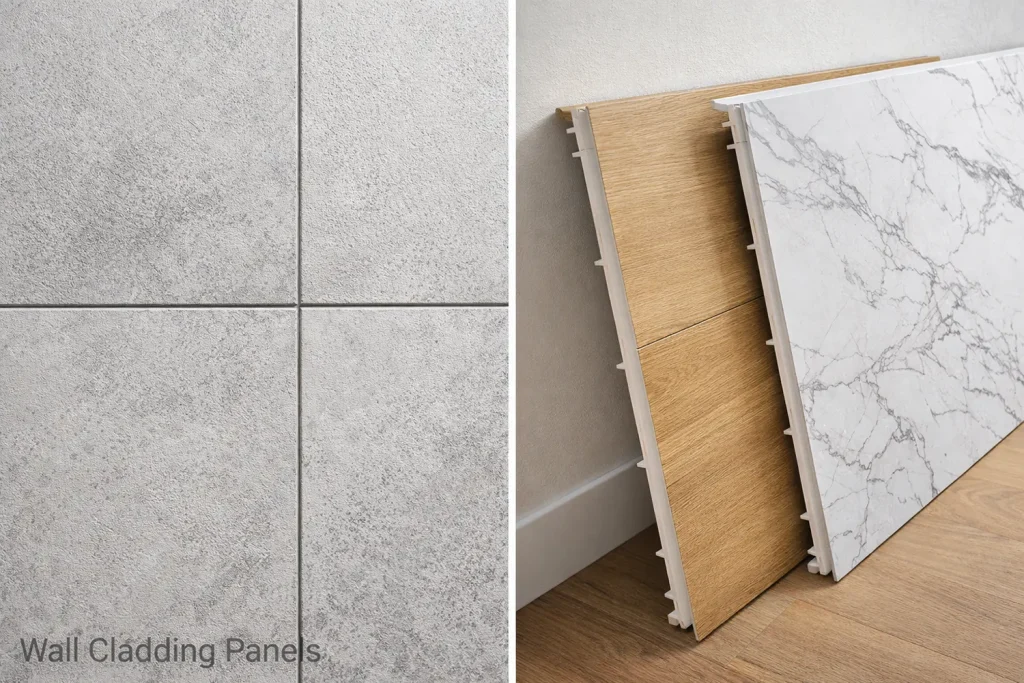
Wall Cladding Panels: Definition and Purpose
Prefabricated boards or sheets that allow attaching to a wall (or subframe that supports it) to form a completed exterior or interior finish are known as wall cladding panels. Rather than using the wall itself to achieve the final appearance and protection, cladding panels offer the extra protection which is capable of:
- Enhance the beauty using contemporary textures and finishes (wood grain, stone, metallic, matte, etc.)
- Improve performance through enhanced thermal comfort, moisture control and in some cases acoustic performance.
- Repair cracks on existing walls when doing a renovation.
- Protects walls against rain, UV rays, temperature changes and impacts.
Depending on the system, cladding can be applied on concrete, brick, blockwork or even old surfaces.
The operation of Wall Cladding Systems
It is just a wall cladding panel and not the complete solution. An average cladding system can consist of:
- Cladding panels- the completed outer layer that is visible.
- Frame/battens (option) -They assist in maintaining a flat wall and allow air passage behind the panels.
- Fixing solutions Secure fix using screws, hidden clip, rails or interlocking designs to provide a clean finish.
- Insulation (Optional) - this is placed at the back of the cladding to enhance thermal efficiency.
- Membranes (primarily used on the outside) - water and moisture protective covers.
- Trims and accessories corner products, end caps, flashings, and clean detailing and weather proofing sealants.
In exterior cladding, a wide range of systems is planned in the form of rainscreens: the water can be trapped between panels, which can be drained and ventilated to ensure that the wall dries within a short time span and eliminates the possibility of moisture.
When it comes to the interior cladding, it is often centered around the aesthetics, durability and simplicity in cleaning.
Popular Wall Cladding Panels Materials.
Wall cladding material There is no best wall cladding material. The correct option will rely on the budget, weather, fire necessities, design objectives and maintenance anticipations. The most widespread categories are the following:
1) WPC (Wood Plastic Composite) Wall panels
WPC panels combine wood fibers with polymers, creating a durable product that often mimics wood grain. They’re popular for both indoor and outdoor feature walls.
Pros: attractive appearance, high level of durability, and low maintenance in most cases.
Notes: performance is determined by the material formula and manufacturing quality- always check on the compliance of the material to the target market in terms of UV resistance and fire-rating.
2) PVC Wall Panels
PVC panels are light weighted and are extensively applied in interior areas like bathrooms, kitchens, corridors, and commercial areas where commercial areas require easy to clean surfaces.
Benefits Waterproof, affordable, and easy to mount.
Before selection: performance- It can be variable- make sure the performance is up to impact and fire standards needed.
3) Metal Wall cladding (Steel / aluminum)
Metal clad presents a modern architectural appearance and is typical of commercial properties and modern houses.
Advantages: good, smooth look, long-lasting service.
Considers: is it possible to depend on thickness; coastal regions may need special corrosion-resisting coating.
4) Fiber Cement Panels
Fiber cement is a strong and stable material that is often utilized as an exterior facade.
Pros: they are highly resistant to the external environment, do not alter their shape with time, and generally perform well in fires.
Note: panel is more weighty and may need an extra sturdy fixing method and it should be cut with adequate equipment and safety.
5) HPL (High-Pressure Laminate) Panels
HPL is very popular in exterior rainscreen facades and indoor locations with heavy traffic.
Merits: extremely tough surface play with an expansive variety of colours and textures.
Additional notes: the general system prices might be greater, and the installation is usually based on the engineered solutions in fixing.
6) Stone, Faux Stone, as well as Composite Stone Panels.
The traditional option when it comes to designing a luxurious, statement-based facade or feature wall.
Advantages: high quality design, great image.
Remember that natural stone is rather weighty and may require the reinforcement, whereas faux or composite materials are not heavy and can vary in terms of realism and the overall level.
The major advantages of Wall Cladding Panels.
Enhanced Appearance
Cladding of panels enables the conversion of dull walls into a luxury surface with uniform types of patterns and finish.They are mainly applied to feature walls, retail branding displays as well as a contemporary box-style building design.
Increased Protection against Exposure to weather.
EExterior cladding also gives a protective coating that aids to protect the structural wall against direct rain, UV and extreme temperatures particularly when placed as a ventilated rainscreen.
Lower Maintenance
Quality cladding panels may be easier to maintain compared to the one that peels or fades. Most of them only require a periodic rinsing or mild cleaning.
Faster Installation
Compared to traditional wet trades such as plastering, tiling or stone masonry, panels are usually designed to be installed faster, which saves time on site.
Potential Thermal and Sound insulations Advantages
Added insulation can be aidsed by cladding depending on the system, and can also assist in minimizing thermal bridging. Certain interior cladding designs also minimize the echo or enhance the comfort in crowded areas.
Wall Cladding Panels Application
Wall cladding panels are very diverse. The panels of wall cladding are usually used in:
- Outside building fronts on houses, villas, apartments, offices and malls.
- Balcony and patio wall surfaces, exterior feature walls and garden boundary walls.
- Walls of interior features within the living rooms, lobbies, and reception areas.
- Bathrooms and kitchens especially in the application of waterproof PVC panel systems.
- Retail shops and business streets where cleaning is not so complicated.
- Resort, restaurant and hotel projects.
The Selection of the Wall Cladding Panels
The following are realistic selection criteria that are of concern in real projects:
- Indoor vs. Outdoor Use
The exterior panels should deal with UV, temperature variation and rain, and wind loads. It is always important to ensure that the panel is outdoor-rated. - Fire Performance Requirements
There are country and type of building fire codes. Request the suppliers to provide test reports and certified fire rating that is mandatory in your project. - Waterproof and Water Repellant
Wet zones (bathrooms) and exteriors use systems that should be able to deal with wet water and dry. - Climate and Location
Beach sites require resistence to corrosion. Hot weather requires UV resistance. - Installation Technique and Underground
Take into account wall flatness, prevailing conditions and labor aptitude. - Surface Finish, Retention of Color, and the Warranty
Wood grain and matte finishes are the trends, but the long-term stability of the color is important, enquire of the UV test and warranty.


