



How to Achieve Minimalist, Wabi-Sabi, and Art Deco Styles with Interior Decorative Wall Cladding
Today's interior wall cladding offers more than just wall protection; it sets the tone for the whole room while keeping your walls safe. Whether you prefer the sleek lines of minimalism, the non-linear curves of wabi-sabi, or the straight lines of art deco, the right wall cladding can help you get the look you want.
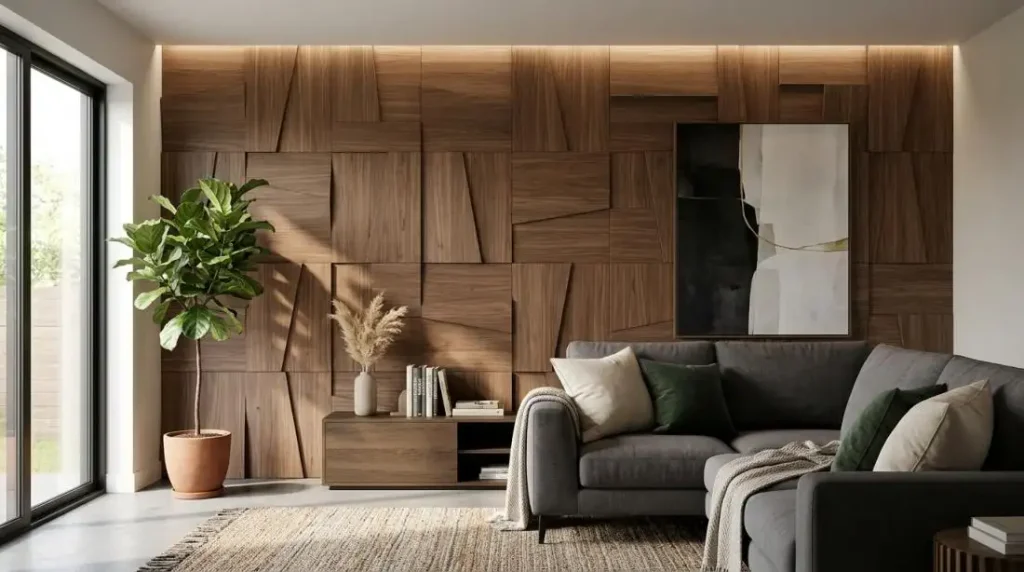
Wall paneling reflects your aesthetics, and you can choose the paneling lines, textures, proportions, and finishes. Below are three aesthetics, and the wall cladding to help you set.
1. Minimalist Style: "Less is More" with Clean Lines
Minimalism is the pursuit of perfection. While this style appears empty, there is always hidden wall cladding that complements the wall. The wall design is just as important as the wall cladding.
Key Design Principles for Minimalist Wall Cladding
•Flush, seamless wall surfaces – No visible ceilings, props, or design. Use large (≥ 4ft wide) wall panels and place them right next to each other.
•Monochrome or neutral colors – Use whites, greys, soft black, and off-whites. Be careful with glossy. Matte wall finishes draw less light and help minimize distracting visuals.
•Panels can also be placed vertically or horizontally to run from the floor to the ceiling to give the appearance of more height or length.
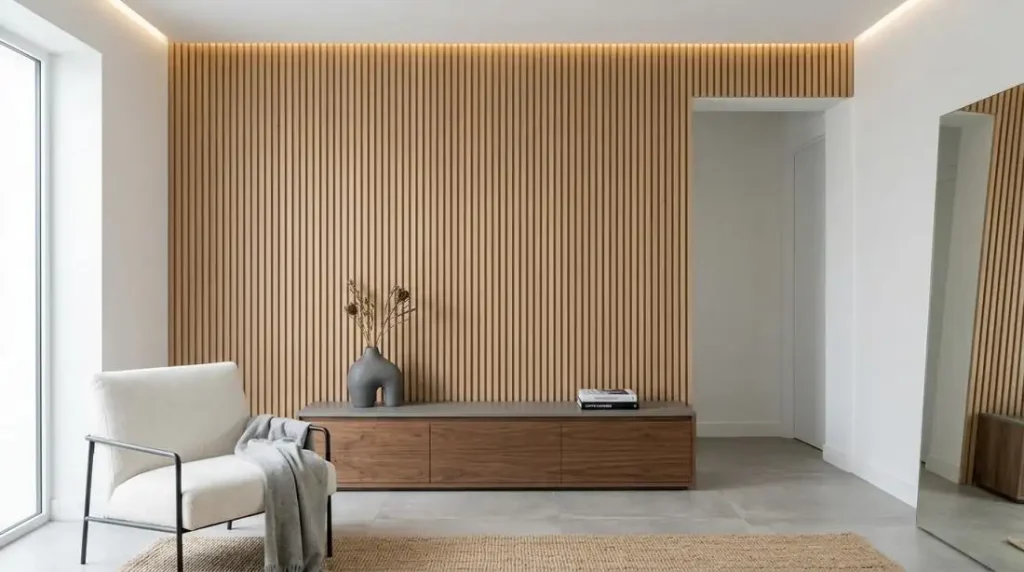
How to Achieve It with Interior Decorative Wall Cladding
•For available paneling options: painted MDF, microcement, or high gloss lacquered boards will work well. Avoid wood panels and textured boards.
•Line treatment: We employ hidden fixing systems (invisible clips or adhesives) to create a uniform flat surface with no screws or clips visible.
•Pro tip: To highlight the effect of the wall cladding appearing to float, install LED lights recessed at the top and bottom of the wall cladding.
✅ Checklist to achieve a minimalist wall cladding using the design principles of Minimalism:
•Precise with no ornamentation,
•Monochromatic
•No Gloss, Semi-Matte, or Matte Finish
•Panels that perfectly fit the height of the walls
2. Wabi-Sabi Style: The Beauty of Imperfection.
Wabi-sabi is the appreciation of the imperfect or unpolished things. Rather than embracing a mass-produced perfected style, embracing the beauty of age and design in interior decorative wall cladding includes authenticity and texture.
Core Characteristics of Wabi-Sabi Wall Cladding
•Surfaces that Leave the Hand of the Artisan – Irregular surfaces can be a result of slight warping, creeping cracks, or hand-carved unevenness.
•Natural materials – Those old windows in the barn can be re-used, bamboo, fiber panels, or untreated travertine.
•Earthy, muted tones – Warm grays, clay browns, moss greens, and oxidized rust.
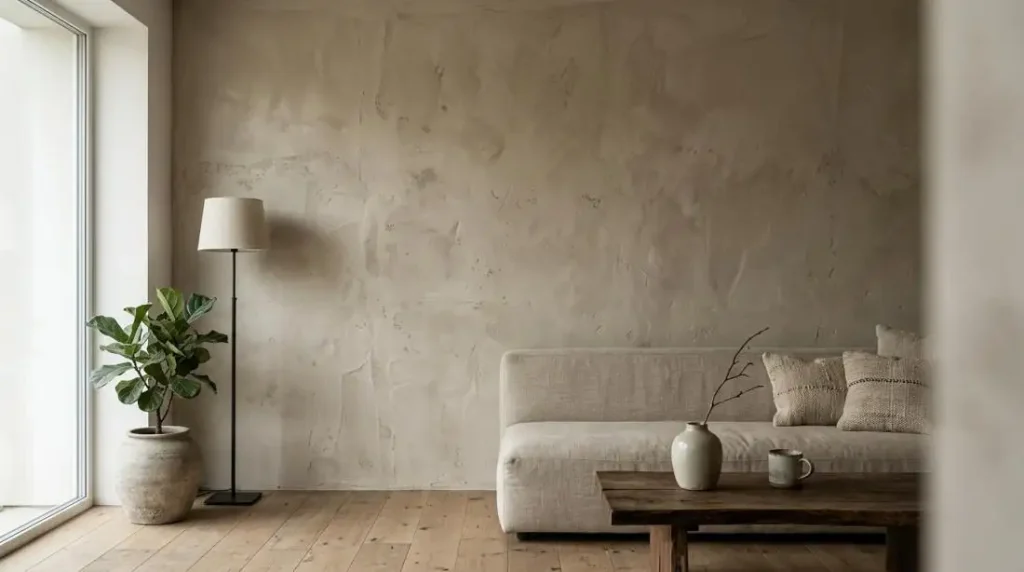
How to Achieve It with Interior Decorative Wall Cladding
• Wall cladding directional lines and grain – No need to pull straight lines. Instead, place vertical shiplap with uneven widths or random width planks, resembling hand-hewn timber. Gaps (deliberately) and (inconsistently) between boards, are good.
• Finishing touches: We do not use high-gloss coatings; therefore, we do not use Polyurethane. Instead, we use a hard wax oil, ensuring the wall cladding is untreated. Wall cladding should be rough and dry to the touch.
• Aging effect: Choose wall cladding from old barns or lime-washed oaks. The old wood tells a story of age and beauty.
• Installation tip: Don't try for perfect corners when installing wall panels. Rather, purposely leave "broken" corners. Blackened metal nails with heads should be used for a detailed finish.
✅ Wabi-sabi materials:
•Reclaimed cedar boards
•Unpolished slat stone
•Woven jute panels
•Shou sugi ban wood
3. Art Deco Style: Geometric, Glammed, and Metallic
This decorative style is loud, luxurious, and perfectly symmetrical. For inner walls clad with decorative wall panels, large geometric shapes with bold colors combined with reflective lines can bring drama.
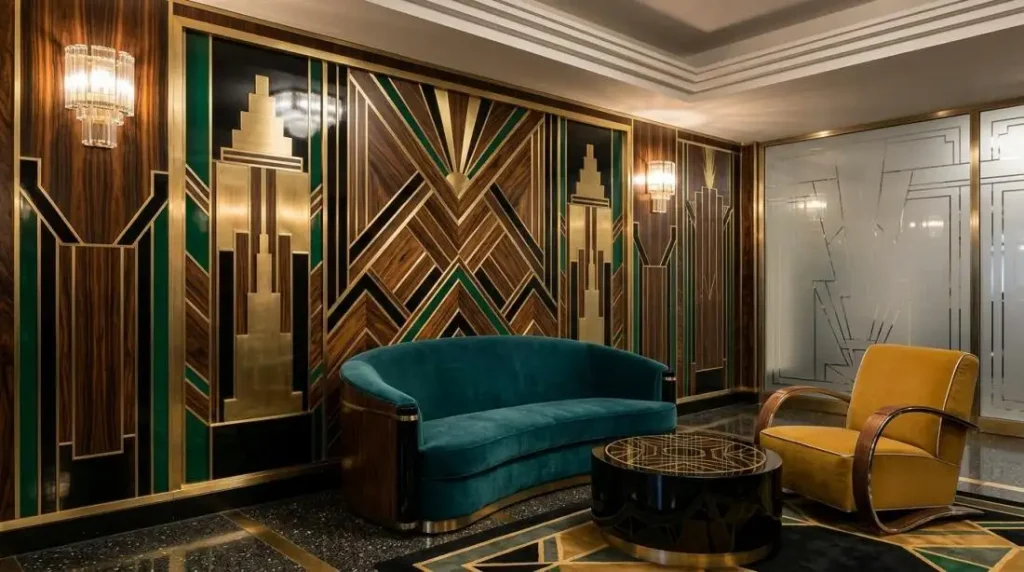
Distinctive traits for wall cladding in the Art Deco style
•Motifs should be created with the repeatable geometric shapes of sunbursts, chevrons, trapezoids, and fan shapes.
•Materials such as high-gloss black wood, polished brass, reflective glass with a black finish, and high-gloss lacquer may be used.
•There should be perfect symmetry. Whatever elements appear on the left side of the wall should be duplicated exactly on the right side.
How to Achieve It with Interior Decorative Wall Cladding
•Modular cladding may be used in zigzag or an overlapping arch. Modular 3D panels may be used that combine stepped or octagonal reliefs.
•Then stick with a dark wood veneer and combine with brass or stainless steel. These should be flush with the wood and line the materials in 5-10mm widths.
•Use black and gold or navy and silver combinations. For emerald green, combine with a brass. The wall cladding should be finished in a high-gloss finish to reflect light.
•Consult a professional installer: A laser level is needed to ensure each metal stripe is in line. An Art Deco illusion is broken if there is even a 1mm gap.
✅ How to quickly create Art Deco wall cladding?
•The base panel must be high-gloss walnut or black ash.
•Choose polished brass or polished chrome strip inlays.
•Patterns should be vertical chevrons or stacked arches.
•Steel angle trims should have machine-applied polished edges.
Choose Your Style
| Feature | Minimalist | Wabi-Sabi | Art Deco |
| Lines | Straight, continuous, hidden joints | Irregular, organic, visible gaps | Geometric, mirrored, metallic inlays |
| Texture | Smooth, flat, non-tactile | Rough, dry, tactile | Glossy, reflective, polished |
| Colors | White, gray, black | Earthy browns, muted greens | Gold, black, deep jewel tones |
| Key material | Lacquered MDF | Reclaimed wood | Brass-inlaid veneer |
| Mood | Calm, orderly | Meditative, cozy | Opulent, energetic |
Let Lines Lead the Way
Interior wall cladding is not just decoration – they tell your story. Embrace the clean horizontal or vertical lines for minimalism. For wabi-sabi, embrace the crooked and worn. For Art Deco, unleash geometry and shine.
Remember that the wall cladding you choose influences lighting, acoustics, and even perceived room size. Start by drawing your intended line patterns on paper. Then, select panels that match those lines in scale, material, and finish.
When you master the relationship between interior decorative wall cladding and line language, you don't just decorate a wall—you compose an experience.
Frequently Asked Questions (FAQ)
1. Can I mix two styles of wall cladding in the same room?
Yes, but do so carefully. For example, use minimalist interior decorative wall cladding on three walls and a single wabi-sabi accent wall. Avoid combining Art Deco with wabi-sabi in one small space—they send conflicting visual messages.
2. Is wall cladding for all walls in a room costly?
It depends on some factors. Minimalist MDF panels are on the cheap end at $5 to $15 per square foot. However, the Wabi-sabi panels will set you back a bit more since sourcing becomes more expensive, costing around $10 to $30 per square foot. The most expensive option is the Art Deco panels ($30 + per square foot) with brass inlays. You can save some costs by only using wall cladding on one feature wall.
3. What is the best way to clean wall cladding while preserving the finish?
•High-gloss panels: A soft microfiber cloth with water will suffice.
•Wabi-sabi wood: Only dry dust. Do not use any moisture or cleaning products.
•Art Deco panels: Use a specialized brass or chrome cleaner, and only use it sparingly.
4. What styles of wall cladding are best suited for small rooms and/or rooms with lower ceilings?
Minimalist panels, with vertical wall cladding that goes all the way from the floor to the ceiling, is best for small rooms and lower ceilings. For this same size room, the Wabi-sabi panels, with horizontal lines that are uneven, can make it feel even smaller, so only use them on one shorter wall. Art Deco panels can make the room feel even more busy, so they are not a good fit for smaller spaces. However, this style is great for a small dining room.
5. Can I do this as a DIY wall cladding project?
Yes, the Minimalist style panels that come with a large format and are self-adhesive as well as Wabi-sabi floating panels are a good fit for DIY. However, the Art Deco style that has metallic inlays is more complicated due to the symmetry that is offered, and should be done professionally.


