



PVC vs. Aluminum vs. Fiber Cement – What's the Real Difference in Outdoor Waterproof Wall Panels?
When choosing Outdoor Waterproof Wall Panels, most homeowners and builders focus solely on “waterproof” claims. But the material behind that property determines everything—durability, maintenance, cost over 20 years, and even how the wall breathes.
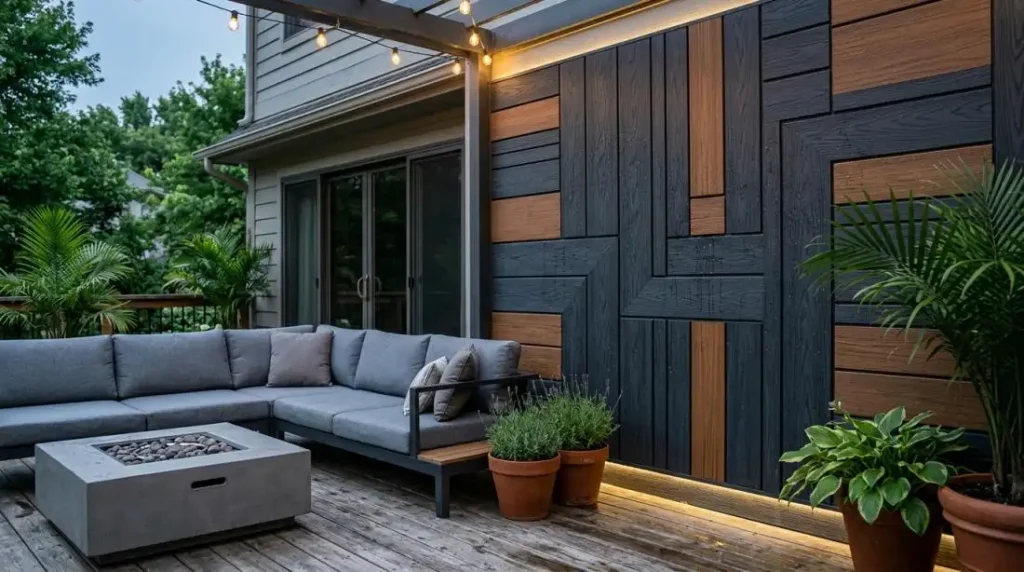
Three materials dominate the market: PVC (Polyvinyl Chloride), aluminum, and fiber cement. Each has a distinct scientific mechanism for repelling water, resisting UV damage, and handling thermal stress.
This guide will give you the basic material science of Outdoor Waterproof Wall Panels, allowing you to make better climate focused decisions.
1. PVC Outdoor Waterproof Wall Panels: Closed-Cell Chemistry
PVC panels are made of either solid vinyl or a solid rigid foam. Their waterproofing occurs because of a non-porous molecular structure as a result of plasticizers and stabilizers to form a surface with almost no water absorption, rated below 0.5% by ASTM D570.
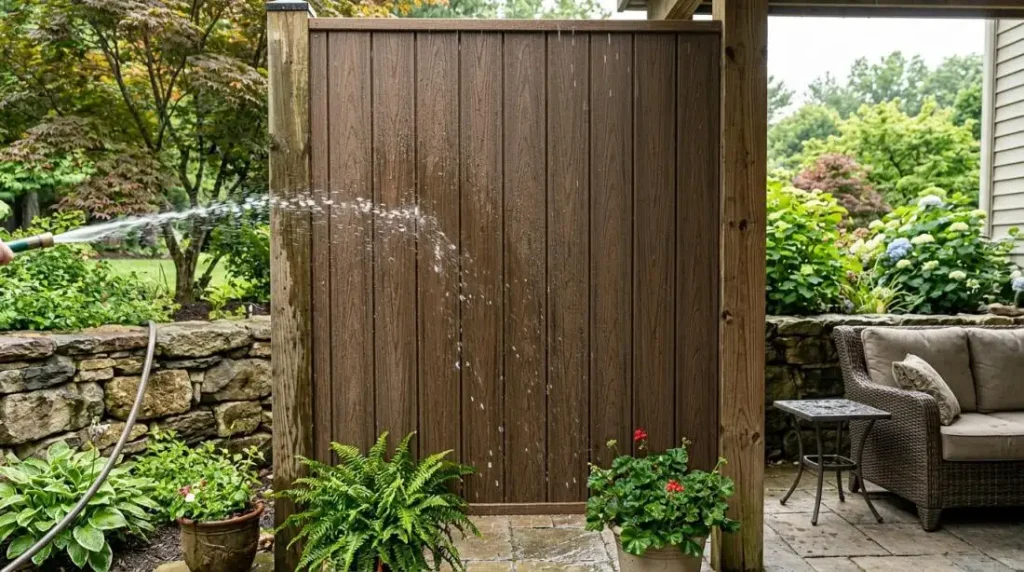
Water Resistance of PVC
• Hydrophobic Backbone: PVC will synthetically repel water due to chlorine atoms.
• Co-extruded Cap Layer: Since UV Degradation and Surface Sealing occur with Co-Extruded Cap Layers, pure acrylic or ASA layers are used.
• No Capillary Action: Like wood or cement, PVC has no open pores and therefore will not absorb any moisture
Pros of PVC Outdoor Waterproof Wall Panels
• They are lightweight (about 1.5–2 kg/m²) and can be easily installed with a DIY approach.
• Naturally resistant to rot, insects, and salt spray.
• Flexible – won't crack under minor building movement.
• Low cost upfront.
Cons
• Thermal expansion – up to 5 mm per meter for a 50°C change. Poor installation (tight seams) causes buckling.
• Brittle below -20°C – impact can shatter panels.
• VOC concerns – some low-quality PVC releases plasticizers over time.
Best Applications
Mild climates, coastal areas (salt-resistant), budget-friendly siding, accent walls.
✨ Example: A beach house in Florida using PVC Outdoor Waterproof Wall Panels saw no swelling after 3 hurricane seasons – but dark colors faded by 15% due to UV.
2. Aluminum Outdoor Waterproof Wall Panels: Oxide Layer Engineering
Outdoor wall panels created with aluminum sheets that have factory-applied, waterproof, protective coatings consist of 2 barriers: the outer layer of naturally-occurring aluminum oxide (Al₂O₃) and either polyester or a PVDF (polyvinylidene fluoride) coating.
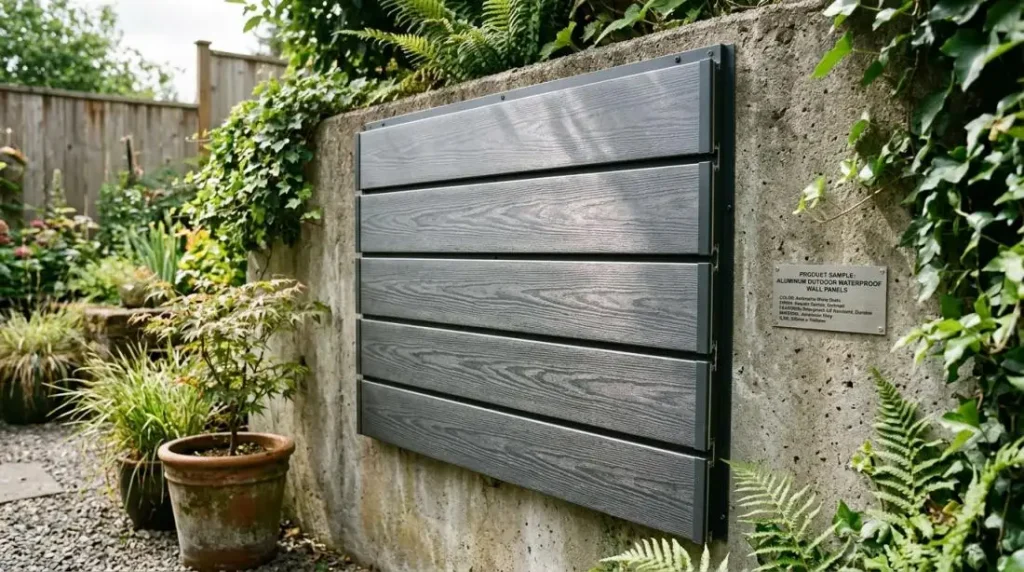
How Aluminum Repels Water
• PVDF coating: A fluoropolymer provides contact angles > 110° (superhydrophobic), which allows the water to bead and roll off.
• Interlocking seams: Most aluminum Outdoor Waterproof Wall Panels use hidden fasteners with rubber gaskets, eliminating screw holes as entry points.
Pros
• Extreme durability – 40+ years with PVDF coating.
• Resists high wind (tested up to 150 mph) and hail.
• Non-combustible (Class A fire rating).
• 100% recyclable.
Cons
• High initial cost – often 3-4× PVC.
• Thermal conductivity – aluminum transfers heat/cold, increasing building energy load (requires insulation backer).
• Galvanic corrosion if in contact with steel or copper fasteners.
Best Applications
• High-wind zones (typhoon areas), commercial buildings, modern architectural designs, wildfire-prone regions.
�� Pro tip: Always use stainless steel or aluminum screws. Carbon steel will rust and cause pitting in the aluminum.
3. Fiber Cement Outdoor Waterproof Wall Panels: Hydrophobic Infusion
Fiber cement is a composite of cement, sand, and cellulose fibers. By itself, it's porous – but factory-applied hydrophobic treatments make it waterproof. The process involves silane/siloxane sealants that bind to the cement matrix and provide a seal that is water repellent and gas permeable.
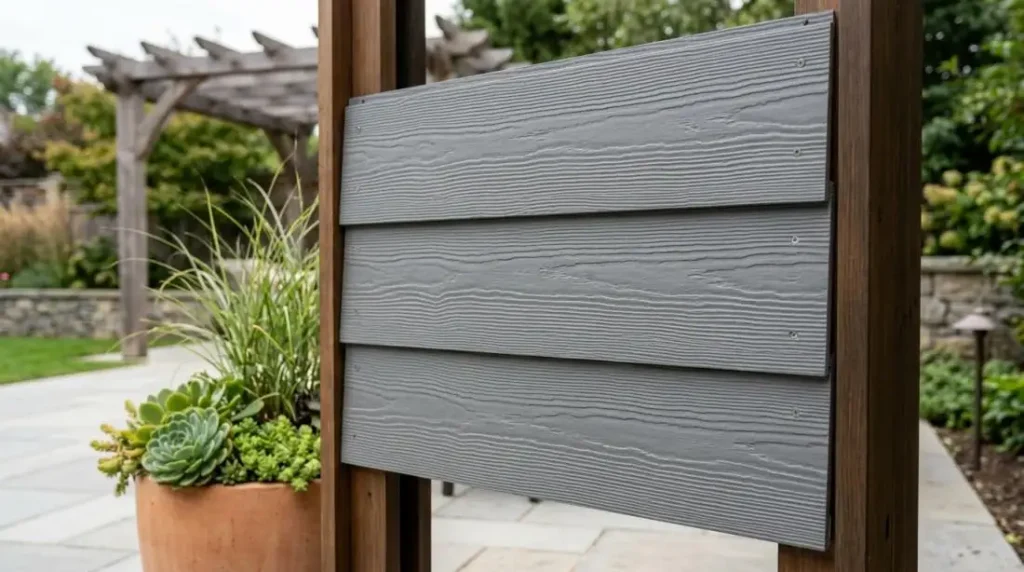
How Fiber Cement Controls Water
• Micro-pore blocking: The water-repellent compounds get absorbed into the micro-pores and block them while still allowing gas and water vapor to pass through.
• Low water absorption: Treated panels achieve <10% absorption vs. untreated cement at 20%+.
• Pressure-equalized rain screen design: Most installations use a ventilated gap behind the panel, allowing any moisture that penetrates the joint to drain and dry.
Pros
• Very high impact resistance – can withstand baseball thrown at 80 mph.
• Excellent fire resistance (Class A, non-combustible).
• Looks like natural wood or stucco – embossed grain patterns.
• Resists freeze-thaw cycles (tested ASTM C1185).
Cons
• Heavy – 15–30 kg/m², requires reinforced structure and professional installation.
• Abrasive to cut – needs diamond-tipped blades and dust control (silica hazard).
• Surface coatings fade in 8-12 years; must be repainted.
Best Applications
• Mountain lodges, wildfire zones, high-impact areas (schools, parks), homeowners wanting wood look without flammability.
�� Note: Never skip the back-ventilated air gap. Even the best treated fiber cement Outdoor Waterproof Wall Panels can trap moisture if installed directly on a solid wall.
Side-by-Side Comparison Table
| Property | PVC | Aluminum | Fiber Cement |
| Water absorption | <0.5% | 0% | 8-10% (treated) |
| Thermal movement | High (5 mm/m per 50°C) | Moderate (2.4 mm/m) | Low (0.6 mm/m) |
| Weight (kg/m²) | 2–3 | 4–7 | 18–30 |
| Fire rating | B/C (self-extinguishing) | A (non-combustible) | A (non-combustible) |
| 20-year cost | Medium (replacement likely) | Low (no maintenance) | Medium (repainting) |
| Best climate | Temperate, coastal | Hot, windy, marine | Cold, wildfire, snowy |
Which Outdoor Waterproof Wall Panels Should You Choose?
The “best” material depends on your site's physics, not just aesthetics.
�� Choose PVC if you need lightweight, cheap, and live in a moderate climate without extreme cold or fire risk. Avoid on south-facing walls with dark colors (heat distortion).
�� Choose Aluminum if you face hurricanes, wildfires, or want a true 40-year maintenance-free solution. Opt for the more expensive option. Then, add rigid insulation behind it to mitigate thermal bridging.
If you need or want natural textures, something that stands up to impacts, or are located in a freeze thaw zone, Fiber Cement is the choice for you. Commit to proper installation (air gap, breathable membrane) and repaint every decade.
Final Thought: Waterproof ≠ Vapor-Proof
All three Outdoor Waterproof Wall Panels effectively block liquid water. But only fiber cement (with a vented rain screen) and aluminum (with a drained cavity) manage vapor diffusion. PVC, if sealed tight, can trap condensation from inside the wall – leading to hidden mold.
Therefore, always pair your chosen panel with a moisture management strategy that includes a weather-resistant barrier (WRB) and drainage plane. That's true material science in action.
Frequently Asked Questions (FAQ)
Q1: Can I place Outdoor Waterproof Wall Panels on top of old siding?
A: It depends. Aluminum and fiber cement panels need an air gap with a drainage furring strip. PVC can be mounted directly, but there's still the moisture problem. Check first and add a water resistant barrier if needed.
Q2: Is Outdoor Waterproof Wall Panels painting/sealing needed?
A: PVC and aluminum that has a factory PVDF coating don't need painting for over 20 years. Fiber cement needs painting every 8–12 years. Aluminum that has no coating and bare fiber cement needs immediate sealing when installed.
Q3: What material works best for very cold climates (like -30°C)?
A: Fiber cement works best. PVC can crack at -20°C and aluminum, that does contract more than PVC, can still be used with the right thermal break fasteners.
Q4: How eco-friendly are the panels?
A: Aluminum is the best as it is 100% recyclable and has recycled content. Fiber cement has low embodied energy but is heavy. PVC is hard to recycle, so, look for phthalate and lead free to be more environmentally friendly.
Q5: How do I clean Outdoor Waterproof Wall Panels?
A: Do not apply a pressure washer over 100 bar. PVC scratches are hard to remove, and never use acid on aluminum. It will remove the oxide layer which can further damage the aluminum.


