



Outdoor Balcony Flooring: How To Pick Safe Slip-Resistant Surfaces
Outdoor Balcony Flooring is not just a design choice. It is a safety decision that affects daily walking, cleaning, and long-term maintenance. From Hengsu’s manufacturing view, the safest projects start with one simple goal: choose a surface that keeps traction when it is wet, dusty, or slightly greasy from outdoor life.
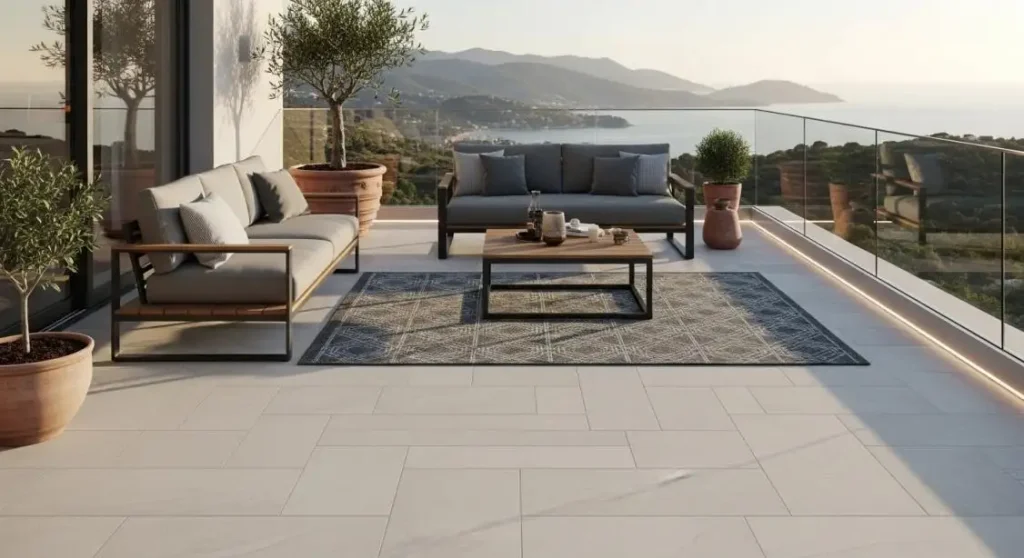
Why Slip Resistance Is the First Balcony Requirement
Balconies are exposed to rain, condensation, cleaning water, and temperature swings. Even a “nice-looking” surface can become risky if it turns slick after a light drizzle. Slip incidents usually happen during normal routines—watering plants, taking out trash, stepping outside in socks, or carrying parcels.
For new buyers, it helps to think in two layers:
✓ Surface traction (how the top texture grips shoes)
✓ Water control (how fast water drains away instead of forming a thin film)
If either layer is weak, Outdoor Balcony Flooring can feel unsafe even when it is new.
Understand Slip Ratings Before You Compare Materials
Many buyers see a single number and assume it means “safe.” In reality, slip resistance has multiple test methods, and each tells a different part of the story.
DCOF, R-Rating, and PTV Explained in Plain Language
DCOF (Dynamic Coefficient Of Friction) is often used for tile surfaces. In the U.S., ANSI A137.1 references a minimum wet DCOF of 0.42 for interior level spaces expected to be walked on when wet.
For outdoor walking zones, some guidance points higher. One ANSI-related summary of NFSI B101.3 notes ≥0.60 for walkways or patio areas that could be exposed to water (with footwear).
Also remember: no floor is truly “slip proof,” so site conditions still matter.
- Rating (DIN 51130) is common in Europe. It is a ramp test for “shod feet,” usually R9 to R13, with higher numbers meaning higher slip resistance.
As a simple buyer rule: R10–R11 is often considered more suitable for many outdoor or semi-outdoor situations than R9, depending on exposure and slope.
PTV (Pendulum Test Value) is widely used in the UK and other markets. A PTV of 36+ is commonly described as “low slip potential,” while 25–35 is “moderate.”
Hengsu Tip For New Buyers: pick one rating system you will standardize on (DCOF, R-rating, or PTV), then request test evidence for your shortlisted Outdoor Balcony Flooring options. Mixing systems without context often causes wrong comparisons.
What Makes a Balcony Surface Slip-Resistant in Real Life
Slip resistance is not only about “rougher is better.” The safest Outdoor Balcony Flooring balances traction with cleanability.
Here are the practical features that actually change performance:
✓ Micro-texture that grips even with a thin water film
✓ Drainage pathways (gaps or channels) that reduce standing water
✓ Stable contact (no rocking tiles, no loose edges)
✓ Dirt tolerance because dust + moisture can reduce traction quickly
One example from decking-related slip testing shows how surfaces can be measured with friction values (wet). A published technical bulletin reports an average wet static COF of 0.73 and wet dynamic COF of 0.45 for a tested wood surface, while also warning that “grooved” surfaces may not always be more slip-resistant than smooth ones due to reduced sole contact and debris trapping.
The buyer takeaway is simple: choose textures that keep contact area and stay easier to clean.
Material Options for Outdoor Balcony Flooring
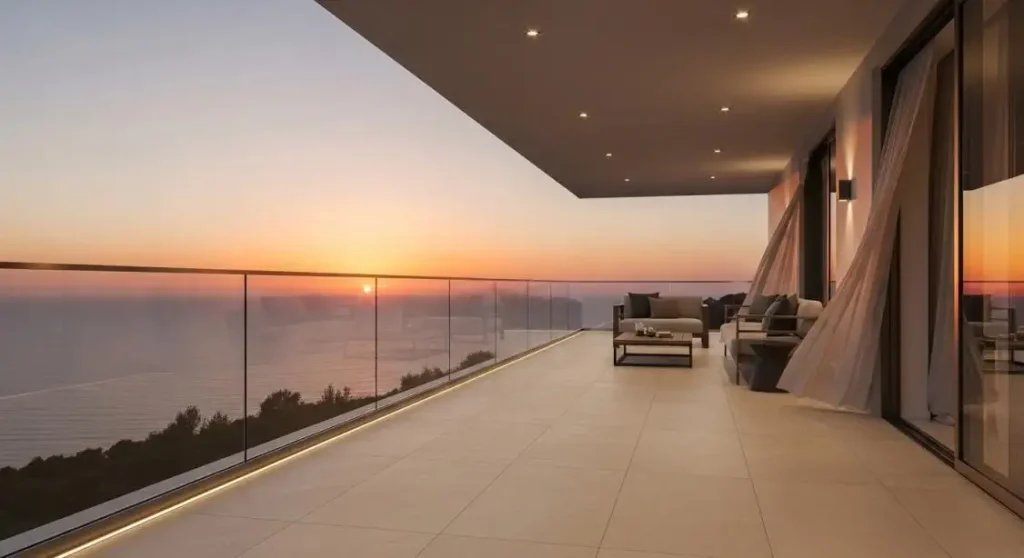
From Hengsu’s production perspective, most balcony projects fall into three common material directions. Each can be safe, but each needs the right surface finish and installation logic.
1) Anti-Slip Porcelain Or Ceramic Pavers
These are popular for premium appearance and stain resistance. The key is to select outdoor-intended textures and ask for slip documentation (DCOF / R-rating / PTV). Be cautious about assuming a minimum threshold automatically means “safe everywhere.”
2) WPC (Wood-Plastic Composite) Decking Or Deck Tiles
Composite decking is comfortable underfoot and often chosen for barefoot-friendly balconies. However, slip behavior depends on the surface embossing, contamination, and maintenance. Some testing discussions show wet traction numbers can vary and can drop when dirt builds up, so cleaning planning matters.
3) Coated Or Treated Outdoor Panels
Coatings can add grip, but durability and re-coating cycles must be planned. If a finish wears unevenly, slip risk becomes inconsistent across the walking path. In commercial projects, we typically suggest confirming wear expectations early, especially near door thresholds.
A Safe Selection Checklist for New Buyers
If you want a simple method to choose Outdoor Balcony Flooring without overthinking, use this step-by-step filter. It works for residential balconies, apartment projects, and light commercial terraces.
✓ Step 1: Define Exposure
Fully open to rain? Semi-covered? Frequent wash-down?
Any slope, ramp, or steps? (Higher risk areas need stronger traction targets.)
✓ Step 2: Choose A Target Metric
If you buy tile-heavy solutions, request wet DCOF evidence (and understand its limits).
If your market uses EU standards, specify an R-rating range such as R10–R11 for outdoor use where appropriate.
If you want an easy “risk band,” request PTV and aim for 36+ where applicable.
✓ Step 3: Check Drainage Design
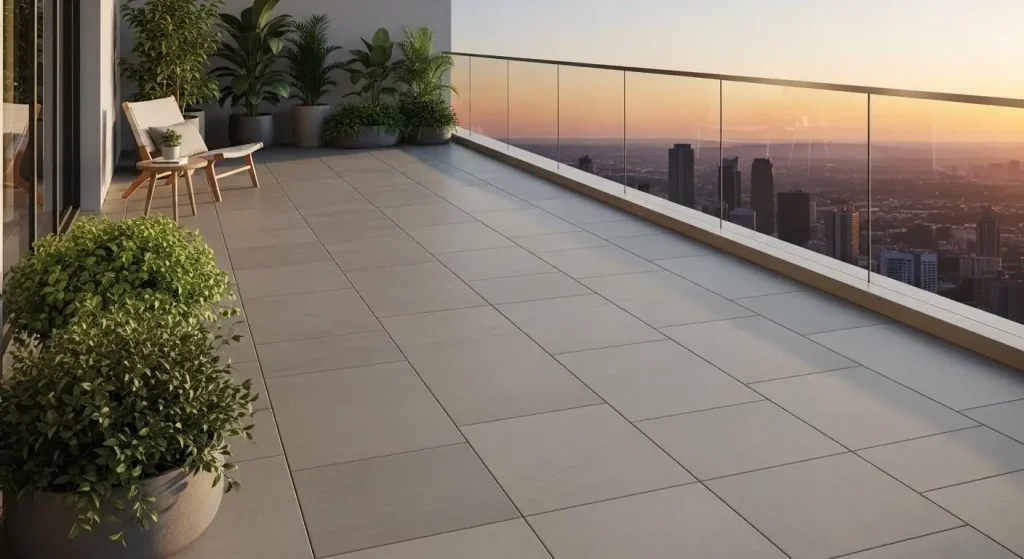
Water should have an exit path.
Avoid details that trap dirt in the main walking line.
✓ Step 4: Validate With A Small Test Zone
Install a small area near the door where traffic is highest.
Wet it, walk it carefully with typical footwear, and observe how it feels.
This is also how Hengsu supports project buyers: we prefer small, repeatable verification before full rollout, because balcony conditions vary widely by building and climate.
Hengsu Recommendation and CTA
Choosing Outdoor Balcony Flooring that feels safe in wet conditions is not about chasing the “highest number.” It is about matching slip rating, texture, drainage, and maintenance reality to your actual balcony exposure.
CTA (Call-to-Action):
If you are sourcing Outdoor Balcony Flooring for a residential project, apartment upgrade, or commercial terrace, contact Hengsu with your balcony size, exposure level (open / semi-covered), and your preferred material direction (pavers, WPC deck tiles, or treated panels). We will recommend a practical slip-resistant surface option, share relevant test references (DCOF / R-rating / PTV where applicable), and provide a cost-effective proposal designed for safe, real-world walking—not showroom-only performance.


