



How to Choose Outdoor WPC Wall Panels: Profiles, Finishes, Lifespan
Outdoor WPC Wall Panels are fast becoming the go-to choice for modern façades, backyard feature walls, and balcony upgrades. They look like timber, install like a system, and stand up to weather better than most natural materials. If you are new to this category, this guide walks you through profiles, finishes, and lifespan - so you can choose with confidence and avoid costly missteps.
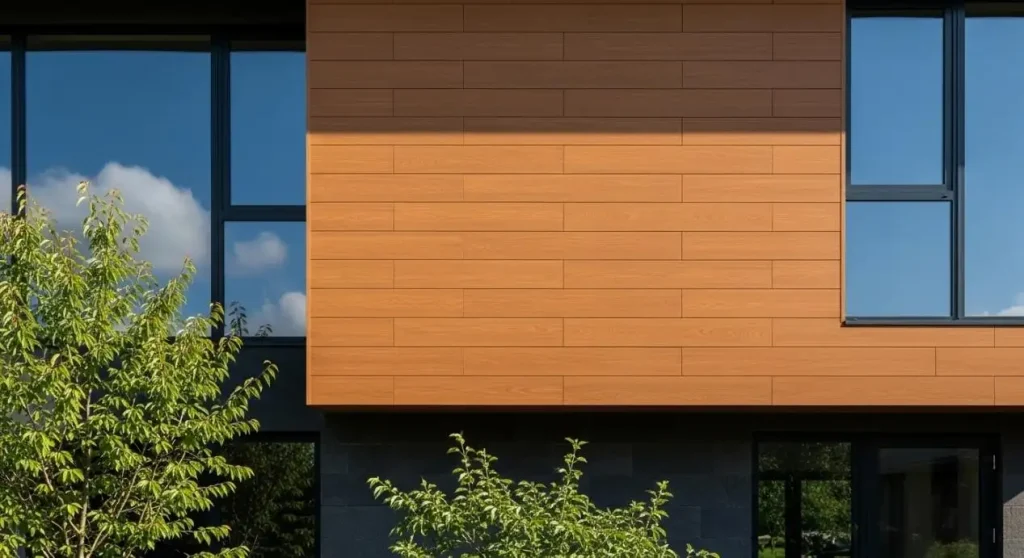
Start Smart: What Outdoor WPC Wall Panels Are
Wood-plastic composite (WPC) blends wood fibers with recycled polymers and additives, then extrudes them into stable cladding boards. The result feels warm like wood yet resists rot, termites, and splintering. Many panels are "co-extruded," meaning the core is protected by a thin cap layer that improves stain and UV resistance. In cladding applications, WPC panels typically mount on an aluminum or timber batten subframe, using hidden clips for a clean, screw-free face.
For a quick quality check, ask suppliers for compliance with cladding standards and tests such as EN 15534 (WPC requirements), UV aging (ASTM G154 or ISO 4892), water absorption tests, and fire classifications per your local code (e.g., EN 13501-1 or ASTM E84). These documents tell you more than a brochure ever will.
Choose the Right Profiles for Outdoor WPC Wall Panels
Profile choice affects look, structural behavior, and fixing speed. Think beyond "color" here; the right geometry can save time on site and deliver a stronger wall.
Solid Vs. Hollow
• Solid boards offer higher screw-holding strength and better impact resistance. They are preferred for high-traffic or wind-exposed façades, but they weigh more and can cost more to ship.
• Hollow boards reduce weight and material use. Multi-chamber designs improve stiffness while keeping panels light. In many low-to-moderate wind zones, a well-designed hollow profile performs well and installs faster.
• Ask for section drawings showing wall thickness and chamber geometry. Higher wall thickness in key areas (clip channels, edges) usually correlates with durability.
Mounting and Joint Options
• Hidden-clip channels speed installation and deliver uniform gaps. Look for positive "bite" clips in stainless steel.
• Tongue-and-groove (T&G) or shiplap edges create a continuous face and help shed water. T&G can hide fixings completely and control shadow lines.
• Ventilation features - such as rear grooves or spacer ribs - maintain a drainage plane. A ventilated cavity behind the cladding is indispensable for long service life.
Pick a Finish That Lasts
Finish affects color stability, scratch resistance, and maintenance. Three common choices dominate:
• Brushed matte: Calm, low-glare finish that conceals minor scuffs. Ideal for large façades seeking a consistent look.
• Deep embossed woodgrain: Adds relief and shadow. Next-gen embossing preserves detail longer, but elevated peaks can wear faster in high-touch areas.
• Co-extruded cap: A thin protective shell (roughly 0.3-0.6 mm) fused to the core during extrusion. Enhances resistance to stains, fading, and mold, while making cleaning straightforward.
Dark colors absorb more heat in sunlight and can run 10-15°C hotter than light tones on peak summer days. For high-sun orientations, lighter colors help manage heat; otherwise, design for thermal movement. Evaluate color durability via QUV accelerated aging (e.g., 2,000 hours to ASTM G154) and the ΔE shift. Many architects target ΔE ≤ 5 to constrain visible fading.
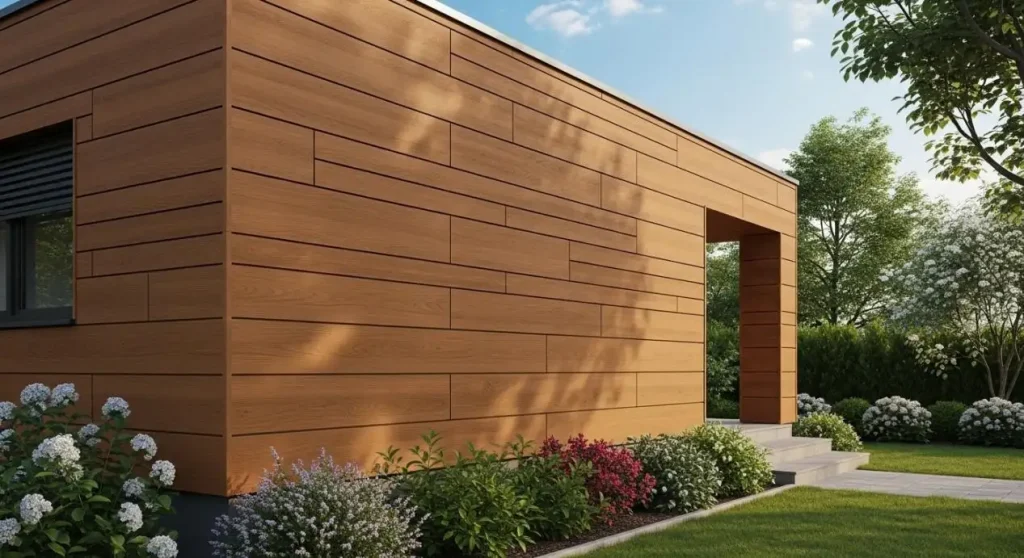
What Determines Service Life - and How to Evaluate
Materials, cap technology, installation quality, and climate drive outcomes. Assess competing systems with quantifiable benchmarks.
Weather, Water, and Heat
• Water uptake: Low water absorption helps prevent swelling and freeze-thaw degradation. Request test data by mass (e.g., 24-hour and long-term soak). Look for low single-digit percentages and stable dimensions after conditioning.
• Thermal movement: WPC expands with temperature. A typical linear expansion of about 0.03-0.06 mm per meter per °C means a 3 m board can grow ~3-5 mm over a 20°C swing. Installers must include expansion gaps and follow the supplier's spacing chart.
• Density and strength: Many façade-grade WPCs fall around 1.2-1.4 g/cm³. Higher density often means better fastening and impact resistance. Ask for wind load and impact test reports if your site is exposed.
• UV and staining: Co-extruded caps resist stains from common contaminants and slow down color change. Request stain-removal test results (coffee, oil, and mud) and UV reports with ΔE values across light and dark colors.
• Fire and code: Verify the required classification for your building type and height, then ask the supplier for matching reports (e.g., EN 13501-1 class, ASTM E84 rating). Never assume; codes vary by region.
With proper installation and basic care, many Outdoor WPC Wall Panels carry 10-25-year limited warranties. Read the scope: fade and stain warranties often have different terms than structural ones, and some exclude coastal or high-UV environments unless specific grades are used.
Installation and Care Made Simple
Good products can underperform if poorly installed. A ventilated cavity - often 20-30 mm - behind the cladding helps moisture escape and keeps the wall system dry. Use corrosion-resistant fasteners and clips, and follow the manufacturer's batten spacing and starter/finisher details.
Plan for movement. As a rule of thumb, provide end gaps according to board length and your local temperature range. Example: at 0.05 mm/m/°C, a 3 m panel sees about 3 mm change over a 20°C swing - so a 4-6 mm allowance at ends is typical, adjusted to your climate.
Maintenance is straightforward. Rinse periodically with water, use a mild detergent for grime, and avoid harsh solvents. A seasonal check of clips, trim, and sealant transitions keeps the façade neat. Co-extruded surfaces usually need only light cleaning to stay fresh.
Compare Suppliers and Take Action
Don't buy on sample color alone. Build a like-for-like comparison with data and small field tests:
• Ask for technical data sheets, test reports (UV, water absorption, thermal expansion), and fire classification.
• Request three full-length sample boards to test clip fit, straightness, and color consistency under outdoor light.
• Inventory accessories: corner pieces, starter rails, drip flashings, and finishing trims. A full set reduces onsite adjustments.
• Scrutinize warranty length and conditions, plus climate-matched references.
• Check lead time and after-sales coverage, including spare parts and color continuity for later expansions.
Ready to move from research to results? Get a sample kit, a one-page buyer checklist, and a bill-of-materials estimate for your project. Need help selecting profiles or calculating expansion gaps for your climate? Book a quick consult from Hengsu with a cladding specialist and bring your drawings - we'll map the right Outdoor WPC Wall Panels, finishes, and fixings to your budget and timeline.


