



Waterproof Wall Cladding Panels: The Smart Outer Wall Extreme Protection Upgrade (Complete Guide)
The panels of waterproof wall cladding have become one of the most convenient methods of protecting the exterior of a building (as well as some of its internal areas) and enhance its appearance. Waterproof cladding is a known solution that is very reliable when it comes to heavy rainfall, humid air, stormy winds, or when you just want a cleaner more sustainable look, regardless of the weather, waterproof cladding will protect the building and help to keep it dry at the same time, revitalize the exterior + sustainable design.
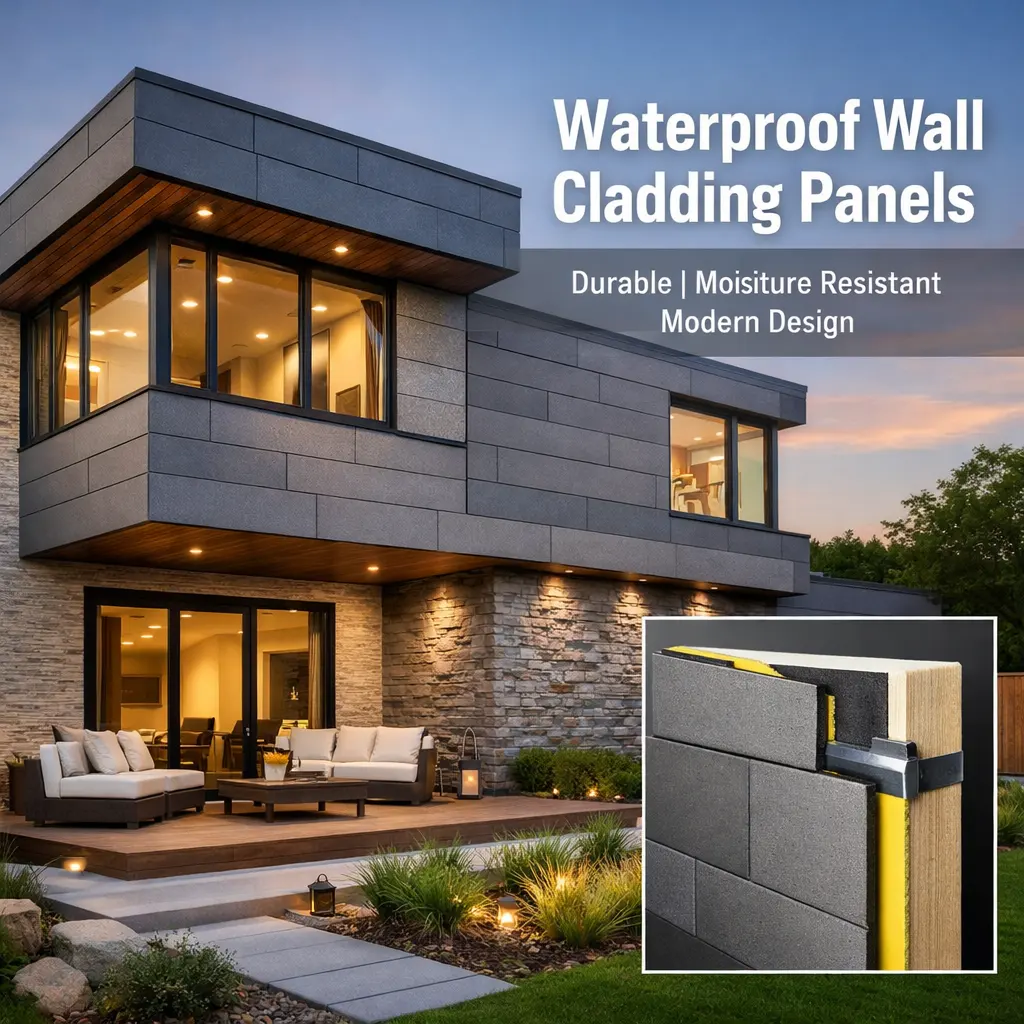
This guide describes the meaning of waterproof wall cladding panels, their operation, the most used material types, its main advantages, most common use, and the main considerations when selecting the appropriate system.
Waterproof Wall Cladding Panels Explained
Exterior (or interior) paneling over the surface of a wall in a building are waterproof wall cladding panels that are laid over the wall surface to form an extra safeguard. They are mainly aimed at preventing or controlling water exposure, to prevent moisture finding its way into the wall of the structure below.
One thing should be known: most cladding systems are not based on a single ideal seal. They instead employ the combination of:
- Water-resistant panel faces
- Close fitting panel joints which are meant to keep out water
- Flashings and edge details
- A ventilated air gap that aids in the performance of the rainscreen
- An under-cladding layer is a waterproofing membrane
It is this type of multi-layer that means good cladding systems remain efficient over time- even in harsh weather.
The way Waterproof Cladding Systems contain moisture
The waterproof cladding system is usually a high-performing system which handles water, in two ways:
1) Water-shedding construction that diverts the rainfall off the wall surface
The paneling and the design of the joints are constructed in such a way that rain water falls off rapidly and therefore, limits the time of water contact and seepage.
2) Draining and breathing in order to contain any water that gets into the system
Arguably, wind-driven moisture can force moisture into the smallest of crevices in the real-life situation.That is why most cladding systems include a rainscreen cavity- a thin air cavity which allows:
- Water to drain down and out
- Any residual moisture will be dried faster by ventilation
- Reduces the chances of retained moisture and growth of microorganisms
This proves particularly useful in high-rise construction, coastal areas and storm prone areas.
Examples of Waterproof Wall Cladding Paneling
The level of performance, budgets, and aesthetics vary in different projects. The most general categories of waterproof friendly panels are:
Aluminum composite panel systems
Metal composite panels are characterized by the use of aluminum skins with a core. Their commercial facades are popular because of:
- Clean, modern appearance
- Light weight
- Strong weather resistance
- Easy to make using consistently smooth flat-packaged panels
Good in commercial exterior, storefront buildings, smooth home fronts and branded signage areas.
Fiber Cement Panels
The fiber cement is regarded due to its durability and exterior appropriateness.
- Good moisture resistance
- Properties of material that is not flammable (this is frequently a major requirement)
- Customers can choose textured finishes, such as wood-look, stone-look and matte
Customers can choose textured finishes, such as wood-look, stone-look and matte
Facade panel in high pressure laminate
HPL panels are designed to work in the exterior, and they have ornamental surfaces and high wear resistance.
- Great design variety
- Strong surface durability
- Apposite in the rainscreen cladding
Best on: design oriented facades, feature walls, balconies, commercial exterior.
Vinyl Wall Panels PVC (Mainly used as an interior or sheltered exterior)
Bathrooms, kitchens, basements and other indoor environments that are permeated with high humidity are frequently lined with PVC panels.
- Excellent water resistance
- Easy to wipe clean
- Budget-friendly
Ideal in bathrooms, kitchens and utility rooms and also in the case of renovation.
The exterior wall cladding systems of WPC
WPC has the appearance of wood and is better in its moisture performance than natural wood.
- More stable in the dimension than natural wood, and less swelling or warping
- Inclusiveness of UV inhibitors is usually done to enhance color and surface stability
- Fashionable to the modern warm style
Perfect in home feature walls, patios, out of doors living and commercial highlights that are low-rise..
The important advantages of Waterproof Wall Cladding Panels
1) Strong Weather Protection
The apparent benefit: waterproof coating can be used to protect against rain, humidity, and moisture carried away by winds- minimize the possibility of leakage and structural decay of walls.
2) More intelligent moisture protection even reinforced with rainscreen design
Rainscreen cladding does not simply block water, it regulates water by facilitating water drainage and drying. That helps prevent:
- The growth of molds within assemblies of walls
- Paint blisters and damage of interior wall
- Rot and corrosion at the back of the facade
3) Greater Two Life Without More Maintenance
Many waterproof panel systems require a lot less maintenance as compared to painted exterior walls:
- No frequent repainting
- Smoother surfaces which are resistant to stains and early wear
- Has a more refined and smooth finish with fewer cracks or peels
4) Did not include comfort benefits--improved temperature and less noise (with the appropriate build-up)
It can support when insulated into the wall build-ups:
- Reduced heat gain/loss
- Improved indoor comfort
- A little dampening of sound, most particularly on the busy streets.
5) Modern, High-End Appearance
Cladding panels can radically change the appearance of a building providing:
- Clean lines and sharp edges
- Huge panel sizes produce a clean and modern appearance
- An extensive array of finishes such as solid colors, metallic appearance, and stone or wood appearance.
Typical Applications
Wall cladding panels are waterproof panels that are applied to many types of buildings such as:
- Office exterior, malls, showrooms, commercial buildings
- Storefronts i.e. signing, entrance surrounds and feature bands
- Multi-family and residential- contemporary facades and feature walls and exterior additions
- Hospitality: Hotels, resorts, lobby, surrounding a balcony
- Community facilities: transport facilities, community centers, schools.
- Wet interiors- bath rooms, kitchen, laundry rooms (with the right panel system)
What to consider As an Examiner of the Waterproof Cladding Panels
Not every so-called waterproof panel works as such, particularly when it is used in a built-in installation. The most significant selection factors are the following:
1) Full assembly design (panels, sub-structure and waterproofing elements)
The entire system and not the panel face produces a waterproof facade. Ask about:
- A rainscreen gap that is ventilated and delimited drainage channels
- They should be compatible with the mentioned waterproofing membrane
- Subframe resistance to corrosion
2) Joint & Edge Detailing
Here failures occur in thousands. Pay close attention to:
- Flashings
- Edge sealing
- Corners
- Expansion gaps
- Access on either side of windows and doors
Clean design is wonderful--but it is waterproof detailing which makes it dependable all the year round.
3) Material behavior on local climatic conditions
Consider your environment:
- Coastal regions - emphasize on resistance against corrosion
- In hot and sunny places, use the surfaces and designs that are resistant to UV radiation and accommodate thermal expansion
- Freeze-thaw areas - put an emphasis on crack resistance and proper ventilation
4) Building Code Compliance and Fire Rating
Fire performance can be a major requirement depending on the type of project and region. Ensure that the selected system is in accordance with relevant standards.
5) Color stability in UV and warranty of manufacturers
The exterior finishes may also fade or chalk out with time unless they are developed to be used in the UV situation. Look for:
- UV-resistant coatings
- Established performance in external conditions
- Clear, easy going warranties that cover practices, and are easily achievable
6) Quality of Installation and experience of installer
The finest panel may not work when poorly installed. Waterproof casing is extremely dependent on:
- Correct fastener placement
- Proper alignment
- Clean joint treatment
- Proper flashings and connections of water tight membranes
Installation Hacks That Slay or Slaughter Waterproof Performance
There is one lesson, waterproof performance is in details. For best results:
- Make sure that the wall substrate is ready and sound
- Install the suggested waterproof system and waterproof tape
- Make sure there is a drainage route (particularly of rainscreens)
- Check flashings at the lower end, parapets and openings
- Develop appropriate right spacing to allow movement of heat in the panels without straining or deformation
A moderately greater investment in a good detailing has had a saving of large repair expenses in the future.
Conclusion: The Waterproof cladding provides an appearance-based protection
Wall cladding panels that are waterproof are not just a style addition but a long-term protection mechanism that would ensure that buildings remain dry, maintain durability and remain appealing in harsh environments. With the selection of a panel material, its combination with intelligent moisture control (such as a rainscreen cavity) and attention to details in a high-quality installation, it is possible to create a facade that seems high-quality and is designed to serve during many years.


