



Contents
HSCS
5 Mainstream Weather Resistant Wall Panels: PVC, Aluminum Composite, HPL, FRP, and Modified Wood
The choice of weather-resistant wall panels is fundamental to designing outer building spaces and components for extreme weather environments. The correct choice will ensure wall panels avoid fading in the tropics, warping in monsoon rains, and rotting in extreme winters.
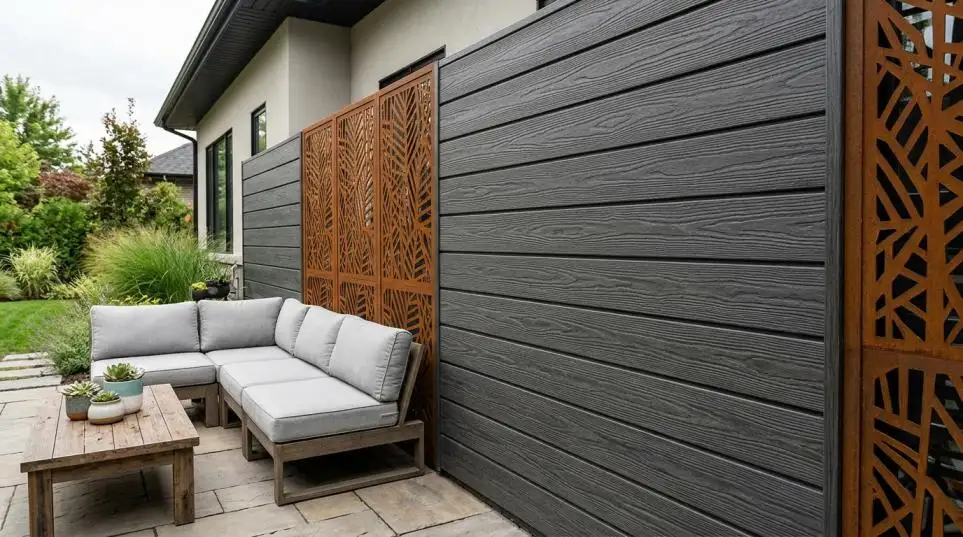
We analyze the five most popular materials for weather-resistant wall panels in the following sections: PVC, Aluminum Composite, HPL, Fiberglass Reinforced Plastic (FRP), and Modified Wood. We explain the prevalent structures of these materials, the construction benefits and constraints of these materials, and the most appropriate construction applications of these materials.
1. PVC Weather Resistant Wall Panels
PVC paneling is one of the most economical of all the weather-resistant wall panels.
• Paneling Structure: A smooth UV stabilized facing encapsulating a cellular foam core.
• Water Resistance: With 0.1% water absorption, or no absorption, panels will not rot or swell.
• Weather Performance: It withstands humidity and salt spray as well as mild chemicals. Begins to lose rigidity when subjected to 70 °C or 158 °F.
• Best for: Residential siding, bathrooms, moderate temperate zones.
• Limitation: PVC has a much lower resistance to impact when compared to metals or FRP.
2. Aluminum Composite Panels (ACP)
Aluminum Composite Panels are one of the best premium wall panels with perfect weather resistance for the modern style of construction.
• Paneling Structure: 2 thin layers of aluminum bonded to polyethylene (PE) or fire-retardant (FR) core.
• Weather Performance: Strongly resist wind pressure, rain, and UV rays, and their quality improves with the use of PVDF (Polyvinylidene Fluoride) paint.
• Advantages:
- Lightweight and strong. Retards fire.
- Varied palette of metallic colors.
• Best for: High-rise structures, CA (PVDF coating), and corporate structures facade.
• Note: Once a surface scratch occurs, it is hard to see and hard to repair.
3. HPL (High-Pressure Laminate) Wall Panels
Weather resistant wall panels are designed much denser and stronger using HPL. They are made from several layers of Kraft paper and thermosetting resins which are fused at high pressure.
• Structure: Decorative laminate + Kraft paper core + Backing seal
• Weather Resistance: Excellent resistance to UV, little to no fading, freeze-thaw cycles, and to chemical pollutants.
• The Benefits of HPL:
- Very high surface hardness (resists scratches and impacts)
- Self-extinguishing (often Class B or A)
- >20 years of service life with a low amount of maintenance
• Best Applications: Building facades, high-traffic external walls, ventilated rain-screen systems.
4. FRP Wall Panels
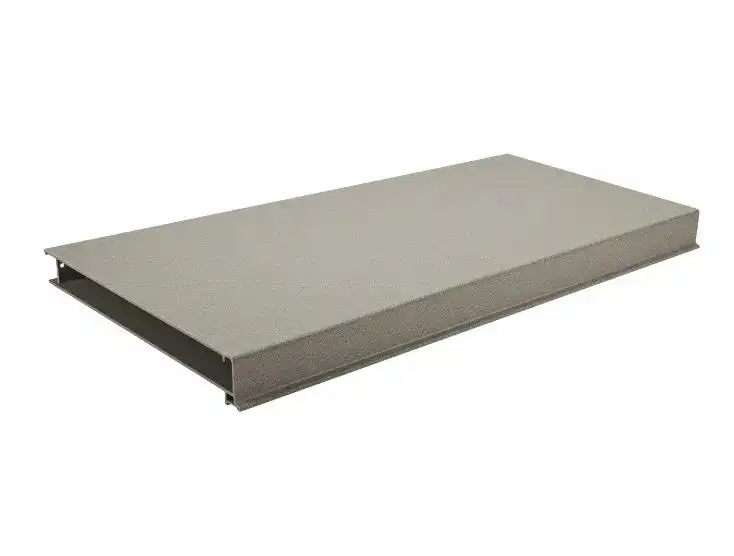
FRP panels, or Fiber-Reinforced Plastic Panels, are an advanced construction board that can add an additional layer of weather resistance to a building. As a result, they are very popular across industrial and agricultural applications.
• Structure: Glass fibers reinforced thermoset resin (polyester, vinyl ester).
• Weather Resistance:
There is superior protection against moisture and UV deterioration. Impact and flexural strength allow changes in temperature from -40°C to +120°C.
• Benefits:
- They have excellent chemical and corrosion resistance
- Available in lightweight and semi translucent designs.
• Best Applications: Greenhouses, livestock shelters, cooling towers and the marine environment.
• Limitations: Direct sunlight exposure or extreme weather combined with a lack of UV inhibitors will lead to fiber blooming.
5. Modified Wood (Thermally or Chemically Treated)
These are a natural product candidates that have been upgraded in design among Weather Resistant Wall Panels.
• Weather Performance
- Reduces moisture uptake (swelling reduced by 50-80%)
- Excellent resistance to rotting and wood boring insects
- Dimensional stability under wet and dry cycles
• Why use modified wood
- Natural appearance and touch
- No toxic chemicals due to thermal modification
- It is still limited, with lower thermal conductivity than metals
• Best suited for eco-friendly facades, garden sheds, saunas, and upscale residential projects
• Note: Modified wood in harsh UV zones still needs sealants every 5 to 7 years
Key Comparison: Which Weather Resistant Wall Panels Suit You?
| Material | Water Resistance | UV Resistance | Impact Strength | Cost Level |
| PVC | Excellent | Medium | Low | $ |
| Aluminum Composite | Excellent | High (PVDF) | Medium | $$ |
| HPL | Very High | Excellent | High | $$$ |
| FRP | Excellent | Medium-High | Very High | $$ |
| Modified Wood | High | Medium | Medium | $$$ |
�� Notes:
• Cost symbols: $ = low, $$ = medium, $$$ = high
• PVDF refers to a premium coating used on aluminum composite panels for enhanced durability.
• Maintenance is rated from Low (easiest) to Very High (most demanding).
For coastal areas or polluted cities, HPL or PVDF-coated aluminum composite perform best. For high-impact rural areas, choose FRP or thick HPL.
Why Choose Hengsu for Your Weather Resistant Wall Panels?
Zhongshan Hengsu Decoration Materials Co., Ltd. has substantial experience as a manufacturer.
• Founded in 2009, our company traces back to the 1995 establishment of the plastic factory of Zhongshan Hengli.
• We are located in Yongxing Industrial Park, Henglan Town, Zhongshan City.
Logistics Edge: Close to the Guangzhou-Zhuhai West Line, Zhongjiang Expressway, Guangzhou-Australia Expressway, and Ancient Town Station of the Guangzhou-Zhuhai Urban Rail Transit. This strategic positioning allows prompt and efficient shipping on a global scale.
Hengsu Company engages in the manufacturing and the R&D of new environmentally friendly construction materials.
• Concept: Seeking New Frontiers
• Focus: Well-being and Ecology
• Product Line: "Hengsu" Healthy Ecological Wall Top Series
What Hengsu's Weather Resistant Wall Panels Provide
• Eco-Friendly: Hengsu's Weather Resistant Wall Panels are green building materials.
• Creative and Flexible: A variety of choices of textures, wood grains and colors.
• Cost Effective: Low labor costs due to constructed and mounted systems that interlock.
• Quality Assurance: Weather Resistant Wall Panels are tested for humidity, UV, and impact at random before leaving manufacturing.
The Next Step – Entrust Hengsu with Your Project
Weather Resistant Wall Panels make a beautiful, durable exterior simple and fast. Don't buy Wall Panels that will fade, crack, and rot in the first rainy season.
Contact Zhongshan Hengsu Decoration Materials Co., Ltd. today. Have heavy traffic areas? Choose HPL. Prefer PVC for cost effectiveness? Want patented architectural designs? Choose Aluminum Composite. All are backed by 20 years of experience in compositing and plastic design.
Request a quote today and see the difference where innovative design meets green materials.
FAQ
1. What are the best Weather Resistant Wall Panels for coastal homes?
The best options for maximum exposure to saltwater and UV resistance are PVDF Aluminum Composite and HPL. In industrial coastal areas, FRP can be utilized.
2. Do PVC Weather Resistant Wall Panels work in warmer climates?
PVC can begin to warp or deform at 70°C (158°F) and can melt in really hot areas. The best options for hot areas are UV-stabilized PVC, Aluminum Composite, and HPL.
3. Can I use HPL panels in fire risk areas?
Yes. Many HPL Weather Resistant Wall Panels either reach a Class B or even a Class A fire rating (this is dependent on core and thickness). Please check the specific product certification.
4. How do Modified Wood panels defy natural wood?
Untreated natural wood has a far higher absorption of moisture. It also has a far higher susceptibility to rot and insect infection. Modified wood has 50-80% less moisture absorption and a far higher threshold of rot and insect infection. It should also be noted that modified wood should be sealed periodically in high-UV areas.
5. Which Weather Resistant Wall Panels do your DIY clients find easiest to install?
The easiest to install tend to be made of PVC and FRP. These are lightweight and can be cut using woodwork tools. Many use an interlocking system to make the process even easier. Aluminum Composite tends to be the most difficult, as it requires specific tools to fold and route it.
6. Do your Weather Resistant Wall Panels come in custom colors or sizes?
Yes. Zhongshan Hengsu Decoration Materials Co., Ltd. provides decoration materials of different colors and wood grains and sizes. Collaborate with our team if you have a specific project requiring bespoke materials.


