



Contents
HSCS
Wood Grain Wall Cladding Materials Decoded: From Solid Wood to WPC – Everything You Need to Know
Architects, designers, and homeowners have quite the love affair with Wood Grain Wall Cladding. For good reason too. Wood Grain Wall Cladding manages to integrate the modern with the classic in a smooth and appealing manner. Wood-look cladding has the ability to meet preferences and styles of all kinds, especially with options ranging from authentic solid wood to Wood-Plastic Composites (WPC).
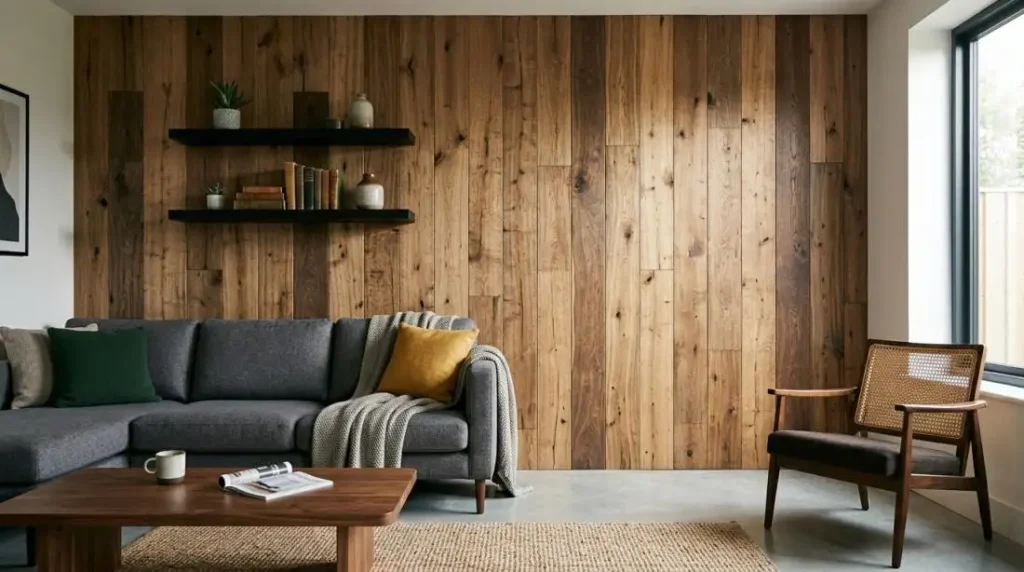
Being informed about the materials used in your Wood Grain Wall Cladding can always give an edge to your wall designing endeavors. You will become familiar with the applications and maintenance of Wood Grain Wall Cladding materials so you can make a more educated choice for the wall cladding project you are most excited about.
The Importance of Material Choice for Wood Grain Wall Cladding
Correctly selecting the material for your Wood Grain Wall Cladding determines how much you will struggle with the following:
• Durability against moisture, UV, and impact
• Installation cost and complexity
• Long-term maintenance (sealing, cleaning, repairing)
• Environmental footprint
• Aesthetic authenticity (grain depth, texture, color stability)
To most people, it goes without saying Wood Grain Wall Cladding is a much more aesthetically pleasing option for wall cladding. Let's take a close look at the types of materials.
1. Solid Wood Wall Cladding – A Classy, Elegant Choice
Solid Wood Wall Cladding cannot be matched for authenticity and a classy nature.
1) Pros:
• Charm from the natural design of each tree's growth rings
• Easy to sand down and change the finish
• Some species like cedar smell wonderful
• Good to the environment, as long as it comes from a tree farm
2) Cons:
• Attracts bugs and can be damaged by the elements
• Needs to be coated to protect the wood
• Holds moisture and can damage
• Expensive and labor intensive to set up
✅ Best for nice homes, hotels, indoor walls, walls of uncovered outdoor porches, and dry indoor walls
�� Maintenance tip: Seal the wood and oil it every 1-2 years. For placement outdoors, 6-12 month applications are recommended.
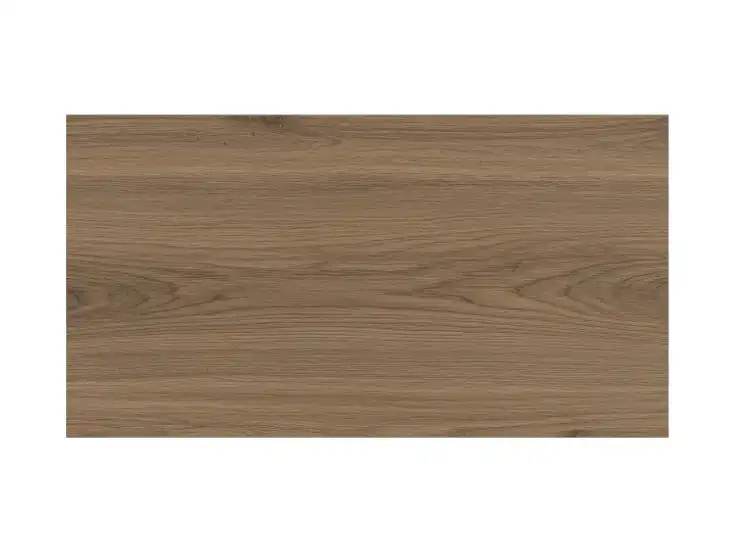
2. WPC (Wood-Plastic Composite) – The Modern Kind
WPC changed the game for Wood Grain Wall Cladding. It is a combination wood fiber (most of which is recycled) and thermoplastic like HDPE, PP, and other additives.
1) Pros:
• Great resistance against moisture, rot, and termites
• Expansion and contraction is minimal
• No painting or staining required. Sealing required only for protection and done infrequently.
• Wood grain designs are provided in realistic embossed forms
• Uses recycled material which is especially great
2) Cons:
• Some of these can degrade due to exposure of UV rays. UV resistant grades are available.
• Heavier than most synthetic options.
• Limited modification after installation.
✅ Best for: Commercial use, coastal homes, bathroom walls, and outdoor facades and pool areas.
�� Pro tip: Co-extrusion also provides added stain and UV protection, making WPC a good choice.
3. PVC (Vinyl) Wall Cladding – The Budget-Friendly Waterproof Option
PVC-based Wood Grain Wall Cladding is lightweight, 100% waterproof, and requires minimal installation skills – often a manageable DIY project.
1) Pros:
• Least expensive option for a wood-like flooring
• Zero maintenance (just clean with a damp cloth with soap)
• Almost completely impervious to any biological or chemical growth
• Can even be laid on top of existing tiles
• Comes in a range of colors and textures
2) Cons:
• Less a natural feeling flooring (can feel like stepping on plastic)
• Not a green option; recycling can be near impossible
• Can be affected by a great deal of heat (don't place near a wood burning stove)
• Very easy to scratch and deeply effect the finish
✅ Best for: Rentals, a kids play room or any multifunctional room, laundry rooms, any quick installation or just for a inexpensive easy to install flooring.
�� Note: For indoors around any kind of heat source use PVC cladding with a fire rating.
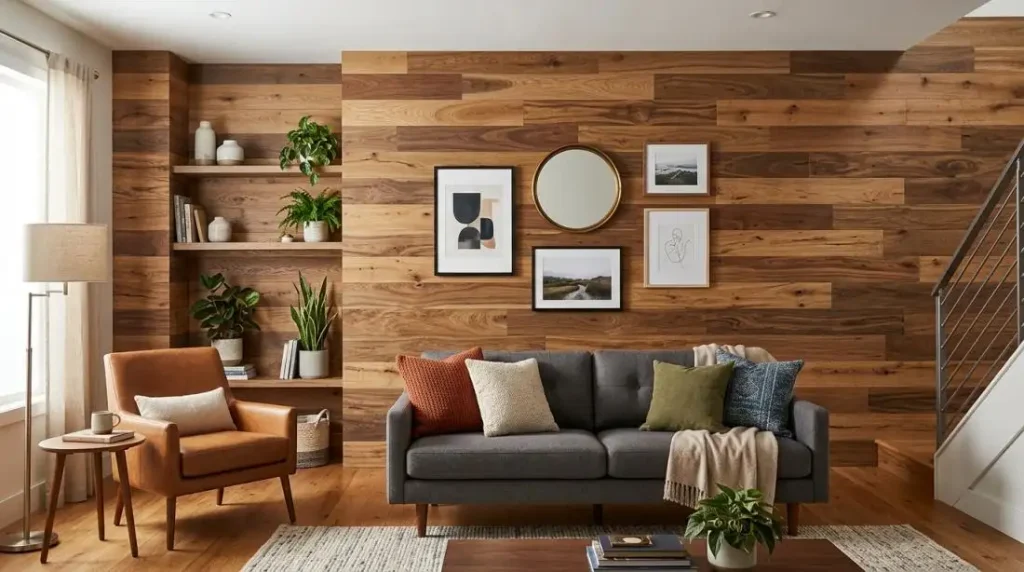
4. Engineered Wood (MDF / HDF) – Budget-friendly But Some Tradeoffs
Medium density fiber board (MDF) or high density fiber board (HDF) can be found as a wood grain printed wall cladding
1) Pros:
• Very smooth surface and perfect for painting
• Cheaper than real wood
• Very easy to cut due to not warping
• Has pre-finished wood films
2) Cons:
• Very susceptible to moisture (will rot if exposed)
• Not an ideal durable option (can chip and break easily)
• Not ideal for a humid or outdoor environment
• The printed grain pattern may look repetitive
✅ Best For: Low traffic walls, home office walls, temporary displays
�� Note: NEVER install in a kitchen, bathroom, or basement without a waterproof barrier.
5. Thermally Modified Wood – Better Durability Without The Chemicals
Thermally modified wood goes through a process of kiln drying wood with minimal oxygen at over 200°C (392°F) as a way to permanently change the chemical structure.
1) Pros:
• As it relates to swelling and shrinking, it has better dimensional stability.
• No toxic preservatives and naturally resistant to insects and decay.
• Material has darker wood tones and it is lighter than untreated wood.
2) Cons:
• More expensive than most solid wood.
• May result in reduced bending strength and increased brittleness if over-modified (e.g. with surface treatment).
• Surface protection remains necessary for outdoor use.
✅ Best for: Premium saunas, outdoor cladding, pergolas, and projects prioritizing sustainability.
Quick Comparison Table: Which Wood Grain Wall Cladding Is Right for You?
| Material | Moisture Resistance | Maintenance | Cost (per sq.ft) | Lifespan (indoor) | Best Environment |
| Solid Wood | Low-Medium | High | $$$ | 20+ years (with care) | Dry, climate-controlled |
| WPC | High | Very Low | $$ | 25+ years | Any (including wet) |
| PVC | Very High | None | $ | 10–15 years | Wet / DIY / rental |
| Engineered Wood | Very Low | Medium | $ | 5–10 years | Low-humidity indoors |
| Thermally Modified Wood | Medium-High | Medium | $$$ | 25+ years | Covered outdoor or humid indoors |
�� Notes: Cost symbols: $ = low, $$ = medium, $$$ = high
Final Thoughts: Matching Material to Your Project
Choosing the best Wood Grain Wall Cladding comes down to three questions:
• Where is it installed? – Wet? Outdoor? High traffic?
• What's your maintenance preference? – “Set and forget” or do you enjoy natural wood care?
• What's your budget for both material and installation?
�� For authentic luxury and you're willing to maintain it → Solid wood.
�� For low-maintenance and high durability (any room, any weather) → WPC.
�� For quick, cheap, and waterproof (rentals or DIY) → PVC.
�� For dry indoor accents on a budget → Engineered wood.
�� For natural performance without chemicals → Thermally modified wood.
Wood Grain Wall Cladding offers a well-rounded selection of materials that provide an excellent balance between appearance, functionality, and value.
Frequently Asked Questions (FAQ)
Q1: Can I use wood grain wall cladding in a bathroom?
Yes. Just make sure to choose the correct wood wall cladding material. PVC and WPC materials are both waterproof so are more than suitable. For Solid and Engineered wood, avoid these in the bathroom as well as other wet places.
Q2: Can I install wood grain wall cladding in my space?
It is possible to install wood grain wall cladding materials, like PVC and Engineered wood, by the tongue and groove method or by the adhesive method. On the other hand, WPC and Solid wood, require preparation and tools and would be better left to the professionals.
Q3: How do I maintain and clean wood grain wall cladding?
These types of wall cladding can be cleaned like other wood PVC and WPC materials. For these, just get a mild soap, warm water, along with a cloth or sponge. Avoid pressure washes, scouring pads, bleach, or anything abrasive as these will easily damage natural wood finishes.
Q4: Will wood grain wall cladding fade?
Yes, wood and WPC materials can fade easily, especially in the sun. To minimize fading choose UV-stabilized WPC or seal with UV protective sealant. To protect wood wall cladding materials, choose shaded areas with protective exterior material.
Q5: Is wood grain wall cladding sustainable?
It can depend on the material. FSC certified forests which make Solid wood are a sustainable option. PVC wall cladding, which is WPC and made from a recycled source, is sustainable. Engineered wood isn't a sustainable source and is a more of manufactured good.


