



What is Bamboo Charcoal Wall Panel? (The 2026 Honest Buyer’s Guide)
What is Bamboo Charcoal Wood Veneer?
Bamboo charcoal wall panel (also known as Bamboo Charcoal Wood Veneer) is a solid, high-density composite material made from activated bamboo charcoal powder, PVC resin, and a decorative surface film. Unlike hollow PVC panels, it is a solid-core board (typically 5mm–8mm thick) that offers Class B1 fire resistance, total waterproofing, and the ability to be "cold bent" around curved walls without breaking.
The "Sandwich" Technology Behind the Board
At HSCS Decor, we find that most clients confuse this material with standard WPC. The difference lies in the core. We manufacture our Bamboo Charcoal PVC Wall Boards using a co-extrusion process that fuses three distinct layers:
- The Substrate (The Core): This is the black, dense layer. We infuse finely milled activated bamboo charcoal into a polymer base. This isn't just for marketing; the charcoal adds structural rigidity and provides natural odor adsorption, trapping VOCs and humidity.
- The Adhesive Layer: A high-strength, non-toxic glue that binds the film to the core.
- The Decor Film: A premium PVC or PET foil that mimics solid wood veneer, marble, or fabric.
Our Experience: When we cut these panels in our Zhongshan factory, the cross-section is solid black. If you see a panel with a grey or white core, it is likely a standard PVC board, not genuine bamboo charcoal.
The Core Benefits: Why the Hype?
Bamboo charcoal panels solve three major problems in modern renovation: they eliminate the formaldehyde risks of plywood, solve the mold issues of wallpaper, and fix the rigidity limitations of stone. Their porous charcoal structure naturally regulates indoor humidity while providing a luxury aesthetic that costs 30-50% less than real wood veneer.
1. The "Odor Eater" Mechanism
Does it actually work? Yes. The activated carbon in the board functions similarly to a water filter. In our internal testing, panels installed in newly renovated rooms helped reduce the "new furniture smell" significantly faster than rooms with painted drywall. The porous structure traps airborne particles and excess moisture, inhibiting mold growth in humid climates.
2. Waterproof & Fire Safety
We frequently recommend these for bathroom vanities and basement walls.
- Water Absorption: Virtually zero (<0.5%). Unlike solid wood, it will not swell if a pipe bursts.
- Fire Rating: Our panels achieve a B1 Fire Rating, meaning they are difficult to ignite and self-extinguish when the flame source is removed.
3. Bendability (The Designer's Secret)
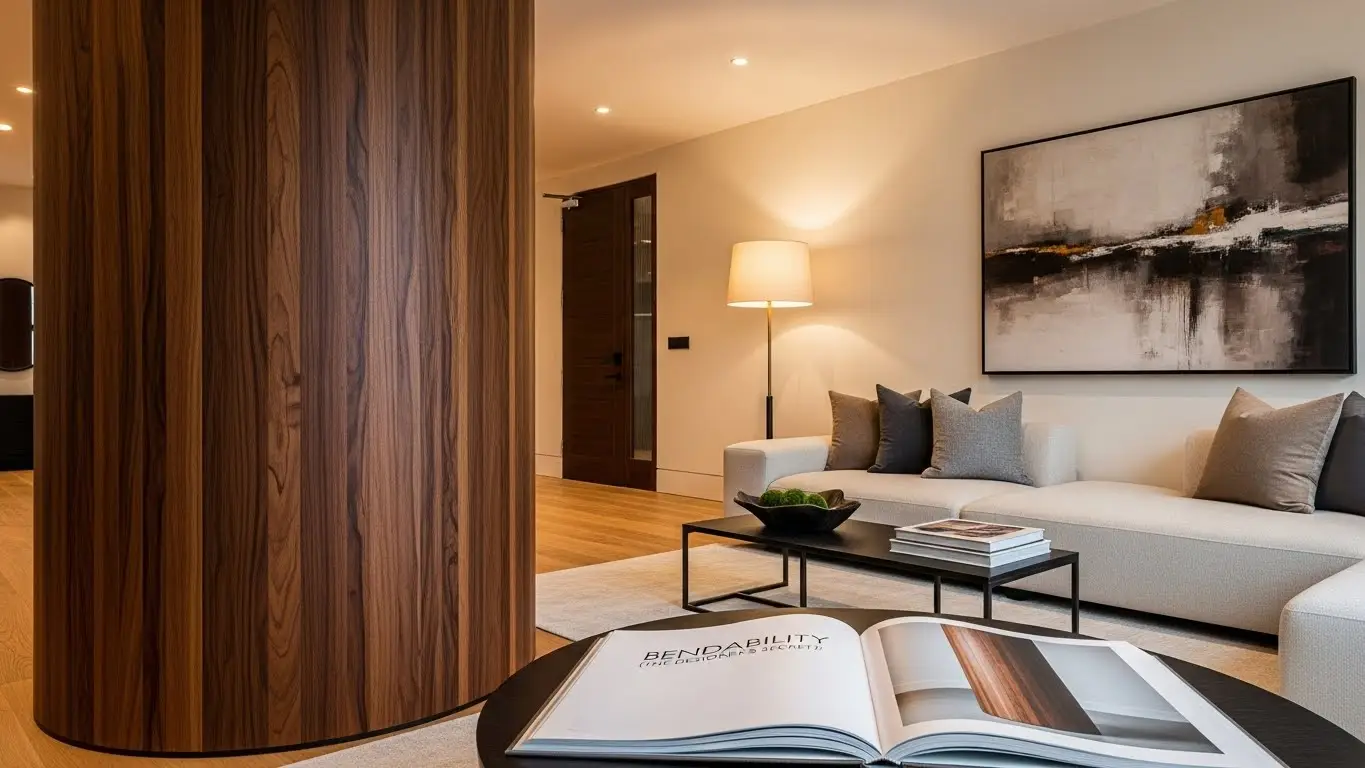
This is the "killer feature" for 2026 interiors.
- The Test: We can take a standard 5mm or 8mm panel and bend it around a curved pillar or rounded corner.
- The Technique: For sharp 90-degree corners, we use a process called "coping" or heating the back with a heat gun to soften the resin, allowing for a seamless wrap. You cannot do this with ceramic tile or standard MDF.
Bamboo Charcoal vs. The Competitors
Bamboo charcoal panels outperform PVC marble sheets in durability and WPC fluted panels in versatility. While PVC sheets are brittle and WPC is often restricted to slats, bamboo charcoal boards provide a smooth, continuous surface that mimics high-end wood veneer with superior impact resistance and air-purifying qualities.
The Drawbacks No One Tells You
The biggest downside to bamboo charcoal wall panels is the weight and the seam visibility. A standard 4x8 ft panel is significantly heavier than a hollow PVC sheet, often requiring two people to lift safely. Additionally, unlike paint, panels have physical seams; unless you use metal trim strips or precise "seamless splicing" techniques, the join lines will be visible.
- Logistics: Because of the density, shipping these panels is more expensive than shipping lightweight acoustic foam or hollow siding.
- The Seam Reality: We advise clients to embrace the seam by using decorative T-moldings (metal strips) in gold or black. It turns a technical necessity into a design feature.
Installation Reality: Glue vs. Clips
Bamboo charcoal panels are best installed using a combination of structural adhesive (like polyurethane construction glue) and metal clips if the edges are grooved. For flat veneer panels, a "glue-on-wall" method is standard.
Our Recommended Installation Steps:
- Level the Wall: The wall must be flat. Bumps will show through the rigid board.
- Apply Adhesive: Use a high-quality structural adhesive on the back of the panel. Do not rely on weak "Liquid Nails" generic brands; use formulas meant for heavy PVC/stone composites.
- Metal Trims: Install aluminum alloy trim strips between panels for a luxury look and to hide expansion gaps.
- No Acidic Silicone: Warning: Never use acid-curing silicone, as it can react with the foil backing over time.
Cost Analysis (2026 Market)
Expect to pay between $3.00 to $6.00 per square foot for high-quality bamboo charcoal panels, depending on the surface finish (PET vs. PVC) and thickness. While the material cost is higher than drywall, you save significantly on labor because there is no sanding, priming, or painting required.
- Hidden Costs: Don't forget to budget for the structural adhesive and the metal trim profiles, which can add 15-20% to the material cost.
Conclusion: Who Should Buy This?
At Hengsu Decoration, we believe Bamboo Charcoal Wall Panels are the ideal choice for homeowners and designers who want the look of luxury wood veneer without the maintenance or fear of water damage. They are perfect for high-humidity areas (bathrooms), high-traffic commercial spaces (hotels), and curved accent walls.
If you need a lightweight, temporary fix, stick to 3D foam stickers. But if you want a permanent, architectural upgrade that cleans your air, this is the solution.
Frequently Asked Questions
Can bamboo charcoal panels be used outdoors?
No, standard bamboo charcoal wall panels are designed for interior use only. Prolonged exposure to direct UV sunlight and rain can cause the decorative film to fade or peel over time. For exterior cladding, we recommend our specialized Exterior WPC Wall Panels or Co-extruded Bamboo Wood Fiber boards which have UV-resistant caps.
How do I cut bamboo charcoal panels?
You can cut these panels using standard woodworking tools. A circular saw with a fine-tooth blade is best for straight cuts. For outlets and switches, a jig saw works perfectly. Because the core is solid and dense, we recommend cutting with the decorative side facing up (if using a hand saw) or down (if using a circular saw) to prevent chipping the film.
- Learn more: How to cut WPC wall panels without chipping
Do I need to remove existing wallpaper before installing?
Yes, for the best adhesion, we strongly recommend removing old wallpaper or peeling paint. The structural adhesive needs to bond directly to a solid surface (like drywall, concrete, or plywood). Bonding to wallpaper creates a weak link—if the wallpaper peels, your heavy panel will fall with it.
How do I clean and maintain these panels?
Maintenance is incredibly simple. Because the surface is non-porous and waterproof, you only need a soft cloth and warm water. Avoid abrasive scrubbers or harsh chemical solvents like bleach, which can dull the glossy finish.
- Full Guide: How to clean and maintain WPC wall panels
Are bamboo charcoal panels safe for bedrooms?
Yes, they are one of the safest options available. Our panels are rated E0 for Formaldehyde emission, meaning they release virtually no harmful gases. Plus, the antibacterial and mold-resistant properties of the bamboo charcoal core make them an excellent choice for bedrooms, nurseries, and allergy sufferers.


