



How to Clean and Maintain WPC Wall Panels (The "Safe-Scrub" Guide)
WPC (Wood-Plastic Composite) and Bamboo Fiber panels are engineered for durability, but they are not invincible. As a manufacturer with over two decades of experience in Zhongshan, we often see customers ruin the matte finish of their "Advanced Grooving" panels by treating them like standard timber or pure plastic.
At HSCS Decor, we know exactly what goes into the polymer cap layer of these panels—and more importantly, what dissolves it. This guide provides the manufacturer-approved methods to clean, maintain, and protect your wall panels without compromising their eco-friendly coating.
The "Do Not Touch" List (Crucial Warnings)
To preserve the polymer integrity of WPC wall panels, never use acetone, undiluted bleach, or abrasive scouring pads. Acetone and harsh solvents can dissolve the protective cap layer, leading to permanent discoloration, while steel wool or wire brushes will micro-etch the surface, making it susceptible to future staining and moisture damage.
Why These Agents Fail
In our laboratory testing at Hengsu, we have observed that solvents like acetone attack the PVC component of the WPC matrix. Once this chemical bond is broken, the panel loses its water resistance and color stability. Similarly, abrasive scrubbers remove the UV-resistant coating we apply during manufacturing.
Strictly Avoid:
- Acetone / Nail Polish Remover: Melts the surface immediately.
- Strong Bleach: Causes "chalking" (white hazy residue).
- Ammonia-based Cleaners: Can dull the finish over time.
- Scouring Pads: Leave permanent scratch marks.
Routine Cleaning: The 3-Step Process
The most effective routine cleaning method for WPC wall panels is a solution of warm water and pH-neutral dish detergent applied with a high-GSM microfiber cloth. This combination effectively lifts surface oils and dust without stripping the panel’s natural sheen. Always wipe the panels dry immediately to prevent mineral deposits or water spots from forming.
Step 1: The "Dry Run" (Dusting)
Before introducing moisture, you must remove abrasive particles. For our Advanced Grooving Wall Panels or Solid Wood Slat series, dust accumulates in the valleys. We recommend using a vacuum with a soft brush attachment to clear the grooves first. Wiping a dusty panel with a wet cloth essentially creates "liquid sandpaper" that can cause micro-scratches.
Step 2: The Solution Mix
Mix 1 tablespoon of mild dish soap into a gallon of warm water. You do not need specialized "composite deck cleaners" for indoor WPC walls; simple soap is chemically safer for the bamboo fiber content.
Step 3: The Wipe & Dry
WPC is water-resistant, but allowing hard water to air-dry on the surface can leave calcium deposits that look like stains. After washing, follow up immediately with a dry, clean microfiber cloth to buff the surface.
Deep Cleaning Fluted & 3D WPC Panels
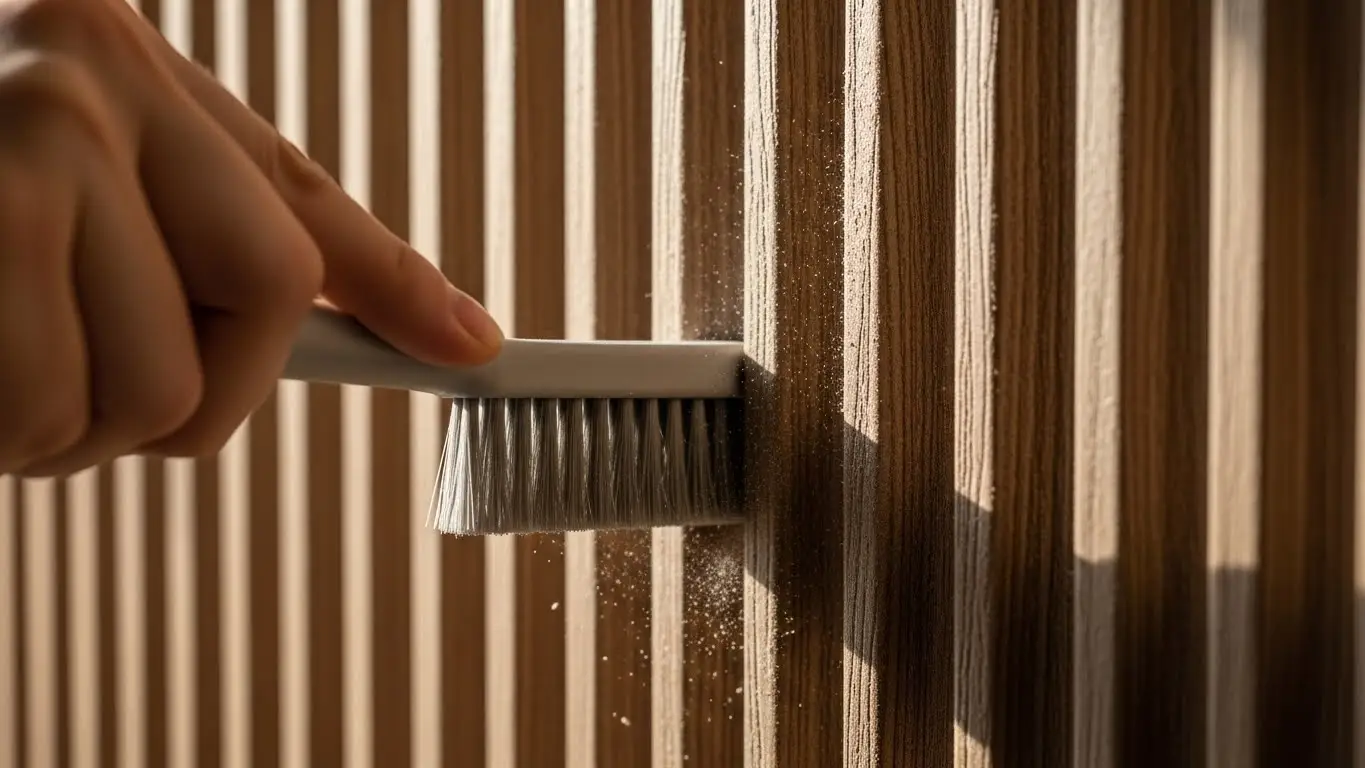
For deep cleaning fluted or 3D WPC panels, use a soft-bristle nylon brush or a toothbrush to gently scrub inside the grooves where dust settles. Avoid lateral scrubbing across the ridges; instead, follow the direction of the grain or flute to lift trapped debris without blunting the sharp aesthetic edges of the panel design.
The "Groove Hygiene" Challenge
Our Interior Ecowood Series features intricate 3D profiles. A flat cloth simply cannot reach the bottom of these grooves.
- Tool: Soft Nylon Brush (or an old toothbrush for spot cleaning).
- Technique: Apply the soapy water to the brush, not the wall. Scrub vertically along the groove.
- Pro Tip: For sticky residue in corners, a Q-tip dipped in warm soapy water is the safest tool to use without risking damage to adjacent areas.
Stain Removal Guide (The "Stain Bible")
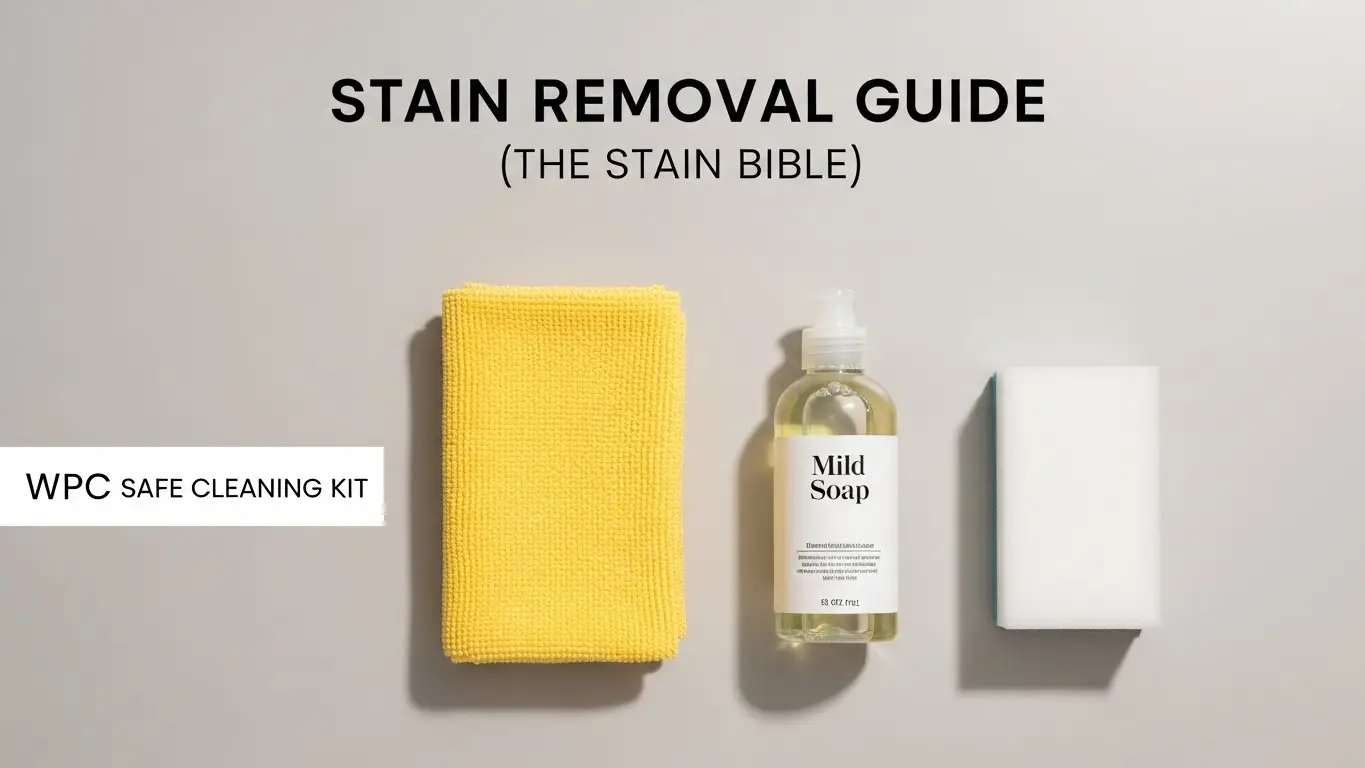
Remove tough stains from WPC panels by using specific agents for specific contaminants: Isopropyl alcohol for ink, degreasing soap for oil, and a melamine sponge for scuffs. Always test the cleaning agent on a scrap piece or an inconspicuous corner first to ensure it does not alter the panel’s gloss level or color.
We tested various common household accidents on our Bamboo Fiberboards. Here are the results:
| Stain Type | Recommended Cleaner | Technique |
| Grease / Cooking Oil | Degreasing Dish Soap | Apply neat (undiluted) to the spot. Let sit for 5 minutes to break down lipids, then wipe. |
| Ink / Permanent Marker | Isopropyl Alcohol (70%) | Dampen a cotton ball. Dab the stain gently—do not rub aggressively or you may spread the ink. |
| Scuff Marks | Melamine Sponge (Magic Eraser) | Use very light pressure. These sponges are micro-abrasive; over-scrubbing will dull the finish. |
| Wine / Coffee | Warm Soapy Water | Wipe immediately. WPC is resistant, but prolonged exposure to tannins can leave a ghost stain. |
| Crayon / Wax | Ice Pack + Plastic Scraper | Freeze the wax with an ice pack until brittle, then chip it off with a plastic edge. |
Removing Mold & Mildew (High Humidity Areas)
Eliminate mold on WPC panels by applying a solution of one part white vinegar to four parts water, allowing it to sit for 10 minutes before rinsing. Vinegar is acidic enough to kill mold spores but mild enough to be safe for the bamboo fiber composite, unlike chlorine bleach which can compromise the material's structural integrity.
Since our panels are popular in kitchens and bathrooms due to their moisture resistance, surface mold can occur if ventilation is poor.
- Spray: Mist the vinegar solution onto the affected area.
- Wait: Let it penetrate for 10-15 minutes.
- Wipe: Use a soft cloth to wipe away the dead mold.
- Rinse: Wipe again with fresh water to remove any acidic residue.
Repairing Scratches and Dents
Minor scratches on WPC panels can often be hidden by buffing the area with a clean finger to redistribute natural oils or using a matching wax filler stick. For deeper gouges, careful application of a heat gun can bring resins to the surface to blend the color, though this requires precision to avoid melting the texture.
If you are dealing with panel damage during the fitting process, prevention is key. For detailed advice on handling the material during installation, refer to our guide on how to cut WPC wall panels without chipping.
For existing scratches:
- The Heat Gun Trick: Set a heat gun to low. Keep it moving constantly about 6 inches from the scratch. The heat brings the polymer resins to the surface, often darkening the scratch to match the surrounding area. Warning: Do not overheat.
- Wax Sticks: For deep gouges, specialized floor wax sticks in a matching color are the industry standard for repairs.
Long-Term Maintenance & Protection
Long-term protection for WPC wall panels involves minimizing UV exposure with window treatments and avoiding wax-based polishes that create sticky buildup. Unlike natural wood, WPC does not require varnishing or sealing; its polymer cap layer is designed to be a finished surface that retains its aesthetic with simple dusting.
If you are planning a renovation or new build, proper installation is the first step in long-term maintenance. Ensure your panels are fitted correctly to avoid warping or gaps that collect dust by following our guide on how to install WPC wall panels step by step.
- UV Protection: While our exterior profiles are heavily UV stabilized, interior panels near south-facing windows should be protected with blinds to prevent slow fading over decades.
- No Polish Rule: Never use furniture polish (Pledge, etc.) on WPC. It creates a greasy layer that attracts dust and is difficult to remove without strong solvents.
Frequently Asked Questions
Can I paint over WPC wall panels if they get stained?
Yes, but it requires specific preparation. You must lightly sand the surface to break the polymer seal and use a high-quality acrylic latex primer followed by acrylic paint. However, painting covers the natural wood texture and bamboo fiber aesthetic, so we generally recommend cleaning rather than painting.
Is steam cleaning safe for WPC wall panels?
No, we do not recommend steam cleaning WPC panels. The intense heat and moisture pressure can force water vapor into the microscopic joints or cause the polymer cap layer to separate from the bamboo fiber core (delamination) over time.
How often should I clean my WPC wall panels?
For standard interior environments, dusting once every two weeks and a damp wipe-down once a month is sufficient. In high-traffic areas like hallways or kitchens where grease and fingerprints are common, spot cleaning should be done immediately as stains occur.
Does WPC wall paneling attract termites?
No, WPC (Wood-Plastic Composite) is highly resistant to termites and carpenter ants. The plastic polymer binds with the wood/bamboo fibers, making the material indigestible to pests, which is a major advantage over traditional solid wood paneling.


