



Contents
HSCS
Wooden Balcony Flooring Guide for Elegant Exterior Design
Wooden Balcony Flooring remains one of the most effective ways to create an elegant exterior space, especially when buyers want a surface that feels warm, architectural, and visually refined. From Hengsu's perspective as a manufacturer, the value of this product is not only aesthetic. It also depends on stable material selection, suitable structure, and correct use in outdoor conditions.
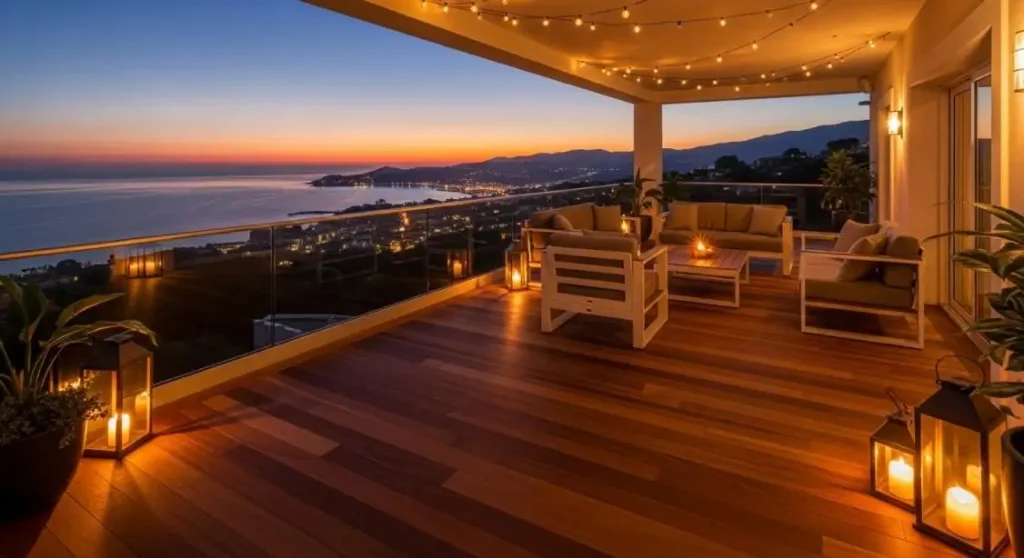
Why Wooden Balcony Flooring Still Appeals to Modern Buyers
Elegant exterior design isn't just for villas or hotels anymore. Balcony appearance is now more important for apartments, private terraces, rooftop spaces, and small commercial properties. Buyers in many of these projects prefer the look of real wood because it gives the surface more depth, texture, and a more polished look than many plain hard surfaces.
At the same time, buyers are getting more sensible. They want flooring that meets their design goals and their expectations for installation, maintenance, and service life. That is why Wooden Balcony Flooring should be looked at as a whole system instead of just a decorative board.
From a project planning perspective, this means asking:
•What wood species or modified wood option fits the local climate?
•What subframe and drainage design will protect long-term performance?
•What finish and maintenance plan will keep the balcony looking elegant over time?
These questions matter because exterior wood changes with humidity, temperature, rain, and sunlight. According to the USDA Forest Products Laboratory, wood in service responds to surrounding humidity, and protective coatings can slow moisture-related movement, but they cannot fully prevent it.
Popular Wooden Materials in 2026
A well-designed balcony floor begins with choosing a wood material that matches both project style and service conditions. In 2026, buyers are paying closer attention not only to appearance, but also to how different wood materials perform in outdoor use. In practical terms, the most popular options are often compared in terms of grain effect, dimensional stability, durability, maintenance demand, and design flexibility.
- Thermally Modified Wood
For buyers seeking a natural wood look with improved outdoor performance, thermally modified wood remains a popular choice. Through heat and steam treatment, the material gains reduced moisture uptake and better resistance to deformation and biological deterioration. This makes it well suited to balcony flooring applications where clean board alignment and reliable appearance are important.
Main Advantages:
•Improved stability in changing weather conditions
•Reduced moisture absorption compared with many untreated alternatives
•Natural wood style with a refined and updated surface appearance
•Balanced value in both design effect and functional performance
Best Application Scenarios:
•Stylish residential balconies
•Hotel terrace and hospitality flooring projects
•Exterior renovation programs
•Projects that emphasize clean board arrangement and lasting visual order
- Acetylated Wood
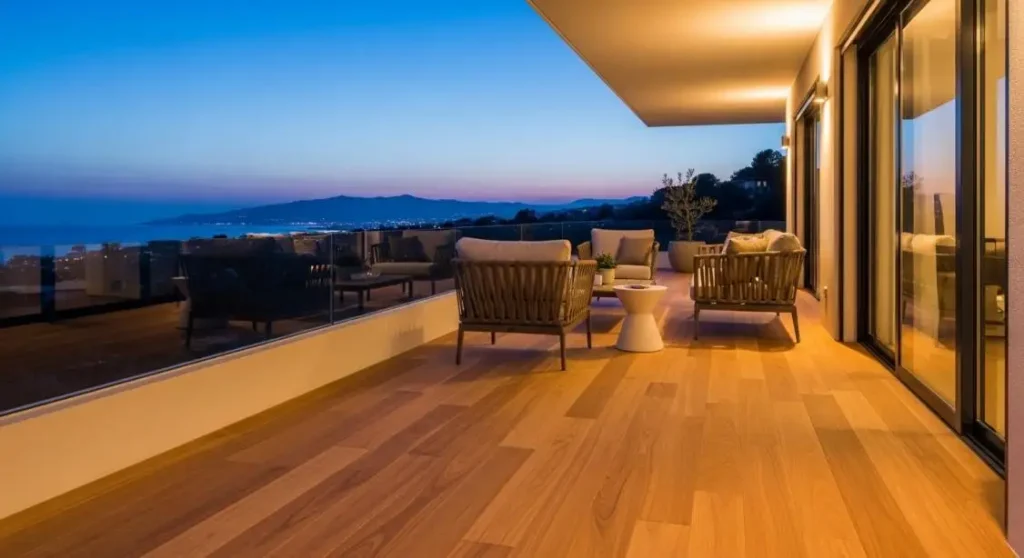
Acetylated wood is increasingly viewed as a premium-grade choice for exterior flooring. Its main advantage is its outstanding dimensional stability and durable performance in more demanding outdoor settings. For buyers who want a smoother installation effect and lower risk of visible movement over time, this material offers a strong premium solution.
Main Advantages:
•Strong resistance to swelling and shrinking
•High durability in outdoor exposure
•Better long-term surface consistency
•Lower maintenance expectations in many premium projects
Best Application Scenarios:
•Premium balconies in upscale residential buildings
•Coastal projects with more demanding outdoor conditions
•Luxury residential developments
•Exterior spaces where reduced upkeep is an important selling point
- Dense Natural Hardwood
Traditional hardwoods such as teak and other dense exterior wood species continue to hold market value because of their rich grain, solid feel, and premium visual identity. Many buyers continue to favor these materials when the project calls for authentic wood character as a defining part of the exterior design language.
Main Advantages:
•Rich natural grain that creates a distinctive visual effect
•Noticeable depth and prestige in the finished material appearance
•Solid texture that reinforces a premium outdoor image
•Highly suitable for classic and upscale building styles
Best Application Scenarios:
•Luxury residential villas and private homes
•Boutique hospitality and leisure projects
•Classical or heritage-inspired exterior concepts
•High-end spaces where true wood texture contributes strongly to the design identity
Structure and Installation Influence the Final Result
Premium material selection is only one part of a successful project. For Wooden Balcony Flooring, achieving both a clean finished look and reliable long-term use depends greatly on sound structure and proper installation. Weak support, poor water drainage, and unsuitable spacing can easily create avoidable performance problems.
The American Wood Council's deck construction guidance shows how strongly performance depends on framing, fastening, and proper support details. In other words, balcony flooring should never be selected without considering the full installation method.
For elegant exterior design, installation should support both engineering order and visual order. Buyers should pay attention to:
• Slope and drainage planning
• Expansion gaps between boards
• Edge finishing and trim details
• Fastener choice for appearance and corrosion resistance
This is especially important in renovation projects. Many clients want a more refined balcony without a full structural rebuild. In such cases, the flooring supplier should help align board profile, thickness, subframe method, and project conditions before production begins.
How Wooden Balcony Flooring Supports Elegant Exterior Design
A balcony becomes more elegant when the flooring works with the architecture instead of competing with it. In premium projects, the floor often acts as the base layer that unifies railing design, wall finish, lighting, and outdoor furniture.
In our experience, buyers usually prefer one of three directions:
• Warm Natural Tone for residential calm and soft visual comfort
• Deep Rich Tone for luxury contrast with metal or glass elements
• Clean Linear Layout for modern façades and disciplined geometry
This is where manufacturing consistency matters. When color variation is uncontrolled or board machining is inconsistent, the result can weaken the overall design effect. By contrast, accurate sizing, coordinated profiles, and cleaner finishing help the project look intentional and high-grade.
Sustainable Sourcing Is Becoming Part of Buyer Decisions
Today, balcony flooring selection is also influenced by sourcing standards. A growing number of buyers now examine where the wood originates and whether the supply chain is built around responsible forest management principles.
Forest certification systems such as FSC and PEFC are widely used to support traceability and responsible sourcing claims in the forest-products chain. For many buyers, this has become part of procurement review rather than only a marketing point.
This shift matters for manufacturers. A competitive Wooden Balcony Flooring program should not focus only on board appearance. It should also support transparent material communication, stable supply, and documentation that helps buyers evaluate sourcing risk more clearly.
Choosing a Supplier That Supports Better Buyer Decisions
For buyers, the most reliable supplier is not simply the one offering a low unit price. It is the supplier that helps clients move into installation with greater confidence.
At Hengsu, we believe a strong balcony flooring supplier should assist buyers in reviewing:
• The material's suitability for outdoor exposure
• Board size and profile alignment with project requirements
• Surface treatment options and finish direction
• Coordination between installation methods and accessories
• Maintenance expectations throughout the service life
When all of these aspects are aligned, Wooden Balcony Flooring becomes more than a finishing choice. It becomes an important element in a more refined and higher-value exterior design plan.
CTA: If your team is preparing for a balcony upgrade or sourcing flooring for a new exterior application, contact Hengsu to discuss wood options, board construction details, finish directions, and installation guidance for Wooden Balcony Flooring. We can support your transition from sample comparison to a clearer and more reliable specification decision.
Suggested External References For Buyer Research: USDA Forest Products Laboratory research on wood moisture performance, American Wood Council construction resources, and FSC/PEFC certification references for responsible sourcing evaluation.


