



Contents
HSCS
Saudi Arabia Vision 2030 and WPC Wall Cladding – A Mutual Journey Toward Sustainable Architecture
Introduction: New Innovations for a New Vision of a Nation
The Vision 2030 project, launched by Saudi Arabia in 2016, featured their undertaking to reshape economy, society and ecology of the kingdom. A prime component of this project was the modernization of the built environment of the kingdom. Entering the scene is WPC Wall Cladding in Saudi Arabia. This material is unique and driven by the goals of Saudi Arabia's green building.
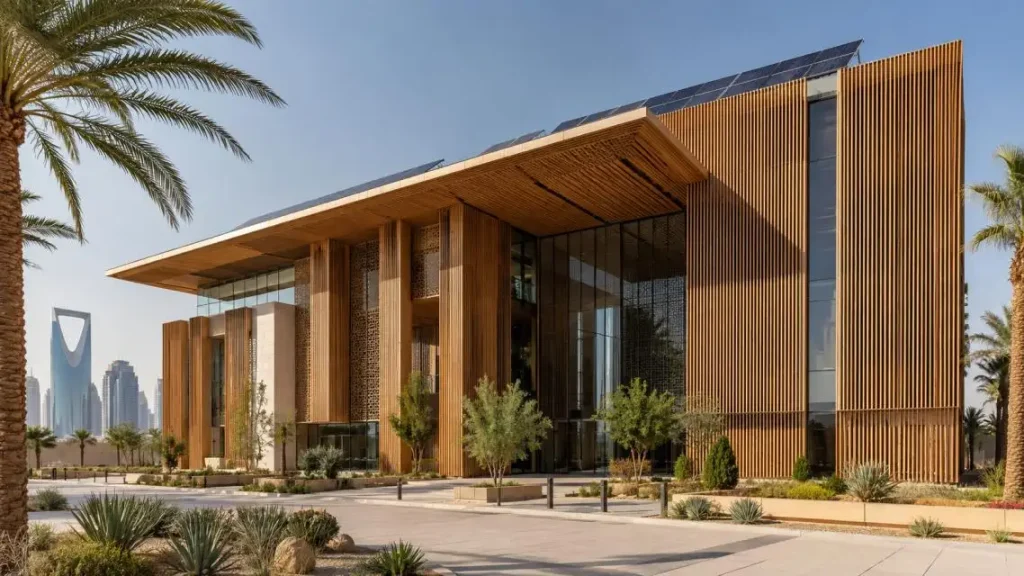
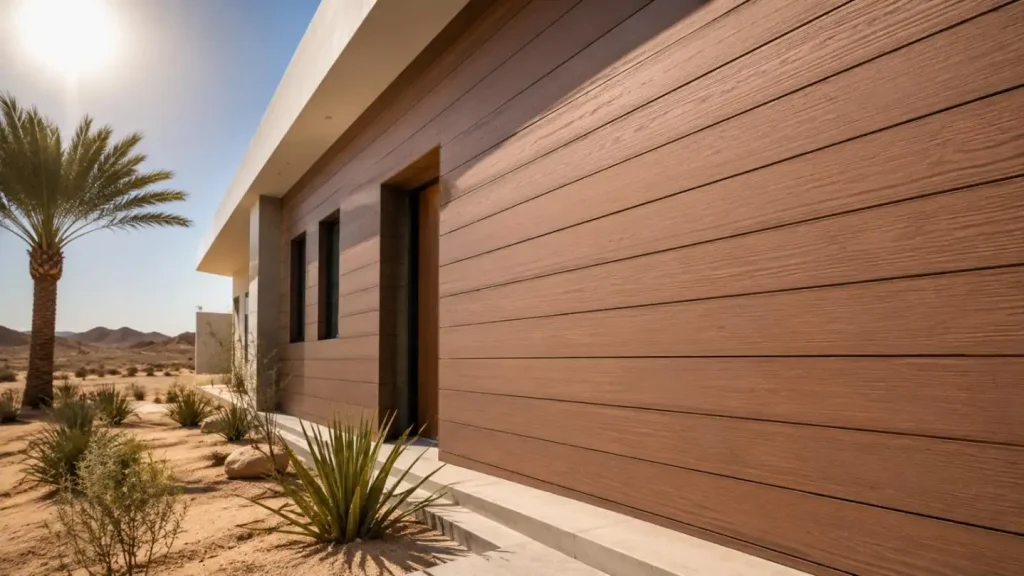
Wall cladding made of Wood Plastic Composites, combining wood fibers, recycled plastics, and additives, provides an appearance of wood, with the strength of polymers and the added benefit of the reduced maintenance. As Saudi Arabia is embarking on its biggest building boom in history, WPC Wall Cladding in Saudi Arabia is seen as more than a building product, but as a game changing product to reach the sustainability of the nation.
The Policy Foundation: The Sustainable Construction of Vision 2030
The sustainable development of cities is a priority of Saudi Vision 2030. The building and construction sector is one of the central features of the realization of the goals of the Vision. The Kingdom has initiated numerous programs to change the way buildings are designed, constructed, and operated.
•The Mostadam Program: This program is an initiative from the Ministry of Municipal, Rural Affairs, and Housing, which aims to encourage sustainability of construction activities by increasing the conservation of energy, water, and other resources. Projects are graded on the sustainability criteria and range in order of Green to Diamond.
•The Saudi Green Building Code: Essentially, this code is a construction sector focused code, and it provides provisions for the construction of buildings that are Green by virtue of their construction being energy efficient and having a reduced level of CO₂ emissions.
•SASO Certification: This certification by the Saudi Standards, Metrology and Quality Organization, is a mandatory certification to ensure building materials are in compliance with standards that address the physical, chemical, environmental, and safety and health aspects of building materials.
•The Saudi Green Building Forum (SGBF): SGBF reported in 2025 that there were 312 green building projects across 22 Arab countries with an estimated aggregate annual CO₂ emissions reduction of 62,800 tons.
Considering the Kingdom's green building policy, WPC Wall Cladding has the ability to bring the policy components to Saudi Arabia.
The Market Momentum: The Growth of WPC in the Kingdom
The evidence is convincing. In 2025, the worth of wood plastic composites in Saudi Arabia was USD 61.6 million, with an estimate of USD 127.5 million by 2034, a CAGR of 8.42%. The growth is attributed to the following:
•Government policies that promote green building: The construction and building sector has a strong attraction to the decreased environmental impact of industry activities called for by Vision 2030.
•Positive transformation of the construction and building sector: The large building projects of NEOM, the Red Sea Project, and Qiddiya entertainment city, created a strong demand for building materials that are sustainable, durable, and economical.
•The continued trend of urbanization: the 2030 urbanization of Saudi cities is expected to achieve 97.6%, and has building materials of high performance to further sustain that growth.
Improvements in the technology for wood plastic composite (WPC) products means they are more resistant, flexible and require less overall upkeep.
Construction activity, urbanization, and the targets set in Vision 2030 are causing the cladding market to reach USD 3.5 billion. Within this market, WPC Wall Cladding in Saudi Arabia is gaining more interest and market share.
A Local Success Story: The Al-Ahsa Palm Wood Project
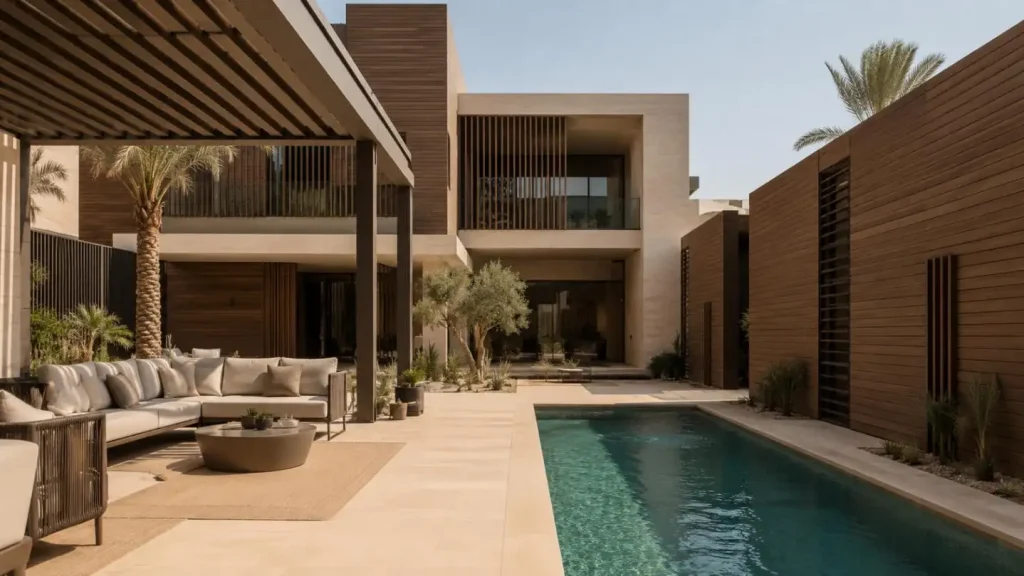
The synergy of Vision 2030 and WPC Wall Cladding in Saudi Arabia is perhaps best captured in the Palm Wood Project in Al-Ahsa. Initiated by the National Center for Palms and Dates, this project is the first of its kind, producing 8,000 tons of processed palm based materials in a year.
•Use of local resources: The project cuts contracts with farmers to source palm trunks and fronds. These are agricultural byproducts which are otherwise valueless.
•Demonstration of a circular economy: By using 50% palm raw materials, the project shows a high degree of industrial and environmental innovation.
•Economic diversification: The project helps reduce Saudi Arabia's dependence on imported wood, provides jobs, and improves the competitiveness of the Kingdom in the domain of sustainable manufacturing.
•Direct alignment with Vision 2030: The project localizes the plastic wood industry, and addresses the economic diversification and environmental aspects of the Saudi Vision.
The panels produced in Al-Ahsa are used in building cladding and outdoor wood flooring, as well as in door panels and other decorative elements. Given their high resistance to moisture and water, combined with termite and pest resistance, the panels are ideal for construction. The Project is Palm Raw Material Utilization's largest plant, and demonstrates a sustainable industry in the circular economy.
How WPC Wall Cladding Meets Saudi Arabia's Requirements
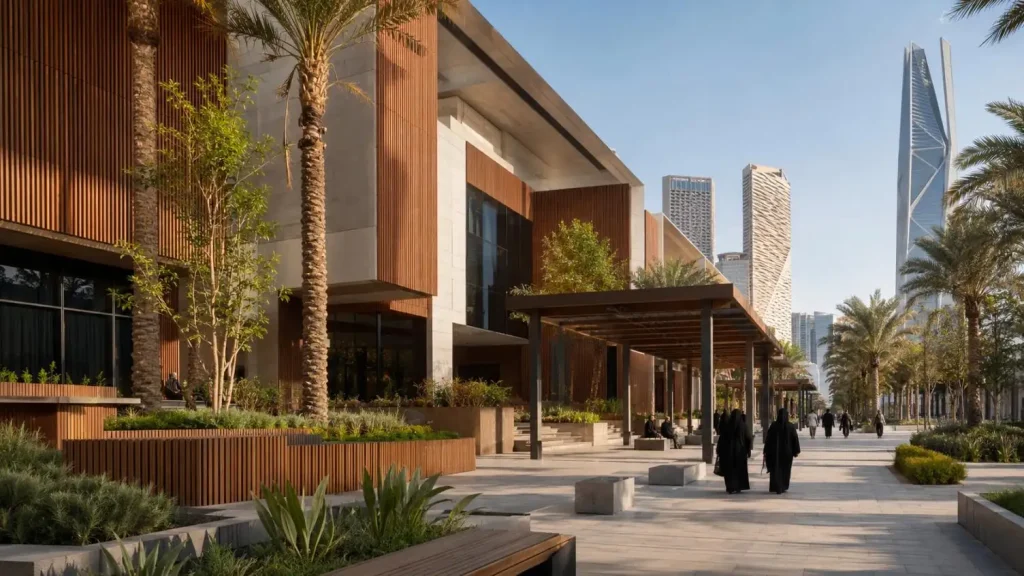
Saudi Arabia presents a tough test for construction materials due to extreme temperatures, dry conditions with high UV exposure, and large temperature variances. However, WPC Wall Cladding in Saudi Arabia offers the following solutions:
•Thermal Insulation: WPC wall panels help to reduce the temperature of the building and the need for air conditioning by insulating the heat entering the building. This is vital because of the high costs of cooling in Saudi Arabia.
•Desert Environment: WPC wall panels are perfect for a desert environment because traditional wood in a high temperature environment will crack and rot. Since WPC wall panels do not corrode, they do not have this problem.
•UV Stability: WPC cladding systems can stand the test of time and sun and will not fade like traditional materials.
•Fire Retardance: WPC wall panels comply with building codes due to their inherent burn resistant qualities.
•Better than Wood: Wooden wall panels need constant repainting and re-staining and as a result, promote the need for consistent maintenance. WPC needs maintenance only once a year.
What We hope For
Sustainable building materials will assist in the sustainable vision of Saudi Arabia's Vision 2030. The construction industry will play an important role in the Saudi Green Initiative to reduce carbon emissions by 278 million tons a year.
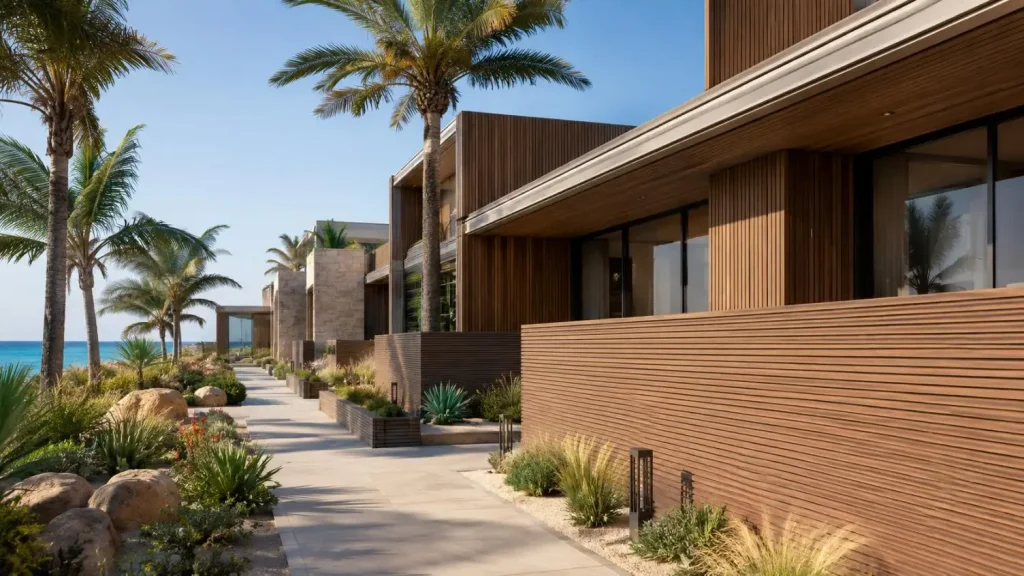
WPC Wall Cladding in Saudi Arabia is more than a construction material. It is part of the future of the Kingdom because it brings together sustainability and innovation, and the use of local materials. WPC wall cladding connects all corners of the Kingdom from the Al-Ahsa date palms to the future megastructures of NEOM. It aids in the development of a modern and sustainable Saudi Arabia, where economic development and protection of the environment coexist.
Final Words
WPC Wall Cladding in Saudi Arabia provides a great opportunity to view the merging of the extraordinarily bold sustainable goals of Saudi Vision 2030 and the real-life advantages of WPC Wall Cladding as a “mutual journey.” The policies set the stage; the product sets the solution. The policies support the product; the technology provides it. The raw materials are localized; the global standards of sustainability are achieved.
The WPC wall cladding's aesthetic flexibility, durability in the extreme, minimal maintenance, and support for a sustainable future goal of the nation offer architects, developers, and building owners across the Kingdom a great deal. As the Kingdom builds the cities of the future, WPC Wall Cladding in Saudi Arabia will become foundational.
Looking for high quality WPC wall cladding for your project in Saudi? With 24 years of experience, HENGSU offers integrated, eco-friendly, WPC wall panels that are moisture, UV, and impact resistant with a lifespan of 30+ years. HENGSU also provides design, production, and after sales support services. Need wall panels for NEOM, Red Sea, or any other project? HENGSU has solutions that are developed with international quality standards that cater to the particular needs of your project. HENGSU provides trustworthy, durable, and sustainably designed wall cladding solutions.
Frequently Asked Questions
Q1. What is WPC wall cladding?
WPC wall cladding integrates recycled wood fibers and thermoplastics into a composite building material. It is used to finish a building's interior or exterior walls.
Q2. Why is WPC wall cladding a good option for Saudi Arabia's climate?
WPC wall cladding is built to last in Saudi Arabia's hot, dry climate. It withstands warping, cracking, or fading due to moisture and strong, dry, intense UV rays.
Q3. In what ways does WPC wall cladding contribute to achieving Saudi Vision 2030?
WPC wall cladding supports the initiatives of Saudi Vision 2030 as a building material that is low carbon and highly insulative, thus energy efficient, and provides an opportunity to deforest less due to its impact decreasing timber usage.
Q4. Does WPC wall cladding have a fire resistance feature?
WPC wall cladding does have a fire resistance feature. Many WPC products maintain international compliance for fire safety, such as the construction standard of the European Test for the Classification of Building Materials (EN13501).
Q5. Does WPC wall cladding keep an eco friendly practice?
Yes, in its construction and recycling post-use, WPC wall cladding incorporates a waste free practice by using no formaldehyde and containing safe and no toxic or harmful substances.


