


Best Lightweight Wall Cladding Panels 2026: Expert Guide
The best lightweight wall cladding panels in 2026 are Wood-Plastic Composite (WPC), Bamboo Charcoal PVC, and Flexible Stone Veneer. These materials dominate the market because they offer a 60–80% weight reduction compared to traditional masonry, allowing for faster installation and lower structural requirements.
In this guide, you will control:
- Material Selection: Choose the right panel based on 2026 weight-to-durability ratios.
- Project Costs: Reduce labor and shipping expenses by up to 30%.
- Compliance: Verify fire ratings (B1/A2) and VOC safety standards.
- Design Trends: Implement 3D textures and integrated lighting strips.
Why Lightweight Cladding is the 2026 Standard
In 2026, the construction industry has pivoted toward "Efficiency First." Traditional stone or solid timber cladding can weigh over 50kg/sqm, requiring heavy-duty mechanical anchors and reinforced wall substrates. In contrast, modern lightweight panels average between 2kg and 8kg/sqm.
This shift isn't just about weight; it’s about the "Shipping & Labor Math." Lighter panels mean one person can handle a 3-meter board alone, and a single delivery truck can carry four times the coverage area of stone. For high-rise retrofitting or interior drywall applications, lightweight cladding is often the only viable way to achieve a premium look without structural modification.
Top 5 Lightweight Materials for 2026
WPC (Wood-Plastic Composite) - The All-Rounder
WPC remains the most popular choice for its balance of price and performance. Made from recycled wood fibers and thermoplastic resins, it mimics the grain of timber without the rot or termite risk.
- Best for: Residential feature walls and commercial corridors.
- Weight: ~5.5kg/sqm for a standard 9mm panel.
Bamboo Charcoal PVC - The Eco-Innovation
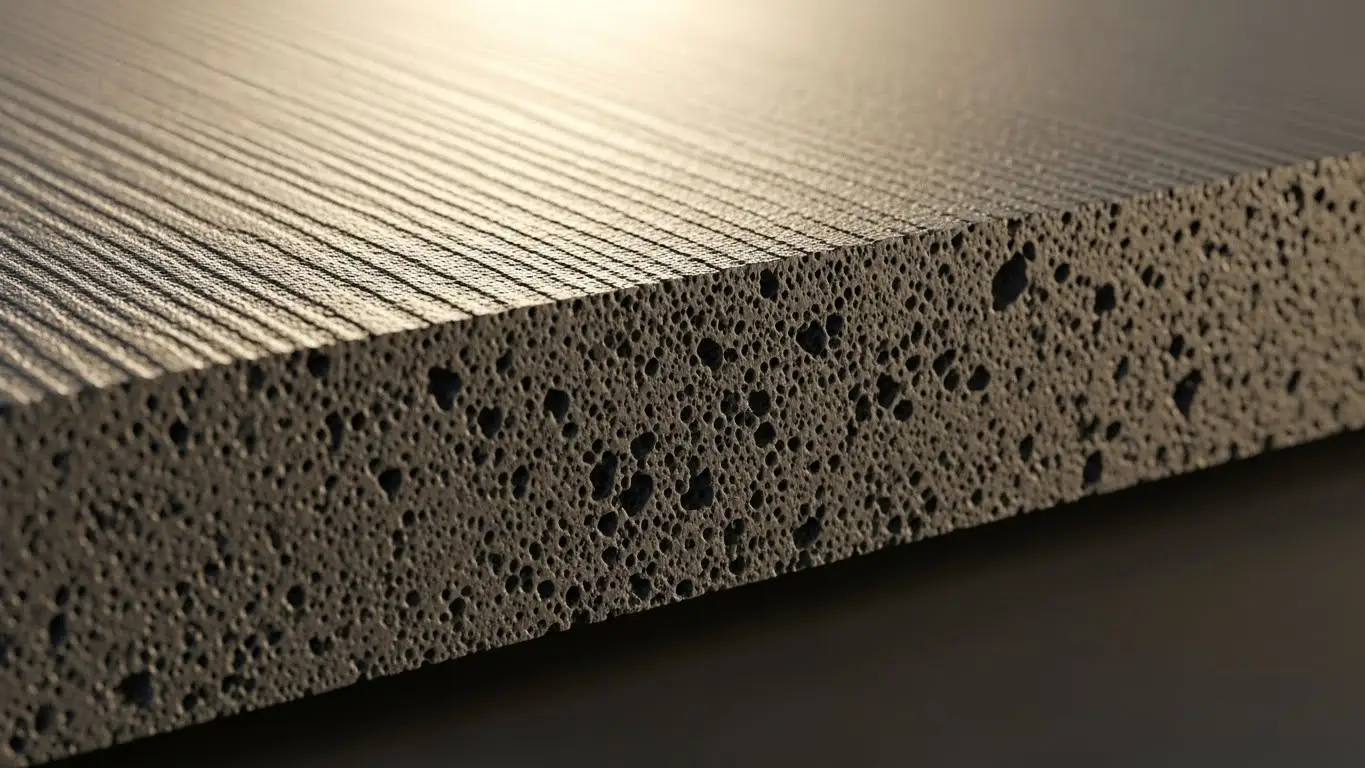
As a specialized manufacturer, we see Bamboo Charcoal PVC as the 2026 "Health Standard." These panels feature a porous core that naturally absorbs indoor odors and regulates humidity.
- Best for: Bedrooms, basements, and health-conscious offices.
- Weight: ~3.5kg – 4.5kg/sqm.
Flexible Stone Veneer - Luxury Without the Load
These panels use a thin layer of real natural stone backed by fiberglass or fabric. You get the authentic texture and best modern wall cladding panels 2026 aesthetics with a thickness of only 1.5mm to 3mm.
- Best for: High-end hospitality and curved feature columns.
- Weight: ~1.5kg – 2kg/sqm.
Aluminum Slat Panels - Modern Industrial Aesthetic
For those seeking a sharp, metallic finish, aluminum slats provide extreme durability. They are virtually maintenance-free and offer the highest fire resistance among lightweight options.
- Best for: Modern exteriors and industrial-style lofts.
- Weight: ~3kg – 5kg/sqm (depending on profile depth).
Comparison Table: Weight, Cost, and Durability
| Material | Weight (kg/sqm) | Avg. Lifespan | Best Use | Price Bracket |
| WPC (Standard) | 5.0 – 8.0 | 15–20 Years | Interior/Exterior | Mid-Range |
| Bamboo Charcoal | 3.5 – 4.5 | 20+ Years | Interior (Eco) | Mid-Range |
| Flexible Stone | 1.5 – 3.0 | 15–25 Years | Feature Walls | Premium |
| Aluminum Slats | 3.0 – 5.0 | 30+ Years | Exterior/Modern | Premium |
| Natural Stone | 45.0 – 70.0 | 50+ Years | Ground Floor | Luxury |
Interior vs. Exterior: Choosing the Right Panel
Not all lightweight panels are created equal. When selecting for Exterior use, UV stability is your primary metric. Look for "Co-extrusion" WPC, which features a protective outer shell to prevent fading. In 2026, we measure color stability using Delta E (ΔE); a ΔE value under 2.0 after 2,000 hours of UV exposure indicates a panel that will look "new" for a decade.
For Interior projects, the focus shifts to Indoor Air Quality (IAQ). This is where best sustainable wall cladding panels 2026 like Bamboo Charcoal excel. Ensure your interior panels meet E0 or E1 formaldehyde emission standards to keep your living spaces safe.
2026 Design Trends: 3D Textures and Integrated Tech
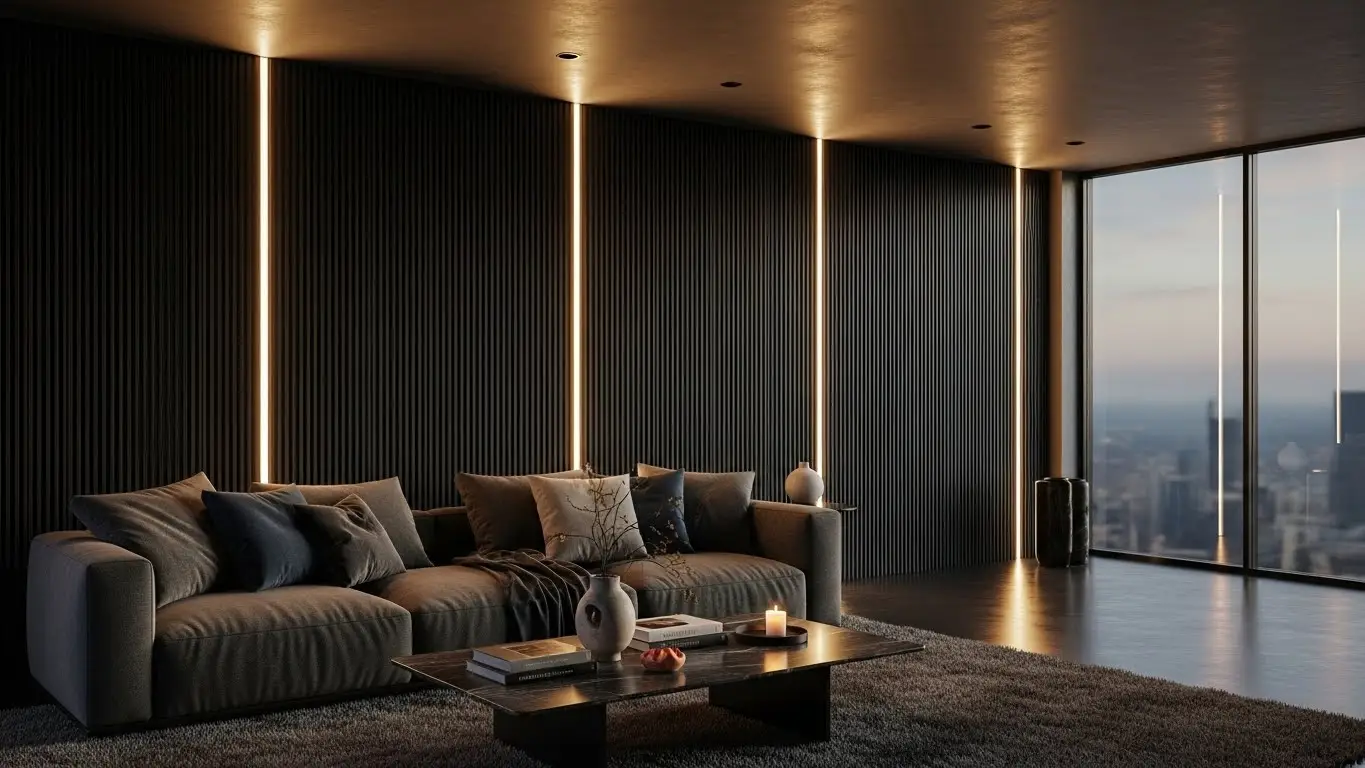
The most significant trend in 2026 is the "Tactile Wall." Designers are moving away from flat surfaces in favor of deep-grooved fluted panels and 3D "skin-feel" finishes.
What’s New:
- LED Integration: Modern lightweight panels often feature dedicated channels to snap in LED strips without cutting into the wall.
- Matte Textures: High-gloss is out; ultra-matte "soft-touch" finishes that resist fingerprints are the new standard for luxury.
Installation: Can You Really DIY Lightweight Cladding?
Yes, most lightweight systems are designed for 2-step installation: Glue and Click.
Steps to Success:
- Preparation: Ensure the substrate is dry. While panels are light, they require a flat surface to prevent "telegraphing" (showing bumps through the panel).
- Adhesive: Use a high-tack polymer adhesive.
- Mechanical Fix: For heavier WPC, use hidden stainless steel clips.
Common Mistakes to Avoid:
- Ignoring Expansion Gaps: Even lightweight composites expand and contract with temperature. Always leave a 2–3mm gap at the edges.
- Over-Tightening: Don't drive screws so hard they crack the flange; let the panel "float" slightly.
E-E-A-T: Compliance, Fire Ratings, and Sustainability
Safety is non-negotiable. For commercial buildings or high-rises, you must specify best fire resistant wall cladding panels 2026 that meet B1 (Fire Retardant) or A2 (Non-Combustible) classifications.
- B1 Rating: The material is difficult to ignite and self-extinguishes.
- A2 Rating: The highest standard for composites, often required for buildings over 18 meters.
At HSCS Decor, our 20+ years of manufacturing experience ensures every batch is tested for density and flame spread behaviour under EN 13501-1 standards.
Frequently Asked Questions (FAQ)
Are lightweight panels fire rated?
Yes, but ratings vary by material. Most high-quality WPC and Bamboo Charcoal panels achieve a B1 rating, while aluminum or fiber-cement options can reach A2 or A1 (non-combustible) status.
How long does PVC cladding last?
Modern PVC cladding, especially those with UV-resistant coatings, typically lasts 15–25 years. Interior Bamboo Charcoal panels can last even longer as they are protected from weather elements.
Can I install these over existing drywall?
Yes, the low weight (under 5kg/sqm) makes them safe for standard drywall. We recommend using a combination of structural adhesive and finish nails for a permanent bond.
Do lightweight panels provide soundproofing?
While not a replacement for dedicated acoustic foam, fluted or hollow-core WPC panels provide significant sound diffusion, reducing "echo" in large rooms by an NRC (Noise Reduction Coefficient) of approximately 0.3.
Are they waterproof?
WPC and PVC-based panels are 100% waterproof and moisture-proof. They will not warp or grow mold, making them ideal for bathrooms and coastal areas.
What is Bamboo Charcoal PVC? It is an eco-friendly composite made from carbonized bamboo powder and polymer resin. It is favored in 2026 for its ability to filter indoor air pollutants and regulate humidity.
Conclusion
Lightweight wall cladding panels are no longer just a "cheap alternative"—they are a high-performance solution for modern architecture. By choosing materials like Bamboo Charcoal or Co-extruded WPC, you gain the aesthetics of luxury stone and wood with a fraction of the weight and labor cost.


