



How to Cut WPC Wall Panels Without Chipping (Pro Guide)
Installing WPC wall panels transforms a space instantly, but one wrong cut can ruin the premium finish. Unlike natural timber, Wood Plastic Composite (WPC) combines wood fibers with thermoplastics and a decorative PVC film. This makes it durable, but also prone to "melting" if cut too fast or "chipping" if cut with the wrong blade.
As manufacturers of solid-core and fluted WPC panels for over 20 years, we have seen hundreds of DIYers ruin expensive panels by treating them exactly like plywood. They aren't.
This guide reveals the specific blade specifications, feed rates, and orientation tricks we use on professional job sites to get factory-perfect edges every time.
The "Anti-Chip" Cheat Sheet (Quick Summary)
To cut WPC wall panels without chipping, use a circular saw with a carbide-tipped, fine-tooth blade (60-80 TPI). Always cut with the decorative side facing DOWN to prevent the teeth from lifting the PVC film. For detail work around outlets, use a jigsaw with a metal-cutting blade and apply masking tape over the cut line.
Essential Tools for WPC Installation
The difference between a jagged edge and a seamless joint often comes down to blade selection. We recommend carbide-tipped blades because WPC is denser than standard wood and can dull steel blades quickly.
Recommended Tool Setup:
| Tool | Specification / Blade | Best Application |
| Circular Saw | 60-80 TPI (Teeth Per Inch) Carbide | Long, straight rip cuts on full-length panels. |
| Jigsaw | 20-24 TPI (Metal Cutting Blade) | Socket cutouts, curves, and switches. |
| Miter Saw | 10-12 inch Sliding Compound | Cross-cuts and precise 45-degree corner miters. |
| Utility Knife | Heavy-duty with Snap-off Blades | Scoring thin skins or trimming caulk. |
| Masking Tape | Blue Painter's Tape (Low Residue) | Essential for preventing surface tear-out. |
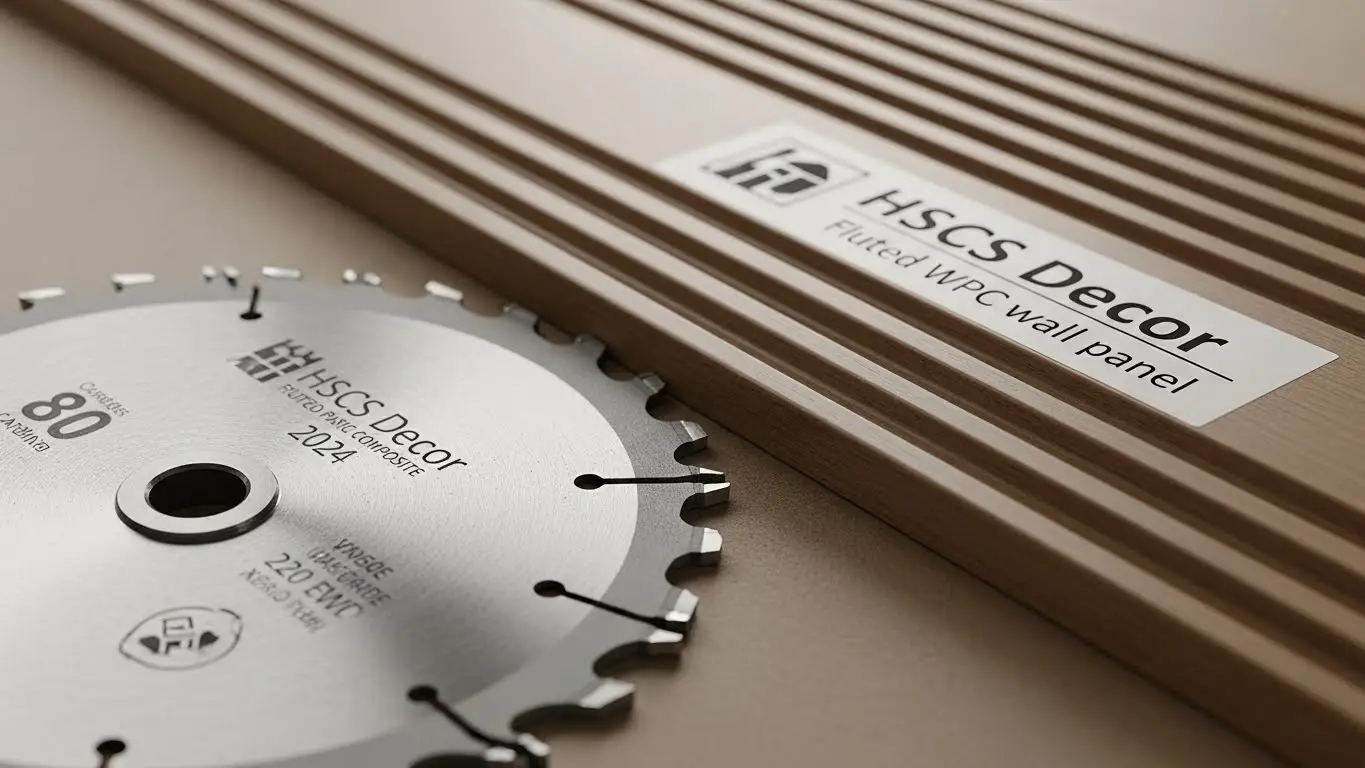
Method 1: The Power Saw Technique (For Thick/Solid Panels)
The best method for cutting solid-core WPC panels is using a circular saw with the panel face-down. This allows the blade teeth to enter from the decorative side, compressing the fibers rather than lifting them, which eliminates surface chipping.
If you are installing our Solid Wood Slat Wall Panels or heavy-duty commercial cladding, a power saw is non-negotiable.
Step 1: The "Face Down" Rule
Physics dictates your cut quality. A circular saw blade spins upward into the material.
- Circular Saw: Cut Face DOWN. The teeth enter the "good side" and exit the back.
- Miter Saw: Cut Face UP. The blade chops down, so it should enter the finished surface first.
Step 2: The Tape Trick
Before you even measure, apply a strip of blue masking tape roughly where you intend to cut. Mark your pencil line directly on the tape. The tape acts as a secondary "skin," holding the PVC film down while the blade passes through.
Step 3: Manage Your Speed (Feed Rate)
This is where most mistakes happen. WPC contains plastic.
- Too Fast: You will chip the edge.
- Too Slow: Friction will build up, and the plastic content will melt, welding the cut back together.
- The Sweet Spot: Listen to the motor. Keep a steady, moderate pace. If you see smoke, speed up slightly or let the blade cool.
Pro Tip: In our testing, we found that cordless saws often have thinner kerf blades (thinner cut width), which generates less heat and dust than heavy-duty corded worm-drive saws.
Method 2: The Score & Snap (For Thin Veneers Only)
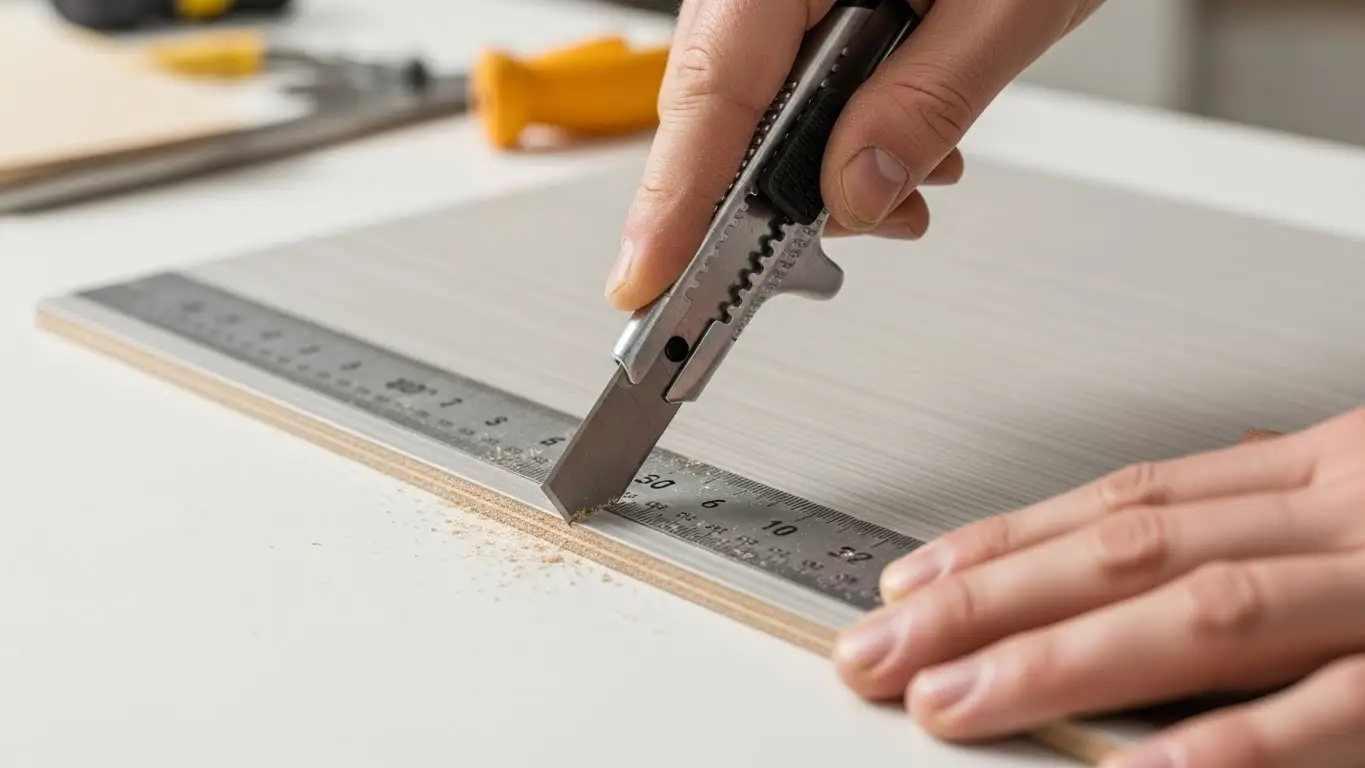
The "Score and Snap" method is only effective for WPC skins or veneers thinner than 4mm. Using a sharp utility knife and a metal straight edge, score the panel deeply multiple times, then snap it over a table edge for a dust-free cut.
Warning: Do not attempt this on our 20mm+ fluted panels or solid-core boards. You will not get a clean break.
- Mark: Draw your line on the finish side.
- Score: Use a metal ruler as a guide. Run your utility knife firmly along the line 3-4 times. You want to cut through the film and into the core.
- Snap: Place the score line exactly on the edge of a workbench. Press down sharply on the waste side.
- Clean: The core might look slightly rough; smooth it with a sanding block (120 grit).
How to Cut Cutouts for Outlets and Switches
To cut electrical outlet holes in WPC panels, mark the box location on the back of the panel. Drill four pilot holes in the corners, then use a jigsaw with a fine-tooth metal blade to connect the dots without damaging the surrounding finish.
Cutting around sockets is tricky because the fluted structure can crack if unsupported.
- Measure Twice: Measure the distance from the floor and the nearest wall to the electrical box. Transfer these to the back of your WPC panel. (Remember to mirror your measurements since you are working on the back!).
- Pilot Holes: Drill a 10mm hole inside each of the four corners of your marked box.
- The Cut: Insert your jigsaw blade into a pilot hole. Run the saw at high speed but push it forward slowly.
- Support: Place a block of scrap wood under the cut area to stop the panel from vibrating violently.
Troubleshooting Common Mistakes
If a WPC panel chips during cutting, the quickest fix is to fill the defect with a wax filler stick or colored caulk that matches the film. If the plastic melts, allow it to cool and harden, then snap off the excess debris and sand the edge.
We frequently troubleshoot these issues for clients:
- Problem: The Edge is Rough/Fuzzy.
- Cause: Your blade is too dull or has too few teeth (e.g., a 24 TPI framing blade).
- Fix: Sand the edge with 120-grit sandpaper.
- Problem: The Film is Peeling Back.
- Cause: You cut "Face Up" with a circular saw.
- Fix: Glue the film back down with a dab of superglue (cyanoacrylate) immediately.
- Problem: The Panel Cracked.
- Cause: The panel wasn't supported. WPC is flexible; if the waste piece droops while cutting, it will snap the remaining connection.
- Fix: Always support the entire length of the panel, including the piece you are cutting off.
Finishing the Edge (After the Cut)
After cutting WPC panels, finish the exposed edges by sanding them smooth or installing a matching L-profile trim. For corners, use an end cap or miter the panels at 45 degrees for a seamless professional look that hides the core material.
While WPC cores are often colored to blend with the surface, a raw cut is never the final look.
- Internal Corners: Usually require no trim if scribed correctly.
- External Corners: We recommend our L-Trims or End Caps which are color-matched to the specific WPC grain.
- Exposed Ends: If a cut end is visible (like on a half-wall), use a matching edge band or cap.
Related Guide: Once your panels are cut, you need to mount them correctly. Read our guide onhow to install WPC wall panels step by step.
Maintenance: Keep your new wall looking fresh. Learnhow to clean and maintain WPC wall panels.
Frequently Asked Questions
Can I use a hand saw to cut WPC wall panels?
Yes, you can use a hand saw, but it requires patience. A fine-tooth tenon saw or hacksaw gives the cleanest results. Avoid coarse rip saws, as the large teeth will shatter the decorative PVC film and leave a ragged edge.
Do I need to seal the cut edges of WPC panels?
Generally, no. HSCS WPC panels are inherently waterproof and rot-proof throughout the core, so sealing isn't required for durability. However, if the panel is inside a shower enclosure, we recommend applying clear silicone to the cut edge for extra security against mold buildup behind the panel.
Why is my WPC panel melting when I cut it?
Melting occurs when friction heat exceeds the melting point of the thermoplastic in the composite. This happens if your blade is dull, your feed rate is too slow, or the blade is installed backward. Switch to a sharp carbide blade and move the saw steadily through the material.
What is the best blade tooth count (TPI) for WPC?
For circular saws, we recommend 60 to 80 TPI (Teeth Per Inch). For jigsaws, use a 20-24 TPI metal-cutting blade. Higher tooth counts create smoother cuts but generate more heat, so manage your speed carefully.


