



Contents
HSCS
The Ultimate Guide to Heavy-Duty PVC Panels: Properties, Benefits & Applications
When you need wall or ceiling cladding that is lightweight, cost-effective, but can also withstand extreme environments, Heavy-Duty PVC Panels are the optimum choice. At a much higher cost, these reinforced panels are engineered to be highly impact resistant, moisture resistant, and durable. In this guide, we will cover everything you need to know about Heavy-Duty PVC Panels from composition to real life examples to help you determine if they fit your requirements for your next assignment.

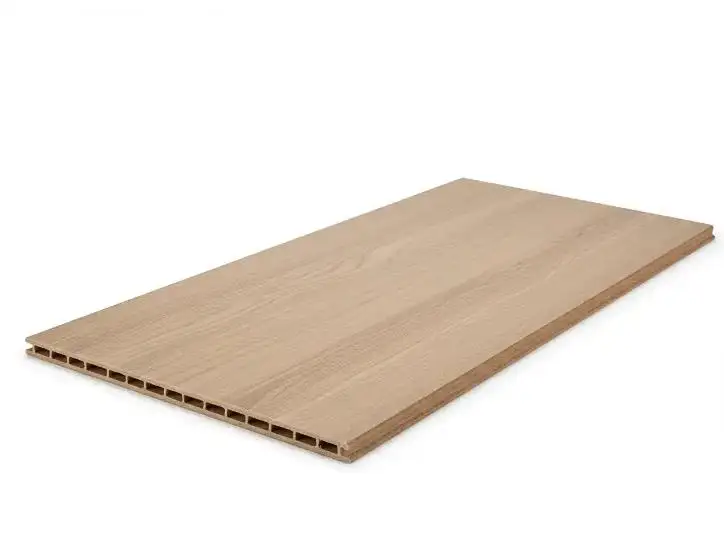
Heavy-Duty PVC Panels are stiff, extruded sheets made of polyvinyl chloride (PVC) that are infused with stabilizers, impact modifiers, and in some rare cases a foam or solid core. They are much thicker and tougher than regular PVC cladding, and also often have a UV resistant surface and an interlocking edge for faster installation.
Key Characteristics:
•Thickness: Most panels range from 4-20mm for solid and 8-30mm for foamed panels.
•Density: Higher density means increased load capacity.
•Surface finishes: Matte, glossy, textured, or wood-grain finishes available.
•Reinforcement: Some panels have fiberglass reinforcement or ribbing.
Why Heavy-Duty PVC Panels Are the Best
More industries are selecting Heavy-Duty PVC Panels and for good reason. Here's what makes them better than the rest:
1. Long-lasting
•Heavy-Duty PVC Panels are resistant to scratches and impact, and are excellent to use as paneling in locker rooms and other areas of high foot-traffic.
•Heavy-Duty PVC Panels can withstand high and low temperatures from -20°C to +60°C and won’t corrode or rusty, even with high exposure to caustic, acidic, and salty water. Heavy-Duty PVC Panels are chemically resistant and keep deterioration at bay.
2. Heavy-Duty PVC Panels Deal with Moisture
•Heavy-Duty PVC Panels will keep wood panels, paneling, and drywall, addressing mold and rot, at bay. Heavy-Duty PVC Panels are used in soggy areas where mold and rot grow like commercial washing spaces and commercial food processing sites.
3. Maintenance
•Heavy-Duty PVC Panels are easy to maintain due to their smooth and stain-resistant surface. Heavy-Duty PVC Panels are resistant to bacteria and will keep them at bay.
4. Fire Retardancy is an Optional Class B Trait
•Heavy-Duty PVC Panels, to public builds standard, self-extinguish and are proven to emit little to no smoke. Heavy-Duty PVC Panels meet the requirements of of ASTM Class of Ignite to of 84 (3-28's) when used to public builds.
5. Lightweight and Strong
•Heavy-Duty PVC Panels weigh considerably less than plywood, even at the same strength. Heavy-Duty PVC Panels simplify panel installations.
6. Chemical and Grease Protective
•Heavy-Duty PVC Panels are chemically resistant, and will keep cleaning agents and industrial surface/solvents from up-ending the floor of the workspace. Heavy-Duty PVC Panels will keep chemical agents, including grease and oil at bay, and are excellent to use as floor panels in makeshift and spontaneous floor labs.
- Cost-Effective Lifecycle
•Zero repainting, no waterproofing membranes, no replacement for decades
•Lower total cost than FRP (fiberglass reinforced panels) or stainless steel
Common Applications of Heavy-Duty PVC Panels
Because of their adaptability, Heavy-Duty PVC Panels appear in an astonishing range of environments:
| Sector | Typical Uses |
| Food Industry | Walk-in coolers, meat processing rooms, brewery walls |
| Healthcare | Hospital operating rooms, cleanrooms, shower areas |
| Transportation | Truck liners, livestock trailer walls, shipping container interiors |
| Industrial | Machine enclosures, chemical storage rooms, clean benches |
| Commercial | Restaurant kitchens, public restrooms, pool changing rooms |
| Residential | Garage walls, laundry rooms, basement paneling, outdoor sheds |
✅ Pro tip: For ceilings in high-humidity areas, use lightweight hollow-core Heavy-Duty PVC Panels to reduce sagging.
How to Install Heavy-Duty PVC Panels – A Quick Guide
Installation is straightforward and requires basic carpentry tools. Most Heavy-Duty PVC Panels come with a tongue-and-groove or interlocking edge.
Step-by-step:
- Prepare the surface – Ensure backing (studs, plywood, or concrete) is clean, dry, and flat.
- Cut panels – Use a circular saw with a fine-tooth blade (or a jigsaw for curves).
- Apply adhesive – Use construction-grade PVC-safe adhesive on the backing.
- Positioning the first panel – Begin in a corner, using a level to ensure it is plumb.
- Locking and fixing – Bang the next panel in to ensure it's seated within the groove, then secure using either stainless steel screws or pneumatic nails. The latter should be used to place the nail head flush with the panel surface.
- Joint sealing – To achieve completely waterproof seams, corner PVC trims should be used coupled with silicone at the edges.
⚠️ Heavy-Duty PVC Panels must be checked and given the appropriate acclimatization to room temperature for 24 hours prior to installation. This prevents issues such as the panel expanding and/or contracting.
Heavy-Duty PVC Panels vs. Competing Materials
To understand their true value, compare Heavy-Duty PVC Panels with alternatives:
| Property | Heavy-Duty PVC Panels | FRP Panels | Stainless Steel | Tile & Grout |
| Moisture resistance | ★★★★★ | ★★★★☆ | ★★★★★ | ★★☆☆☆ |
| Impact resistance | ★★★★☆ | ★★★☆☆ | ★★★★★ | ★★☆☆☆ |
| Chemical resistance | ★★★★☆ | ★★★☆☆ | ★★★★☆ | ★☆☆☆☆ |
| Ease of cleaning | ★★★★★ | ★★★★☆ | ★★★★☆ | ★★☆☆☆ |
| Installed cost per sq.ft | Low–Medium | Medium | High | Medium–High |
| Repair difficulty | Easy (replace panel) | Moderate | Hard (welding) | Messy (regrout) |
Verdict: Heavy-Duty PVC Panels are most recommended for high moisture, medium impact, applications for the greatest value in price and performance.
How to Choose Heavy-Duty PVC Panels
Choosing Heavy-Duty PVC Panels can involve:
•Core Type: Solid (strongest) vs. Foamed (lighter, better insulated, cheaper).
•Thickness: 6+ mm for walls, 10+ mm for floors and areas of heavy impact.
•Color/Finish: White for the standard, and custom colors, wood, or stone prints.
•Certifications: FDA for food, USDA for agriculture, and Class A for fire.
•UV treatment: Required for external or sunlit locations.
��� Measure twice: Always add 5–10% to the cuts and waste.Environmental & Safety Considerations
The Heavy-Duty PVC Panels increased commitment to the environment:
100% recyclable and provided through PVC recycling programs.Calcium-zinc based, lead-free stabilizers.At times, contains 40% post-industrial recycled content.Burning PVC is discouraged due to the production of hydrogen chloride gas.
Thoughts: Are Heavy-Duty PVC Panels Right for You? Heavy-Duty PVC Panels are ideal if moisture, impact, and ease of cleaning are priorities.With a steam room, a refrigerated warehouse, and a quick tile replacement, these heavy-duty PVC panels will also last long.
Summary:
✔️ Best for: Wet, chemical, high-traffic areas
❌ Not ideal for: Extreme heat (>70°C) or structural load-bearing applications
Download a sample spec sheet and test a real Hengsu panel on your area to see if Heavy-Duty PVC Panels are right.
Once you go PVC heavy-duty, you’ll never look back.
Heavy-Duty PVC Panels: Quick FAQ
Q: Can Heavy-Duty PVC Panels be used outdoors?
A: Yes, but only those that have UV stabilization. Standard panels in exposure to the sun will yellow and become brittle over time. Be sure to check the UV resistant label before using it outdoors.
Q: Are Heavy-Duty PVC Panels easy to repair if damaged?A: Yes. Minor scratches can be buffed and deep scratches and holes can be fixed by cutting out the damaged part and patching it up with a new part and PVC cement. For major damages, a panel may have to be replaced.
Q: Do Heavy-Duty PVC Panels meet food safety standards?
A: There are many grades that are FDA compliant and can come in contact with food.In commercial kitchens, dairies and meat plants, look for FDA approved or NSF/ANSI 2 certifications.
Q: How do I clean stubborn stains or grease from the panels?
A: For these stains, warm water with mild dish soap does a good job. For grease, the panel can be cleaned with isopropyl alcohol. Never clean the panels with acetone or solvent based degreasers and always avoid using steel wool.Q: Can I install Heavy-Duty PVC Panels over the existing tile or drywall?
A: Yes, however the existing surface must be sound, dry and clean. If the existing surface is tile, then the glossy surface of the tile will likely need to be sanded or primed in order for the adhesive to bond properly. The existing drywall must have no active moisture.


