



Plastic Wall Cladding Panels: Recyclability, Low Carbon & Green Certifications Explained
Introduction: Breaking the "Plastic = Pollution" Myth
The mention of the word plastic is likely to invoke the image of single-use plastic bags or disposable plastic bottles strewn across a landfill. However, it has been found that Plastic wall cladding panels are a sustainable building material. When carefully engineered, plastic wall cladding does not pose a negative impact on the environment. Instead, they help cut back on construction waste, reduce carbon footprints, and even help in attaining a LEED green building certification.
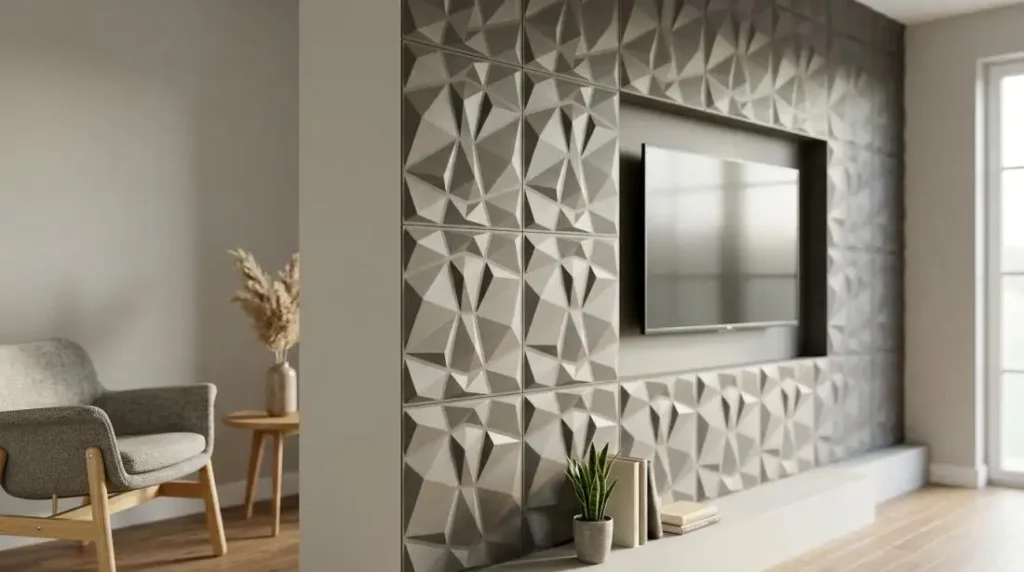
In this article, the environmental reality behind plastic wall cladding panels will be examined from the viewpoints of recyclability, the energy used in manufacturing, and various eco-labels. In the end, the use of plastic cladding wall panels will prove to be defensible from an environmental perspective and a rational choice.
1. Recyclability: Closing the Loop on Plastic Waste
One of the biggest oversimplifications is that plastic wall cladding panels are used and sent straight to the landfills. Surprisingly, the opposite is true.
How is plastic wall cladding recycled?
•Post-industrial recycling: In a factory, off-cuts and bad panels are mechanically grinded to a powder called regrind and then remanufactured into new panels. This achieves a near-zero waste and a closed-loop system in the factory.
•Post-consumer recycling: After a long life in excess of 20 years, panels fabricated from PVC or polypropylene can be collected, cleaned, shredded, and converted to a variety of new products, ranging from industrial trays to wall panels.
•Cradle-to-Cradle Potential: Many producers are now making their plastic wall cladding panels from mono-materials, such as pure PVC without mixed fillers, to make recycling easier in the future.
✅ Key takeaway: Even though painted drywall or mixed-material composites cannot be recycled, plain wall cladding plastic, such as PVC, can be fully recycled and remains strong and structurally intact.
2. Low Carbon Footprint: Embodied Energy Comparison
All traditional wall finishes (ceramic tiles, natural stones, or bricks) require high temperature kilns (greater than 1000°C), and extensive transportation. In contrast to that, plastic wall cladding panels have a much better carbon footprint.
Production Emissions (per square meter, estimated)
| Material | CO₂ equivalent (kg/m²) | Notes |
| Ceramic tiles | 15 – 22 | Excessive firing energy |
| Natural stone | 12 – 18 | Quarrying and heavy transportation |
| Painted drywall | 8 – 12 | Gypsum calcination |
| Plastic wall cladding panels | 5 – 9 | Lower temperature extrusion |
Why They Are Lightweight Champions?
•Lower transportation emissions: Wall cladding panels provide a much better transport efficiency. Plastic wall cladding panels weigh 2-3 kg/m². Tiles weigh 15-20 kg/m². Therefore, a truck can carry 5 times more amount of wall cladding panels compared to tiles, and thus, significantly decreasing the fuel consumption for transportation per square meter.
•Less structural load: Walls that are lighter require less reinforced concrete in construction, providing even better project carbon score.
�� Data point: Plastic wall cladding panels for a 100 m² room project provide a carbon savings of 700 kg of CO₂. This amount is equivalent to 2,800 km drive on a gasoline vehicle.
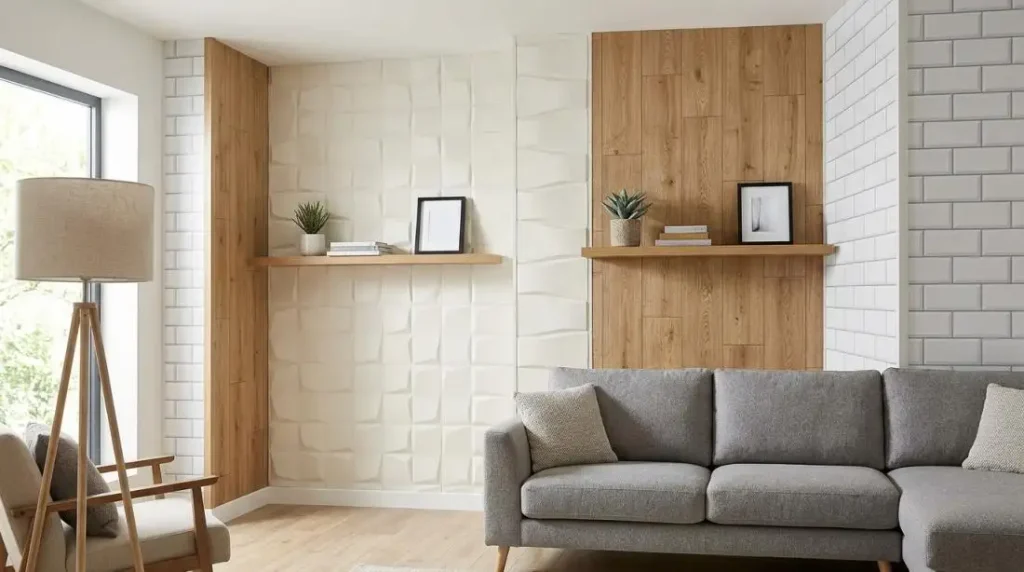
3. Green Building Certifications: LEED, Greenguard, and EPD
For real environmental credentials, third party verifications are needed. Several key certifications can provide insight into the quality of a plastic wall cladding panel.
LEED V4.1
•Materials and Resources (MR) credits: Wall panels can earn credits if they include recycled content and regional materials.
•EQ Credit (Low-Emitting Materials): Panels that are ultra-low VOC also enhance indoor air quality and result in credits.
•Building Product Disclosure: Environmental Product Declarations (EPD) for transparency.
Health-Related Certifications
•Greenguard Gold: certifies that panels are emitting less than 360 volatile organic compounds, and are safe to use in schools and hospitals.
•Declare Label: Similar to a nutrition label, building products should have their ingredients listed down to the level of 0.01%.
Not every plastic wall cladding panel is the same. Look for third-party labels, they assure products have no heavy metals or phthalates.
4. Durability = Less Waste Over Time
Sustainability is about products that have longevity. A product that is easily disposed of is a waste no matter how recyclable it is.
How Plastic Wall Cladding Panels Outperform Alternatives
•Moisture resistance: Panels have no water absorption, thus no mold, rot, or swelling, which is a common issue with wood and drywall.
•Impact resistance: High-quality panels that withstands dents and scratches is perfect for high traffic areas can reduce replacements.
•Low maintenance: Over decades panels don't need any painting, sealing, or waterproofing. Just soap and water is enough to clean them.
✅ Lifecycle advantage: A well-made plastic wall cladding panel can last 25+ years. Over that period, you would replace painted drywall 2-3 times and refinish wood cladding 4-5 times.
5. Spotlight on Sustainable Manufacturing: The Hengsu Story
A true eco-friendly Wall Plastic Cladding Panel should be made with a good manufacturer. One company that exemplifies green commitment is Zhongshan Hengsu Decoration Materials Co., Ltd. Its predecessor was Zhongshan Hengli Plastic Factory, founded in 1995. The company is located in Yongxing Industrial Park, Henglan Town, Zhongshan City, with complete logistics facilities. The entrances and exits of Guangzhou Zhuhai West Line, Zhongjiang Expressway, Guangzhou Australia Expressway, and Guangzhou Zhuhai Urban Rail Transit Ancient Town Station are nearby, making transportation extremely convenient.
Hengsu Company is dedicated to the production and research and development of new environmentally friendly and green building materials. We always adhere to the business philosophy of exploration and innovation and advocate for health and environmental protection as our mission. We continuously improve the performance of our products and shape the "Hengsu" healthy ecological wall top series. Our products are widely recognized by consumers for their advantages such as environmental integration, simple construction, and novel styles.
Why Choose Hengsu Plastic Wall Cladding Panels
•Recyclable formulations: Hengsu panels contribute to the circular economy as they are designed to be recycled at the end of their life span.
•Low-carbon manufacturing: Transport of raw materials and finished goods is reduced as the manufacturing is done centrally located along several major expressways.
•Eco-innovation: The "healthy ecological" series removes hazardous additives and achieves Greenguard Gold equivalency.
CTA: When choosing Hengsu, you buy more than plastic wall cladding panels; you buy partnership with an organization that has spent the last twenty-four years perfecting green building solutions. Browse their ecological wall top series today.
Conclusion: Plastic Wall Cladding Panels – The Responsible Choice
The environmental case for plastic wall cladding panels is clear; when responsibly manufactured and properly recycled, they can be extremely sustainable. They offer:
•Closed-loop recyclability (post-industrial and post-consumer)
•50-70% lower carbon footprint compared to tiles or stone
•LEED and Greenguard certified options for healthy interiors
•Unmatched durability that reduces waste over decades
The key to this is choosing manufacturers such as Hengsu who value innovation, transparency, and real environmental credentials. Next time you plan a building project, do not let the word "plastic" put you off; look the numbers, check the labels and choose the wall plastic cladding panels that will really help the planet.
Frequently Asked Questions (FAQ's)
1. Are the plastic wall cladding panels 100% recyclable?
Yes, the plastic panels, specifically PVC or Polypropylene, can be ground to a regrind and manufactured into new products. However, each manufacturer has a different set up for their local recycling, so calling ahead is the best choice.
2. Is wall cladding plastic harmful for breathing?
Wall plastic paneling with Greenguard Gold certification or similar will be safe indoors with safe VOC emissions. Avoid substitute cheap panels with no label.
3. Can wall cladding plastic earn LEED points?
Yes, wall cladding plastic panels may potentially address MR credits geared toward recycled content as well as EQ credits regarding the emission of volatile organic compounds, contingent on the issuance of an Environmental Product Declaration (EPD).
4. What is the durability of plastic wall cladding panels?
Plastics can last around 20-30 years and result in lower environmental waste.
5. Do plastic wall panels impact the climate less than ceramic panels?
Yes, temperature for production of ceramic wall panels is higher than that of plastic. Additionally, they also have a 50-70% lower carbon footprint.


