



Contents
HSCS
What is WPC Wall Panel Made Of? (A Deep Dive into Composition)
WPC (Wood Plastic Composite) wall panels are a hybrid material manufactured from a precise blend of 60% natural wood fibers (or bamboo powder), 30% thermoplastics (typically HDPE or PVC), and 10% essential chemical additives. This "golden ratio" creates a material that retains the warm texture of natural wood while gaining the waterproof, rot-resistant properties of plastic. Unlike traditional lumber, WPC is engineered to resist moisture, termites, and fading without frequent maintenance.
In this guide, we break down the chemistry of high-quality WPC:
- The Core Formula: Understanding the 60/30/10 ratio.
- The Plastic Matrix: Why HDPE outperforms standard PVC in durability.
- Hidden Additives: The secret ingredients that prevent fading and cracking.
- Quality Tests: How to spot cheap "calcium-filled" panels.
- Safety Facts: Is WPC toxic or formaldehyde-free?
The Core Formula: What Exactly is WPC?
At its most basic level, WPC is exactly what the name suggests: a composite of wood and plastic. However, the quality of the final panel depends entirely on the ratio of these ingredients.
Standard industry manufacturing follows a specific formulation to ensure structural integrity:
- 60% Wood Fiber: Provides rigidity, bulk, and the natural "woody" feel.
- 30% Thermoplastics: Acts as the bonding agent or "matrix" that encapsulates the wood fibers, making them waterproof.
- 10% Additives: Critical chemicals that stabilize the mixture, determine color, and enhance fire resistance.
Pro Tip: If a manufacturer cannot explain their specific ratio, be cautious. A panel with too much wood fiber (over 70%) will absorb water and swell. A panel with too much plastic (over 50%) will look artificial and feel slippery.
1. The Wood Component (The "Nature" Part)
The "W" in WPC stands for the organic filler. While early versions used simple sawdust, modern high-end WPC often uses bamboo powder or high-mesh wood flour.
- Wood Flour/Sawdust: The most common filler. It is cost-effective and provides good insulation.
- Bamboo Powder: Often used in premium panels (like those at HSCS Decor). Bamboo fiber is stronger and has better moisture resistance than standard softwood dust.
- Agricultural Straw: Used in lower-grade options. It is cheaper but can be less consistent in density.
The primary role of this component is to give the panel stiffness. Without it, the wall panel would just be a flimsy sheet of plastic. The wood fibers also allow the panel to be cut and drilled using standard carpentry tools.
2. The Plastic Matrix (The "Shield" Part)
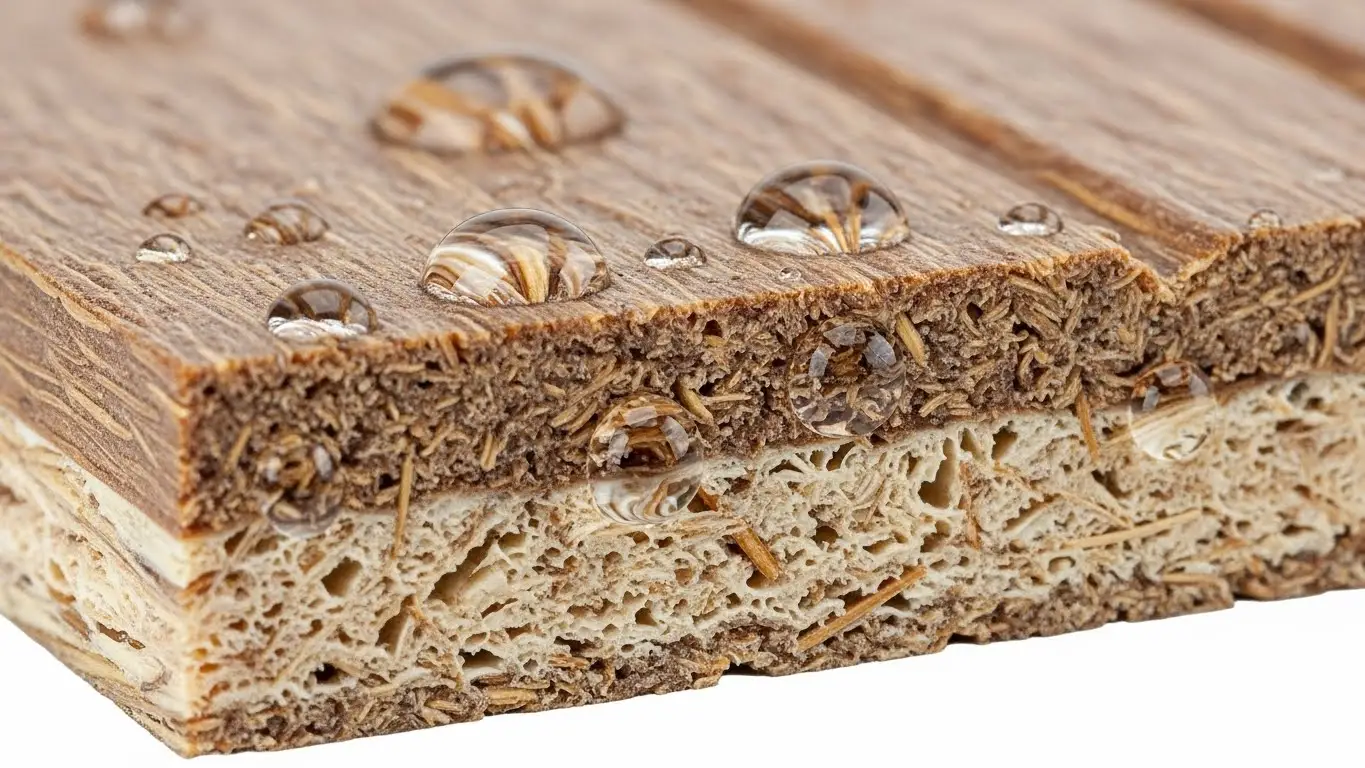
The plastic component acts as the shield. It wraps around the wood fibers during the high-heat extrusion process, sealing them off from moisture and insects. There are two main types of plastics used:
- HDPE (High-Density Polyethylene): This is the industry standard for outdoor and high-durability WPC. HDPE is tough, impact-resistant, and chemically stable. It is the same plastic used in milk jugs and hard piping.
- PVC (Polyvinyl Chloride): Often used for indoor decorative fluted panels. PVC is lighter and allows for smoother, more intricate finishes, but it can be more brittle than HDPE in extreme cold.
Because the plastic matrix creates a non-porous surface, these panels do not require staining or sealing. If you are wondering about upkeep, the plastic content is what makes it possible to simply wipe walls down; for more details, read our guide on how to clean and maintain WPC wall panels.
3. The Secret Additives (Crucial for Durability)
This is where the difference between a 5-year panel and a 20-year panel lies. The remaining 10% of the mixture consists of chemical additives that dictate performance.
- Coupling Agents: Wood is hydrophilic (loves water) and plastic is hydrophobic (hates water). They do not mix naturally. Coupling agents act as a chemical bridge, bonding them at a molecular level so the material doesn't crumble.
- UV Stabilizers: Essential for maintaining color. Without these, the plastic would degrade and the wood would gray within months of sun exposure. This is a key factor in how long WPC wall panels last outdoors.
- Color Pigments: High-grade oxide pigments are mixed directly into the dough, meaning the color runs all the way through the material, not just on the surface.
- Fire Retardants: Additives that help WPC achieve a B1 fire rating, meaning it will not spread flames and creates minimal smoke.
How to Spot "Fake" or Low-Quality WPC Material
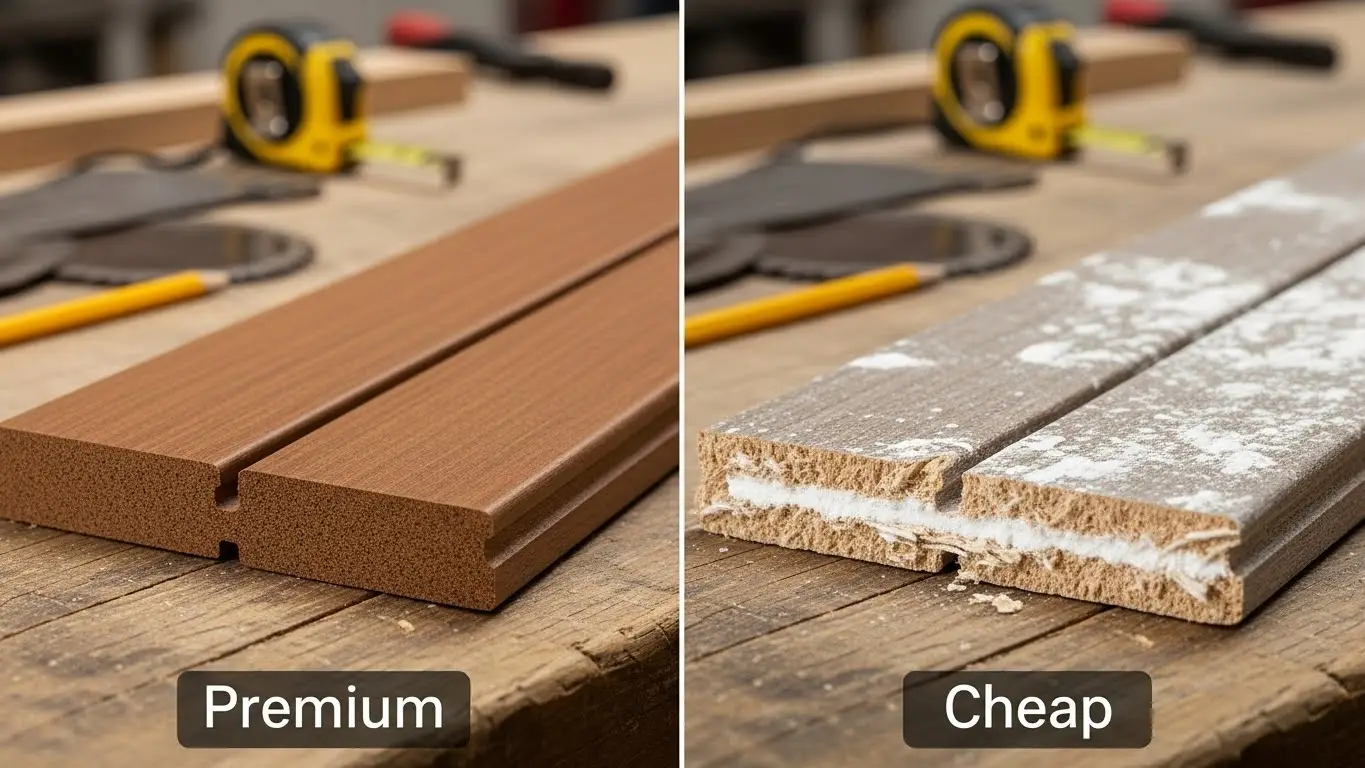
Not all WPC is created equal. Some budget manufacturers fill their mixture with Calcium Carbonate (stone powder) to lower costs. While some stone powder is acceptable for stiffness, too much makes the panel brittle.
Here is how you can test the material quality yourself:
- The Density Check: Heavier isn't always better. If a panel feels unusually heavy like a stone tile, it likely contains excess calcium powder. These panels tend to snap during installation.
- The Cut Test: When you cut the panel, look at the cross-section. It should be a uniform color without large white specks. If you see white powdery spots, the mixture was not blended correctly.
- The Chip Test: When cutting, a good WPC panel should produce clean shavings (like wood). A bad panel will crumble into dust. This is important for a clean finish; see our guide on how to cut WPC wall panels without chipping for proper technique.
Pro Tip: Smell the sample. Fresh WPC should smell slightly like burnt wood or plastic. It should never have a sharp, chemical, or pungent odor.
Is WPC Material Toxic? (Safety & Eco-Friendliness)
A common concern for homeowners is indoor air quality.
- Formaldehyde-Free: High-quality WPC production uses heat extrusion to bond materials, not toxic glues. This means reputable WPC panels are generally rated E0 (zero formaldehyde emission), making them safer than many plywoods or MDF boards.
- Recycled Materials: The "P" in WPC is often sourced from recycled plastics (milk bottles, shampoo bottles), and the wood fiber is often post-industrial sawdust. This makes WPC a green building material that diverts waste from landfills.
However, always check for certification (like SGS or CE reports) to ensure the plastic source is clean and free from lead or heavy metals.
WPC vs. PVC vs. Wood: Material Comparison Table
| Feature | WPC (Wood Plastic Composite) | PVC (Polyvinyl Chloride) | Solid Wood |
| Main Ingredients | Wood Fiber + HDPE/PVC | 100% Plastic/Stone Powder | Natural Timber |
| Water Resistance | 100% Waterproof | 100% Waterproof | Absorbs moisture (rot risk) |
| Texture | Natural, warm wood feel | Smooth, plastic/cool feel | Authentic grain |
| Durability | High (Rot/Termite proof) | Moderate (Can be brittle) | Variable (Needs treatment) |
| Maintenance | Low (Wash only) | Low (Wash only) | High (Paint/Seal/Stain) |
Frequently Asked Questions About WPC Composition
Is WPC wall panel waterproof?
Yes, WPC is 100% waterproof. The plastic matrix encapsulates the wood fibers, preventing them from absorbing moisture. This makes them ideal for high-humidity areas, though you should check specific ratings for direct shower use.
Does WPC contain formaldehyde?
Generally, no. Because WPC is manufactured using a high-heat extrusion process rather than adhesives, high-quality panels are rated E0 (formaldehyde-free). Always check the manufacturer's safety data sheet to be sure.
Can WPC panels be painted?
Yes, but it is rarely necessary. WPC comes pre-colored with UV-stable pigments. If you must paint it, you will need to sand the surface to remove the gloss and use a primer designed for plastic surfaces.
Is WPC better than PVC for wall panels?
It depends on the application. WPC is stronger, heavier, and looks more like real wood, making it better for feature walls and exteriors. PVC is lighter and cheaper, making it suitable for ceilings or temporary fit-outs.
How difficult is it to install WPC panels?
WPC panels are designed for easy installation, often using a tongue-and-groove or click system. They can be glued or screwed directly onto walls. For a detailed walkthrough, read how to install WPC wall panels step by step.
Why do some WPC panels crack?
Cracking usually occurs if the manufacturer used too much stone powder (calcium carbonate) instead of plastic, or if the panel was installed without room for thermal expansion. WPC does expand and contract slightly with temperature changes.
Conclusion: Choosing the Right Material for Your Project
Understanding what WPC wall panels are made of is the first step to ensuring you get a product that lasts. A true high-quality WPC panel relies on the balance of strong wood fibers, durable HDPE plastic, and the right chemical stabilizers. It offers the beauty of wood without the deforestation or the maintenance headaches.
If you are looking for WPC panels that strictly adhere to the high-performance 60/30/10 formula, contact HSCS Decor. We invite you to request a free sample kit to feel the density and quality of our materials firsthand.


