



Contents
HSCS
Selecting a WPC Wall Panel with Insulation for Reliable Wall Performance
Although a WPC wall panel can be advertised as being insulated, it does not necessarily mean that it can substitute for conventional wall insulation.
The critical issue for an architect, contractor and building material buyer is the amount of thermal resistance the panel contributes to the finished wall, rather than just the fact that it feels warmer than ceramic or metal cladding.
It is influenced by various factors such as panel thickness, internal structure, backing material and installation details.
Thus, selection of an appropriate WPC Wall Panel with Insulation starts with familiarization of the wall assembly and the true performance needed for the project.
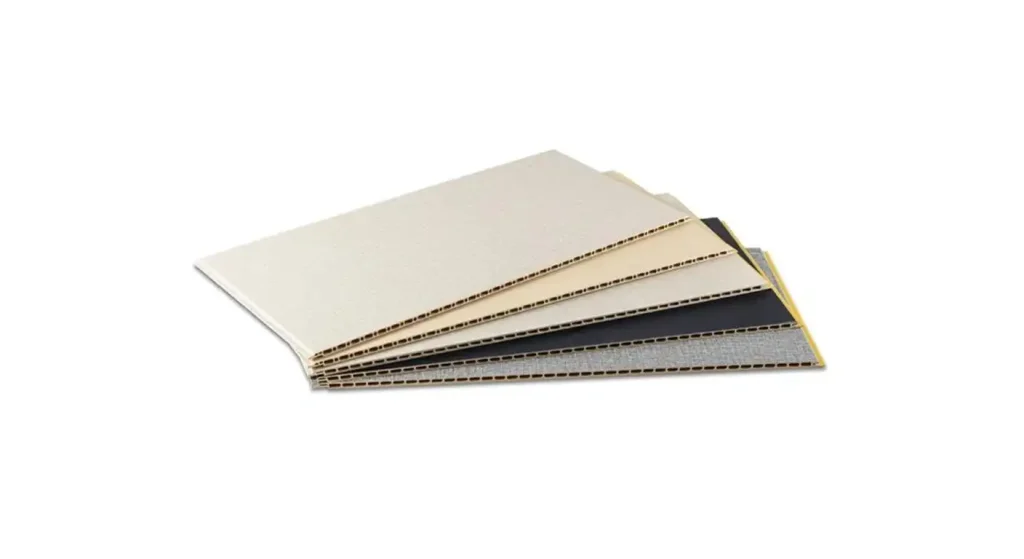
What's a WPC Wall Panel with Insulation?
WPC is the acronym for wood-plastic composite, which is a material made from wood and/or plant fibers and thermoplastic polymers.
The WPC wall panels are widely employed for decoration in household and office interior. They are moisture resistant and dimensionally stable with a variety of wood-look finishes - resulting from their composite construction.
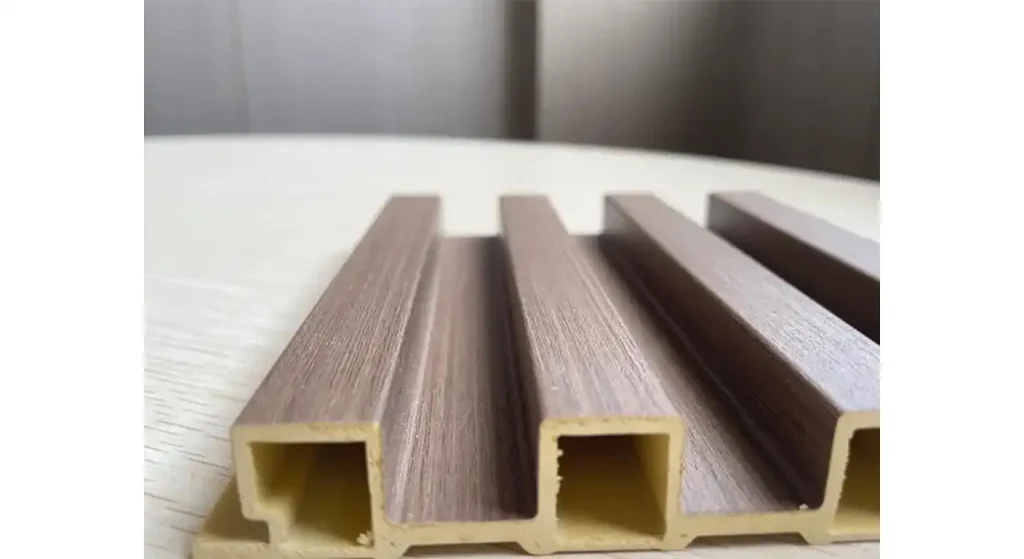
Some profiles are hollow and in integrated designs backings or separate insulating layers can be used.
Don't consider these constructions as equivalent.
HSCSDECOR's Wood Plastics Composite Integrated Wall Panel is introduced as a functional interior wall finishing material which has thermal and acoustic comfort properties.
However, the entire layer structure of a panel needs to be verified prior to evaluating its insulation performance.
Start at the Building's Thermal Requirements
Building projects can have varying levels of thermal performance.
A decorative wall in a conditioned office might only need to enhance the comfort, appearance of the surface. If the wall is facing the outside of a residence, it might be required to have a specified R-value in order to comply with energy efficiency provisions.
If you are renovating, existing insulation, wall materials and depth of insulation available for installation are factors to consider.
While a WPC panel can be a part of a full wall assembly, it is not necessarily a complete wall assembly that meets building insulation requirements.
Buyers should decide in advance what the location of the wall is and what type of wall they want, in addition to the thermal performance and space available for the project, before requesting quotes.
This avoids the choice of beautiful cladding that is not suitable to the building's needs.
Thermal Resistance - More than just panel thickness
Not all panels are insulating – thicker is not always better.
The conductivity of each material, the thickness of the layer and the conditions of the whole wall assembly are all important factors in determining the thermal performance.
In SI units, thermal conductivity is typically measured in units of watts per square meter per kelvin (W/m·K), and thermal resistance is measured in units of square meters per kelvin per watt (m²·K/W).
A material with a lower thermal conductivity has a higher resistance to the flow of heat through the material of the same thickness.
Details such as hollow sections, air cavities, insulation backing and mechanical fixing arrangements can all make a difference.
To ensure that buyers get test data for the precisely constructed product, the supplier should be asked to provide data for products not just described as “thermal insulation” or “energy-saving panel.”
| Verification Item | Information to Confirm | Evidence to Request |
| Panel composition | WPC and backing materials | Layer specification |
| Thermal conductivity | Tested material value | Laboratory report |
| Thermal resistance | Value for stated thickness | Thermal test data |
| Insulation layer | Material and thickness | Section drawing |
| Fire performance | Applicable classification | Fire-test report |
| Joint structure | Connection and fixing details | Installation drawing |
Differentiate between WPC Decorative Panels and Insulated Cladding
This separation is crucial when making comparisons between suppliers.
Typical WPC decorative panels are used to finish walls, and add impact resistance and waterproof surfaces. They have a composite and hollow structure, which can provide some thermal insulation.
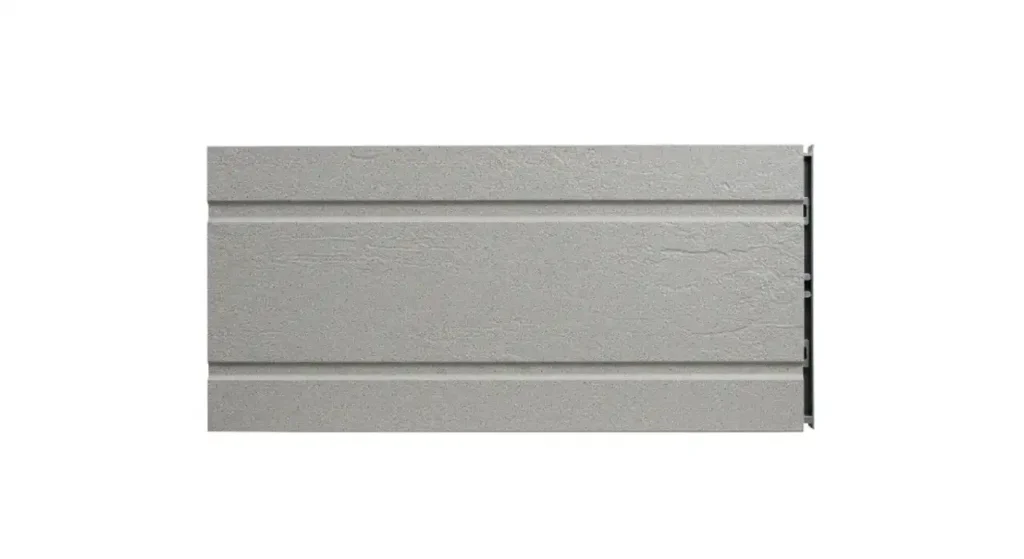
Insulating materials like polyurethane, EPS or mineral wool, are specifically used in the construction of an insulated cladding system.
Various Insulated Wall Cladding Panels are available from HSCSDECOR that describe these insulation-core options.
But it is not automatically a WPC product as facing materials could be metal, PVC or fiber cement.
Quotes should be confirmed to provide WPC decorative cladding, a WPC panel with insulation backing or an insulated wall cladding system.
Assess the potential for moisture and condensation problems
Always remember insulation performance goes hand in hand with moisture control.
The installation of an internal lining may alter the surface temperatures of the walls and where condensation can take place.
In general, the walls made of WPC material can withstand wetness, but if they have a decorative surface made of moisture-resistant materials, it does not mean that all areas of the wall are waterproof.
The condition of existing wall, the location of insulation and the vapor-control must all be considered.
Joins, edges and hidden cavities are of special concern for bathrooms, basements and damp business interiors.
The use of appropriate detailing will inhibit moisture from building up behind a decorative panel that is otherwise strong.
Inspect for installation & thermal bridging.
The effectiveness of an insulated wall system can be affected by the installation quality.
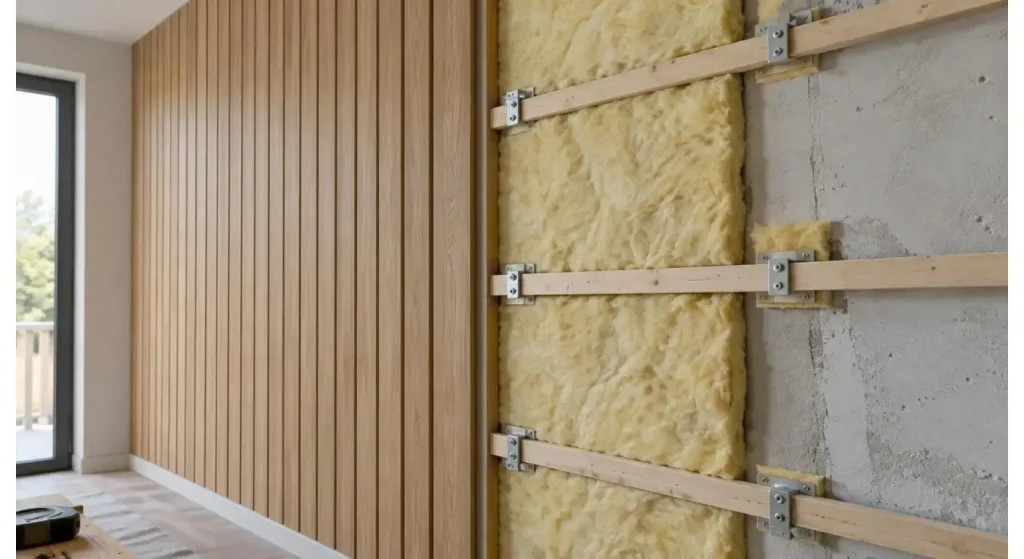
Heat can be conducted through mechanical fastenings and along support rails and openings between insulation sections.
The uneven substrates can also create cavities or joints that are not aligned, which can impact the finished wall.
HSCSDECOR's WPC Wall Panel Interior provides information on tongue and groove connection, hidden fixing options and installation techniques for interior decor.
If extra insulation is needed in a project, installers are advised to verify the installation of the insulation behind the panels and how corners, outlets and perimeter joints are handled.
The design of installation must continue to be compatible with the structural and fire & moisture-control requirements.
Evaluate the suitability of the application, both indoors and out, and fire safety
Fire performance of WPC wall panels will depend on the product construction and formulation since these products typically have organic and polymer materials.
A general statement of flame resistance should not be substituted for a classification for the specific panel used.
If decorative surface fire protection is supplemented by other insulation the fire behavior of the complete assembly might be different from that of the decorative surface fire protection alone.
Specific fire and smoke-performance requirements are required for commercial interiors, corridors and other regulated areas.
Test reports applicable to the buyer's needs should be requested and the buyer should ensure they apply to the product being supplied.
Hotels, offices and residential developments can also have documentation regarding indoor air quality issues.
Verify Samples and Supplier Documentation
A useful purpose for product samples is to check the surface quality, colour and dimensions and accuracy of the product profile.
However, the results of a small sample cannot alone substantiate the thermal performance of a whole wall system.
Suppliers should give detailed product drawings, material information, installation instructions and on hand thermal or fire-test reports.
Additionally, HSCSDECOR has a WPC Wall Panel Normal Panel (V Seam) that displays the dimensions and profile specifications; this is why it is essential to specify the exact type of panel in purchasing documents.
A trial installation may be more suitable for larger projects to identify joint alignment, avoiding problems with ordering and delivery and to validate fixing and finishing issues.
| Inspection Area | Inspection Method | Acceptance Focus |
| Substrate | Wall flatness check | Within installation tolerance |
| Panel joints | Trial fitting | Consistent alignment |
| Insulation continuity | Concealed layer inspection | No unintended gaps |
| Fixing system | Fastener inspection | Secure installation |
| Edges and corners | Detail inspection | Proper closure |
| Finished surface | Visual assessment | No visible defects |
Conclusion
WPC Wall Panel with Insulation should be assessed as a building assembly, and not as a decorative board that has an insulation attribute.
Whether or not it can meet project requirements depends on the thermal resistance, material construction, moisture control and installation details.
Contractors and distributors, in verifying technical evidence and checking a representative installation prior to purchase, will be able to choose more suitable wall panel solution.
FAQs
Q1. Are WPC wall panels thermally insulated?
Depending upon their construction, WPC panels can provide some thermal resistance. The actual performance however should be verified by product or assembly testing.
Q2. Is it possible to substitute conventional insulation with WPC wall panels?
Not automatically. There are a number of decorative WPC panels and dedicated insulating materials, and local building requirements must be taken into account.
Q3. What types of insulation can be used behind WPCs Wall panels?
Mineral wool or rigid foam insulation, or other approved insulation materials are suitable depending on wall design. The compatibility and moisture control need to be checked.
Q4. Can insulated WPC panels be used for rooms with a lot of moisture?
They might be appropriate if panel grade and full wall detailing is appropriate. It is still important to treat the joints and to manage moisture.
Q5. What documents will a prospective buyer want to see?
Focus on technical information, profile drawings, thermal and fire-test reports (if available), installation directions, and material information.


