



Are WPC Wall Panels Fire Resistant? (Ratings, Safety & Tests)
Yes, high-quality WPC (Wood Plastic Composite) wall panels are fire-resistant and typically meet the B1 fire rating (difficult to ignite). Unlike solid wood, WPC contains fire-retardant additives that give it self-extinguishing properties, meaning the fire stops once the flame source is removed. However, they are not completely non-combustible like stone or concrete.
If you are planning a renovation or a large-scale commercial project, understanding these fire ratings is critical for safety compliance.
In this guide, you will learn:
- The difference between "Fireproof" and "Fire Resistant."
- What the Class B1 rating actually means for your safety.
- How to perform a simple "Lighter Test" to check quality.
- Safety rules for installing WPC behind stoves and fireplaces.
- Why cheap WPC panels might fail fire inspections.
Is WPC Fireproof?
It is important to be precise with safety terminology. No wood-based product is 100% "fireproof" in the same way that steel or rock is. However, WPC is engineered to be significantly safer than traditional timber.
The key distinction lies between Non-Combustible and Fire-Retardant:
- Non-Combustible (Class A): Materials like stone, brick, or concrete that will not burn at all.
- Fire-Retardant (Class B): Materials like high-quality WPC that resist ignition and slow down the spread of fire.
The most critical safety feature of HSCS Decor WPC panels is that they are self-extinguishing. If a flame touches the panel, it may char, but as soon as the fire source is removed, the panel stops burning on its own. This prevents the walls from becoming a fuel source that spreads fire to other rooms—a major advantage when comparing WPC wall panels vs wood panels.
Understanding WPC Fire Ratings (The "B1" Standard)
When buying WPC panels, you will often see the term "B1 Rating." This is the industry standard for fire resistance in composite materials. If a supplier cannot show you certification proving their product meets this standard, do not install it in a commercial space.
What is Class B1?
In simple terms, Class B1 means "Difficult to Ignite." Under normal fire conditions, these materials do not catch fire easily, and they do not contribute significantly to the spread of flames.
Common International Standards
Depending on your location, the certification code may look different. Here are the equivalents you should look for on technical data sheets:
| Region | Standard | Minimum Safe Rating for WPC |
| Europe | EN 13501-1 | Class B-s1, d0 |
| USA | ASTM E84 | Class A or B (depending on additives) |
| China/Asia | GB 8624 | Class B1 |
Note on Smoke: The "s1" in the European standard refers to smoke production. High-quality WPC produces very little smoke, whereas cheaper plastic alternatives can produce thick, toxic black smoke (rated s2 or s3).
The Science: What Makes WPC Fire Resistant?
WPC is a hybrid material made from wood powder, thermoplastics (like PVC or PE), and additives. The natural wood powder is flammable, and plastic can melt, so how does the final product resist fire?
The secret lies in the additives.
During the manufacturing process at HSCS Decor, we introduce flame retardants such as Zinc Borate or Aluminum Trihydrate. These compounds disrupt the burning process. When exposed to heat, they release water vapor or form a protective charred layer that cuts off oxygen to the material beneath.
Common Mistake:
Cheap manufacturers often skip these expensive additives to lower costs. While the panel looks the same, it will burn like standard plastic. Always verify the specifications before purchasing.
Can You Use WPC Panels in Kitchens & Near Fireplaces?
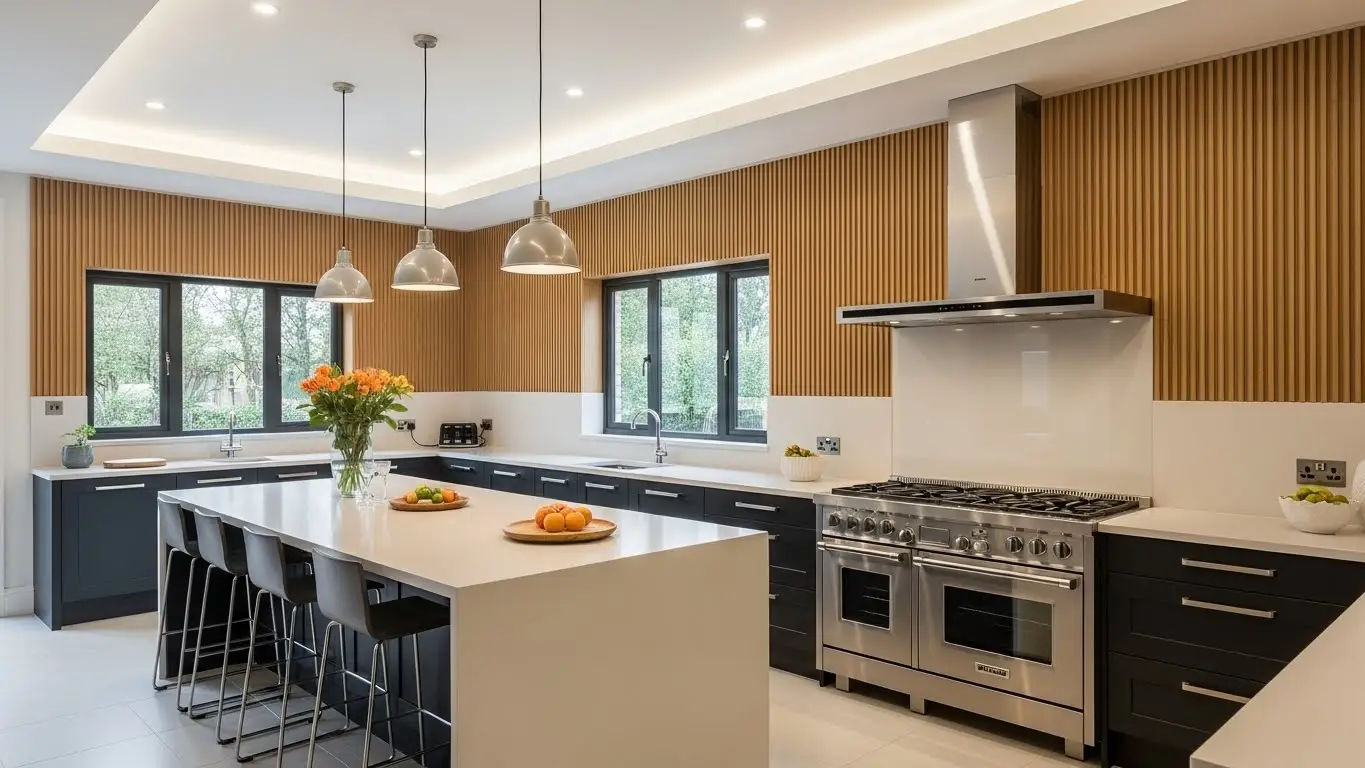
This is one of the most common questions we receive from homeowners and designers. Because WPC is durable and water-resistant—making WPC wall panels waterproof for bathrooms—people assume they are tough enough for anywhere. However, heat requires special consideration.
1. In the Kitchen
Safe: You can install WPC panels on general kitchen walls, dining areas, and islands.
Caution: Do not install WPC panels directly behind a gas hob or open flame without protection. Even though they are fire-resistant, the sustained high heat can cause the material to warp or discolor.
- Recommendation: Use a glass, stainless steel, or tile splashback for the 60cm area immediately behind the stove, and use WPC for the rest of the kitchen.
2. Near Fireplaces
Safe: WPC makes an excellent surround for electric fireplaces, which do not emit intense heat outwards.
Caution: For wood-burning stoves or open fireplaces, you must maintain a safety distance.
- The Rule: Keep panels at least 20cm (8 inches) away from the opening of a wood burner.
- Heat Deformation: WPC can start to soften or warp at temperatures above 70°C (158°F). If the area around your fireplace gets too hot to touch, it is too hot for WPC.
WPC vs. Wood vs. PVC: Which is Safer?
To help you decide, here is how WPC stacks up against other common wall cladding materials regarding fire safety.
- Solid Wood:
- Fire Risk: High. Wood is a fuel source. Unless heavily treated with expensive chemicals, it catches fire easily and spreads flames rapidly.
- Smoke: High smoke production.
- Standard PVC Panels:
- Fire Risk: Medium. PVC generally self-extinguishes, but it melts instantly when exposed to heat.
- Smoke: High risk. Burning PVC can release toxic fumes (dioxins).
- HSCS WPC Panels (Fire Rated):
- Fire Risk: Low. Difficult to ignite and self-extinguishes immediately upon removal of flame.
- Smoke: Moderate/Low. Better formulations reduce smoke density significantly compared to pure PVC.
3 Ways to Test if Your WPC Panel is Fire Resistant
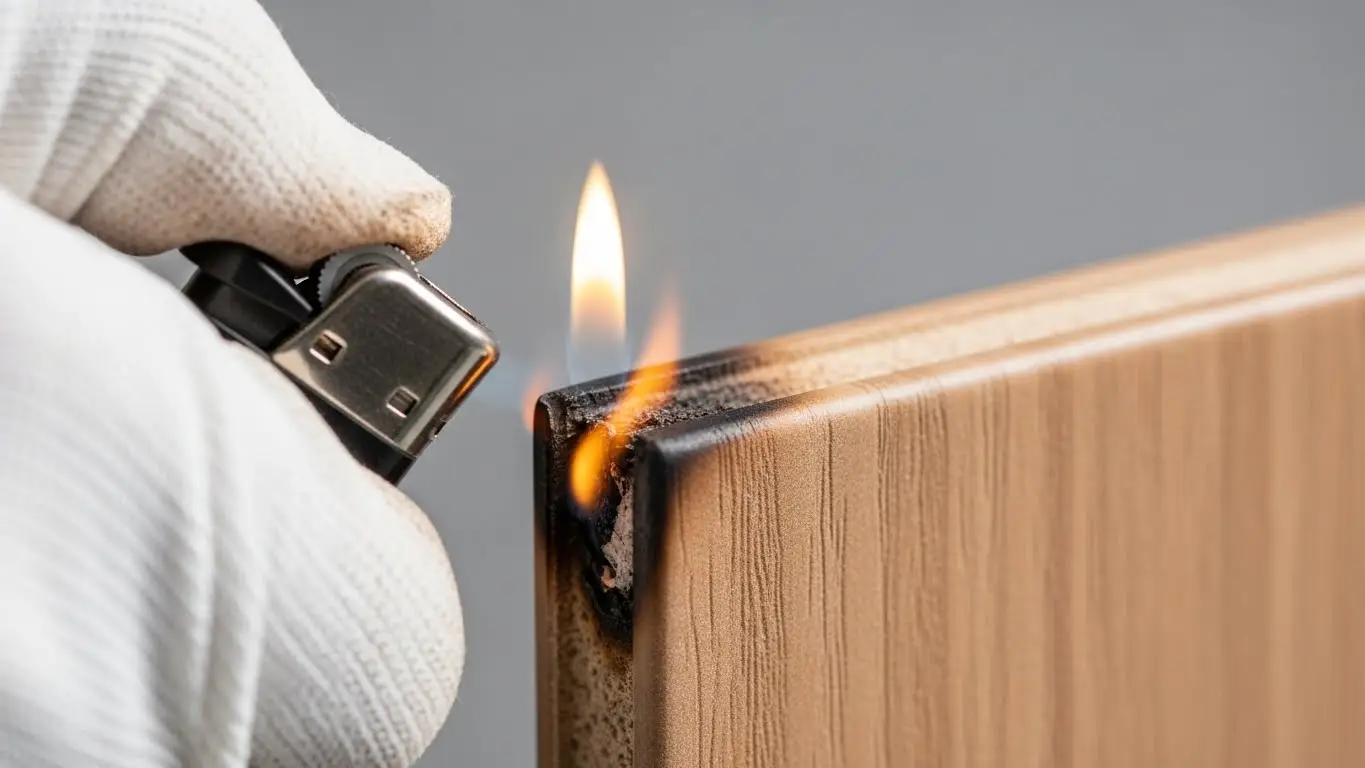
If you have a sample in hand, you can verify the quality yourself. (Please perform these tests safely outdoors or in a controlled environment).
1. The Documentation Check
Before testing physically, ask the supplier for their SGS or TUV test report. Look specifically for "Reaction to Fire" tests. If they hesitate to send it, treat that as a red flag.
2. The Lighter Test (DIY)
Take a lighter to the corner of a WPC sample for 5–10 seconds.
- Good Result: The material will blacken (char). When you pull the lighter away, the small flame on the panel should die out within 1–3 seconds.
- Bad Result: The flame continues to grow and travel up the panel after you remove the lighter.
3. The Density Check
Fire resistance is often linked to density. Heavier panels usually contain more stone powder and fire-retardant additives. If a panel feels surprisingly light or hollow, it may lack the necessary density to resist heat. If you are unsure about the right construction for your needs, checking what thickness WPC wall panel for bathroom or other areas is a good reference point for material sturdiness.
Frequently Asked Questions (FAQ)
Is WPC board fireproof or fire resistant?
WPC is fire resistant, not fireproof. It is classified as B1 (difficult to ignite) and self-extinguishing, meaning it stops burning when the fire source is removed, but it can still be damaged by intense heat.
Can WPC be used in the kitchen behind a stove?
No, you should not install WPC directly behind a gas stove or open flame. While it won't catch fire easily, the high heat (>70°C) can cause warping. Use a glass or steel splashback for the area directly behind the burner.
What is the melting point of WPC panels?
Most WPC panels will begin to soften and deform at temperatures around 70°C to 80°C (158°F - 176°F). They do not melt like pure plastic but will lose structural integrity if exposed to sustained high heat.
Does WPC release toxic fumes when burned?
High-quality WPC releases significantly less smoke than standard PVC. However, because it contains polymers, it will produce some smoke if forced to burn. Always choose panels rated s1 (low smoke) for indoor safety.
Is WPC cladding safe for high-rise buildings?
This depends on local building codes. While B1-rated WPC is safe for interiors and low-rise exteriors, many countries require non-combustible (Class A) materials for the exterior cladding of high-rise buildings over a certain height.
Difference between B1 and B2 fire rating WPC?
B1 is "difficult to ignite" and is the standard for commercial safety. B2 is "normal flammability," meaning it burns faster and is generally not recommended for public buildings or exit routes.
Conclusion
Safety is just as important as aesthetics. While WPC wall panels offer a stunning wood-like finish, their ability to self-extinguish and resist ignition makes them a superior choice over traditional timber and cheap plastics.
For most residential and commercial projects, a Class B1 rating provides the necessary peace of mind. However, always respect the material's limits—keep it away from direct open flames and ensure you are buying from a certified manufacturer.
Looking for certified fire-resistant WPC panels for your project?
Contact HSCS Decor today to request our latest ASTM/EN test reports and order free samples to test the quality yourself.


