



What Thickness WPC Wall Panel is Best for Bathrooms? (Expert Guide)
For bathroom walls, the ideal WPC panel thickness is 8mm to 10mm to ensure structural rigidity and impact resistance against daily wear. For bathroom ceilings, a lighter 5mm to 6mm panel is the industry standard, as it reduces the load on the suspension grid while remaining moisture-resistant.
Choosing the wrong thickness is the most common reason for warping and "hollow" sounding walls. In this guide, we break down the engineering behind these numbers so you can confidently specify materials for your renovation.
What you will learn in this guide:
- The "Golden Standard" for shower walls vs. vanity areas.
- Core differences: Why 8mm Solid is stronger than 10mm Hollow.
- Installation risks: How thickness changes your clip and glue choices.
- Ceiling specs: Why you should never use heavy wall panels overhead.
- Durability facts: How to prevent punctures and moisture damage.
Why Thickness Matters in a Wet Environment
Many homeowners assume that waterproofing is solely about the material composition. While knowing what WPC wall panel is made of helps—it is a mix of wood fiber and thermoplastics—the thickness of that material dictates how it behaves under stress.
Moisture & Thermal Expansion
Bathrooms are unique because they cycle between hot steam and cool air. Thinner panels (under 6mm) lack the internal rigidity to resist thermal expansion. Over time, this constant expanding and contracting can cause thin panels to bow or warp between the studs/adhesive points. An 8mm+ panel has enough mass to hold its shape despite temperature fluctuations.
Impact Resistance
Bathrooms are often tight spaces. Elbows, door handles, and heavy toiletry bottles frequently hit the walls. A thin, hollow panel can crack or puncture under this impact. A thicker profile acts as a shock absorber.
Sound Insulation
Have you ever tapped on a plastic wall and heard a cheap, hollow rattle? That is usually the sound of a 5mm or 6mm panel installed on a wall. Increasing the thickness to 9mm or using a solid core drastically dampens that sound, making the wall feel and sound like permanent masonry.
Recommended Thickness by Bathroom Zone
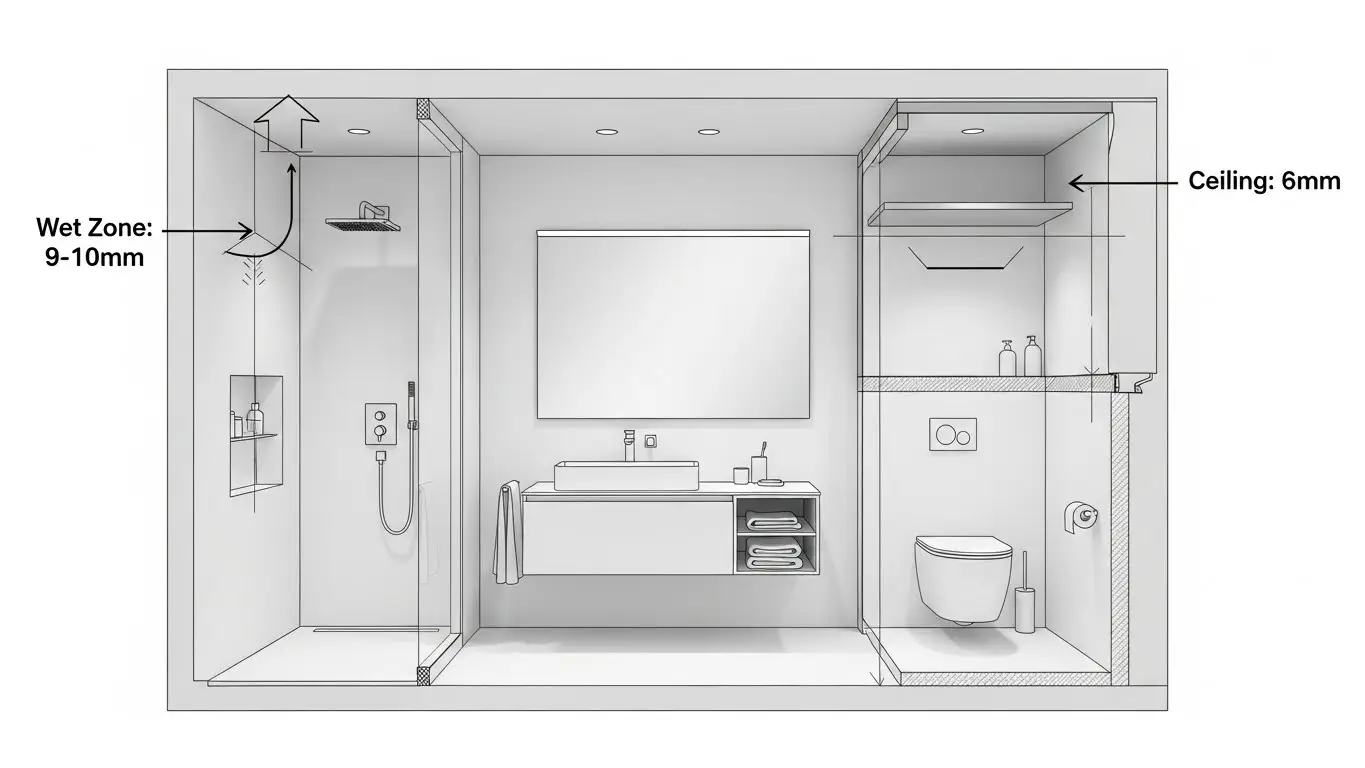
Not every surface in your bathroom requires the heavy-duty protection of a 10mm panel. To optimize your budget without sacrificing quality, follow this zone-specific matrix.
Shower Enclosures (Wet Zone)
- Recommended: 9mm – 12mm
- Reason: The shower area faces the most abuse—hot water, steam, and scrubbing. A thicker panel ensures the tongue-and-groove locking mechanism is deep enough to create a watertight seal that won't separate over time.
Vanity & Dry Walls
- Recommended: 8mm – 10mm
- Reason: This is the standard "safe" zone. It balances cost and durability. An 8mm panel is thick enough to hide minor imperfections in the wall behind it (like uneven old tiles) but lighter than the heavy shower panels.
Bathroom Ceilings
- Recommended: 5mm – 6mm
- Reason: Gravity is your enemy here. Installing heavy 10mm panels on a ceiling puts unnecessary strain on the framing or adhesive. 6mm panels are rigid enough to span the ceiling joists without sagging but light enough to be installed easily overhead.
Solid Core vs. Fluted (Hollow) WPC: Does Thickness Change?
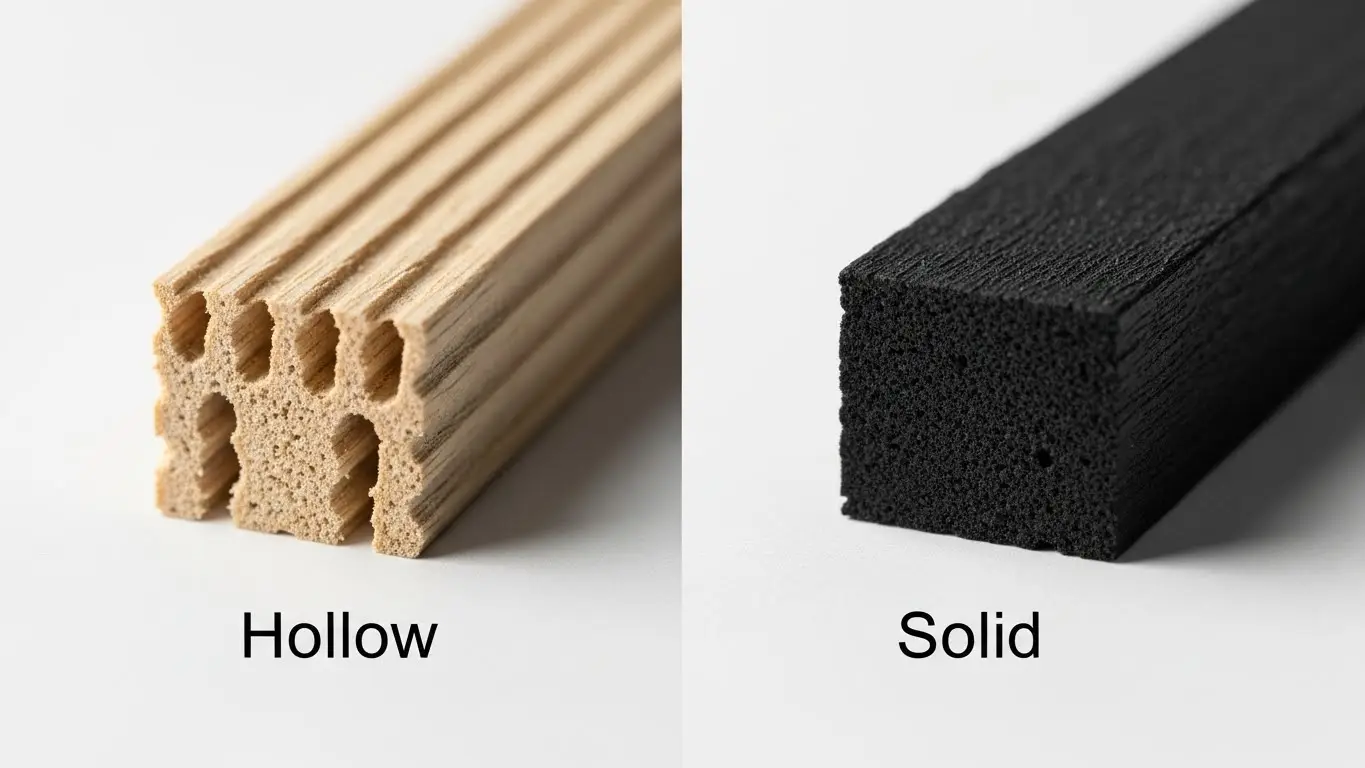
This is where most people get confused. Thickness is not the only metric of strength; density is equally important. When comparing options, you must understand the difference between standard hollow WPC and solid core options like Bamboo Charcoal.
Solid WPC (Bamboo Charcoal)
Bamboo Charcoal panels are high-density, solid boards. Because they are solid, a 5mm to 8mm solid panel is often stronger and harder than a 10mm hollow panel. They offer superior impact resistance and are completely waterproof. If you are unsure about the specific benefits of this material, read our guide on what is bamboo charcoal wall panel.
Fluted/Hollow WPC
These panels have internal voids (honeycomb structure) to reduce weight and cost. For hollow panels, thickness is critical. You should rarely go below 9mm for a hollow panel on a wall, as the thin face layer is susceptible to punctures.
For a deeper dive into how different synthetic materials compare in wet environments, it is helpful to understand the distinction between standard PVC and composite blends. You can read more about what is the difference between WPC and PVC wall panels to see which core suits your project best.
Installation Implications: Thickness Affects Your Clips
The thickness of your panel dictates your installation method. You cannot buy panels first and decide on the hardware later.
Metal Clips vs. Direct Glue
- Thicker Panels (8mm+): These are typically heavy enough to require stainless steel mounting clips that screw into the wall or studs. The groove on the side of the panel is designed specifically to accept these clips.
- Thinner Panels (5-6mm): These are often installed using high-grab structural adhesive (Liquid Nails) directly to the wall. They may not have a groove deep enough for standard clips.
Hiding Wall Imperfections
If you are renovating and covering up old, uneven tiles, a 10mm panel is your best friend. It is rigid enough to bridge the gaps and uneven spots without conforming to the waves in the wall. A 5mm panel is flexible; if the wall behind it is bumpy, the panel will look bumpy too.
Common Mistakes to Avoid
Even with the right thickness, installation errors can compromise the bathroom's longevity.
- Using Ceiling Panels on Walls: Never use a 6mm hollow ceiling panel on a wall. One accidental bump with a heavy object can puncture the surface.
- Ignoring Expansion Gaps: Regardless of thickness, WPC expands. Always leave a 2-3mm gap at the corners, filled with silicone.
- Confusing Indoor/Outdoor Grades: While WPC is famous for durability, indoor bathroom panels are not the same as exterior cladding. If you are curious about how outdoor grades differ in UV and weather resistance, check our article on how long WPC wall panels last outdoors. Do not use exterior cladding indoors (rough texture catches dust) or interior panels outdoors.
FAQs About WPC Panel Sizing
1. What is the minimum thickness for a bathroom wall panel?
For a hollow WPC panel, the absolute minimum for walls is 8mm. For solid bamboo charcoal panels, you can safely use 5mm or 6mm due to the higher density of the material.
2. Does a thicker panel mean it is more waterproof?
No, the material itself (WPC) is waterproof regardless of thickness. However, thicker panels (9mm+) generally have deeper interlocking grooves, which provide a better physical barrier against water passing between the panels.
3. Can I use 6mm panels in the shower?
We advise against using 6mm hollow panels in showers as they are prone to impact damage. However, 6mm solid stone or bamboo charcoal laminate panels are perfectly acceptable for shower linings.
4. How does thickness affect the price of WPC panels?
Generally, price increases with thickness because more raw material is used. A 10mm panel will cost approx 20-30% more than a 6mm panel, but the added durability is worth the investment for wet areas.
5. Will 10mm panels reduce bathroom space significantly?
10mm is only 1 cm. Even if you clad all four walls, you are only losing 2 cm (less than an inch) of total room width. This is negligible compared to the space lost by traditional framing and tiling.
6. Do I need different trims for different thicknesses?
Yes. Edge trims, internal corners, and external corners are sized specifically (e.g., "8mm internal corner"). You cannot use an 8mm trim on a 10mm panel; it simply won't fit.
7. Can I install WPC panels over existing tiles?
Yes, this is a primary use case. Use a 9mm or 10mm panel to ensure it is rigid enough to cover grout lines without "telegraphing" (showing the texture of the tile underneath).
8. Is a solid 5mm panel better than a hollow 8mm panel?
In terms of impact resistance (hardness), yes, the solid 5mm panel is usually superior. In terms of insulation and rigidity over uneven walls, the 8mm hollow panel may perform better.
Conclusion
When selecting WPC panels for your bathroom, rule of thumb is simple: Go thick on the walls (8mm-10mm) and light on the ceiling (6mm). This strategy ensures your walls can withstand daily impacts and steam while keeping your ceiling safe and secure.
Don't let a few millimeters compromise your renovation. If you are unsure which thickness feels right for your home, the best step is to handle the material yourself.
Would you like to feel the difference in rigidity? [Request a Free Sample Kit from HSCS Decor] and compare our 8mm and 10mm panels before you buy.


