



Are WPC Wall Panels Waterproof? (The Truth About Bathrooms)
You want the warmth of wood in your bathroom, but you're terrified of the rot. Is WPC the magic solution? The short answer is yes—WPC (Wood Plastic Composite) wall panels are a game-changer for wet areas, but only if installed correctly.
At HSCS Decor (Hengsu), we haven't just read the spec sheets; we’ve manufactured and supplied these panels since 2009. We know exactly where they succeed and where they fail. This guide digs into the technical truth behind WPC waterproofing, moving beyond the sales pitch to the "lived experience" of installation.
The Science: How Waterproof is WPC Really?
High-quality WPC panels are 100% water-resistant on their surface, making them ideal for bathroom walls and vanity areas. However, because they contain wood (or bamboo) fibers, they are not "waterproof" in the same way as ceramic tiles. For use inside shower cubicles, WPC panels must be fully sealed with silicone at all joints and cut edges to prevent moisture absorption.
To understand why WPC survives where wood fails, you have to look at the core. Our HSCS Interior WPC panels are crafted from a specialized blend of Bamboo Fiber and Thermoplastic Polymer.
Think of the polymer as a "shield." In traditional wood, fibers drink up moisture like a sponge, leading to swelling and rot. in WPC, the plastic encapsulates the fiber, locking moisture out.
Water Absorption Rate Comparison:
| Material | Water Absorption Rate | Risk Level in Bathrooms |
| Solid Wood | >20% | High (Swells, Rots, Warps) |
| Standard WPC | 1-2% | Low (Safe for Walls/Vanities) |
| HSCS Co-Extruded WPC | <0.5% | Zero (Safe for Splash Zones) |
| PVC / Tile | 0% | Zero (Impervious) |
Data Note: Based on standard immersion tests. Solid wood swells significantly after 24 hours, while HSCS WPC retains dimensional stability.
WPC vs. PVC for Bathrooms: Which is Better?
For pure waterproofing in direct shower zones, PVC is superior because it contains no organic material. However, WPC is the better choice for the rest of the bathroom (vanity walls, feature walls) because it offers a premium, matte texture that mimics real timber, whereas PVC often looks shiny and plastic.
Homeowners often confuse these two. We see this daily in our inquiries.
- PVC Panels: Look like plastic. They are functionally perfect for showers but lack the "luxury" feel.
- WPC Panels: Look and feel like wood. They have density, warmth, and texture.
Our Verdict:
- Use PVC if you are lining the inside of a heavy-use rental shower or need a budget solution.
- Use WPC if you want a luxury hotel aesthetic for your feature walls, toilet backing, or vanity areas.
If you are stuck deciding between the two materials, read our deep dive on WPC vs PVC wall panels difference to see a side-by-side cost and durability breakdown.
Can You Install WPC Inside the Shower? (The "Yes, If" Section)
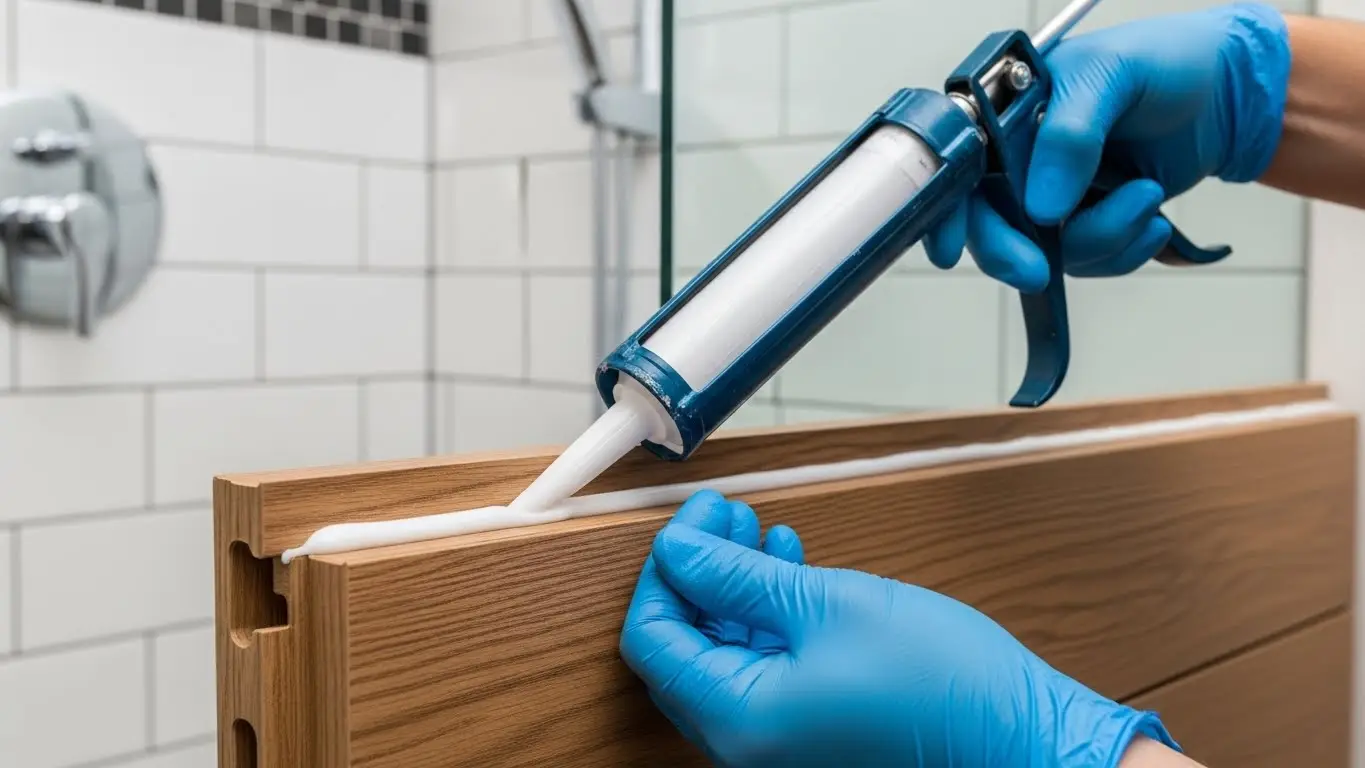
Yes, but with caution. You should use Co-extruded WPC panels (which have a 360-degree protective plastic shield) rather than standard WPC. Essential installation steps include applying waterproof adhesive and sealing all tongue-and-groove connections with mold-resistant silicone to ensure water cannot penetrate the core.
We have supplied panels for thousands of bathroom projects. Here is the only way we recommend installing WPC in a shower zone without voiding your peace of mind:
The 3 Golden Rules of Shower Installation
- Seal the Edges: This is non-negotiable. WPC is waterproof on the face, but the cut edge exposes the bamboo/wood fiber. You must seal every cut with high-grade silicone sealant.
- Vertical Installation: Always run panels vertically in a shower. Horizontal installation creates "shelves" in the grooves where water can sit and eventually work its way in.
- The Silicone Bead: Apply a thin bead of clear silicone inside the groove before clicking the next panel into place. This creates a watertight gasket between planks.
Also, consider the weight and rigidity of the panel. If you aren't sure what specs to look for, check our guide on what thickness WPC wall panel for bathroom to ensure you buy a board sturdy enough for tiling or wet zones.
The "Soak Test" Experiment
At our Zhongshan facility, we conduct rigorous quality checks. One of our favorites is the 48-Hour Soak Test. We submerge a cut sample of our Bamboo Fiber WPC panel in water for two full days.
- Result: Zero visible swelling.
- Measurement: Expansion is less than 0.3mm—imperceptible to the naked eye.This "lived experience" from our lab proves that accidental splashes or humidity won't ruin your investment.
Common Mistakes That Ruin WPC in Bathrooms
The most common failure causes are ignoring expansion gaps and using water-based adhesives. WPC expands slightly with heat and humidity; failing to leave a 2-3mm gap at the perimeter will cause bowing. Additionally, using non-waterproof "Liquid Nails" can lead to panel detachment in steamy environments.
Don't let a bad install ruin a great product. Avoid these errors:
- Mistake 1: The "Tight Fit" Error. Installers often butt panels tight against the ceiling or floor. When hot shower steam hits, the panel expands and pops off the wall. Always leave a gap.
- Mistake 2: Bleach Overkill. WPC is easy to clean. Using harsh bleach or abrasive scrubbers damages the protective film.
- Mistake 3: Ignoring the Substrate. If your underlying wall is already moldy or damp, covering it with WPC won't fix the problem—it will just hide the rot. Fix the leak first.
For those debating between real timber and composite, seeing these maintenance pros and cons usually settles the debate. You can learn more about the trade-offs in our article: WPC wall panels vs wood panels which is better.
Installation Cost & Maintenance
WPC wall panels are significantly cheaper to install than tiles because they require no grouting and can often be placed directly over existing surfaces. Maintenance involves simple wiping with warm soapy water, avoiding the need for grout scrubbing or re-sealing that traditional tile walls require.
Why Homeowners Love It:
- Cleaning: Warm soapy water + soft cloth. That's it. No grout lines to scrub with a toothbrush.
- Lifespan: 15-20 years in a bathroom environment (if sealed correctly).
- Cost: While the material cost is higher than cheap PVC, the labor savings are massive compared to tiling.
If moisture and mold are your primary concerns, you might also want to explore Bamboo Charcoal options. These are denser and offer superior antibacterial properties. Read more here: what is bamboo charcoal wall panel.
Conclusion: Should You Buy WPC for Your Bathroom?
If you want the wood look without the wood worry, WPC is the smart choice. It offers the "Practical Elegance" that HSCS Decor stands for—luxury aesthetics with industrial-grade durability.
The Verdict:
- Go for WPC for a warm, spa-like bathroom vibe.
- Go for Tile/PVC inside the direct shower stream if you don't want to worry about sealing edges.
Ready to transform your space? Check out our Waterproof WPC Collection at HSCS Decor, specifically engineered for high-humidity zones.
Frequently Asked Questions
Can WPC panels be installed over existing tiles?
Yes, WPC panels can be installed directly over existing ceramic tiles using a high-strength structural adhesive (like modified silicone or PU adhesive). This saves significant time and money by eliminating the need for demolition and dust. Ensure the tiles are clean, dry, and secure before application.
Do WPC panels swell in high humidity?
High-quality WPC panels, especially those made with bamboo fiber like HSCS panels, have excellent dimensional stability and do not swell noticeably in bathroom humidity. While wood fibers can absorb moisture, the polymer encapsulation prevents this. Always leave a small expansion gap (2-3mm) at the perimeter to account for thermal expansion.
How do I cut WPC panels for bathroom fixtures?
You can cut WPC panels using standard woodworking tools. A fine-tooth circular saw or jigsaw is best for clean cuts around shower mixers and pipes. For precise holes (like for plumbing pipes), use a hole saw attachment. Always measure twice and remember to seal any cut edges exposed to moisture with silicone.
Is WPC better than MDF for bathrooms?
Absolutely. MDF (Medium Density Fiberboard) acts like a sponge and will swell and disintegrate when exposed to bathroom moisture. WPC is engineered specifically to resist water and is a far superior, longer-lasting option for any wet area or high-humidity environment.
Not Next


