



Are Bamboo Fiber Wall Panels Eco-Friendly? The Truth About Sustainable Decor
Yes, bamboo fiber wall panels are considered highly eco-friendly due to their use of rapidly renewable resources and formaldehyde-free bonding processes. Unlike traditional PVC or chemically treated wood, high-quality bamboo charcoal panels combine organic bamboo powder with medical-grade polymers to create a durable, non-toxic cladding solution that significantly lowers indoor pollution.
However, true sustainability goes beyond just the raw material; it includes lifespan, manufacturing energy, and indoor safety. In this guide, we break down the environmental impact of bamboo charcoal veneers and fiber composites.
What you will learn in this guide:
- Composition: What actually goes into a bamboo charcoal panel.
- Health Safety: Why these panels are rated E0 (Zero Formaldehyde).
- Lifespan: How durability reduces environmental waste.
- Comparison: A direct look at Bamboo Fiber vs. Solid Wood and Drywall.
- Recyclability: The end-of-life disposal facts you need to know.
What Are Bamboo Fiber Wall Panels Made Of? (The Eco Breakdown)
To understand the environmental impact, we must first look at the ingredients. Bamboo fiber wall panels—often referred to as Bamboo Charcoal panels in the industry—are a type of WPC (Wood-Plastic Composite), but with a crucial difference in the core material.
They are typically composed of three distinct layers fused through heat co-extrusion, avoiding the need for toxic glues:
- Bamboo Powder & Charcoal Factor: The core consists of pulverized bamboo mixed with activated charcoal particles. Bamboo is one of the fastest-growing plants on earth, harvestable in 3–5 years, making it a sustainable alternative to hardwoods that take decades to mature.
- Polymer Matrix: A thermoplastic resin (often medical-grade PVC or PP) binds the bamboo dust. While this is a synthetic component, it provides the structural integrity that makes the panel waterproof and termite-proof.
- Surface Film: A high-quality decorative film that mimics wood, stone, or fabric textures, eliminating the need for paints or varnishes that often release volatile organic compounds (VOCs).
If you are currently deciding between materials, understanding this composition is key when comparing WPC wall panels vs wood panels to see which better fits your green building standards.
5 Reasons Why Bamboo Fiber Panels Are Considered Eco-Friendly
1. Rapid Renewability of Bamboo
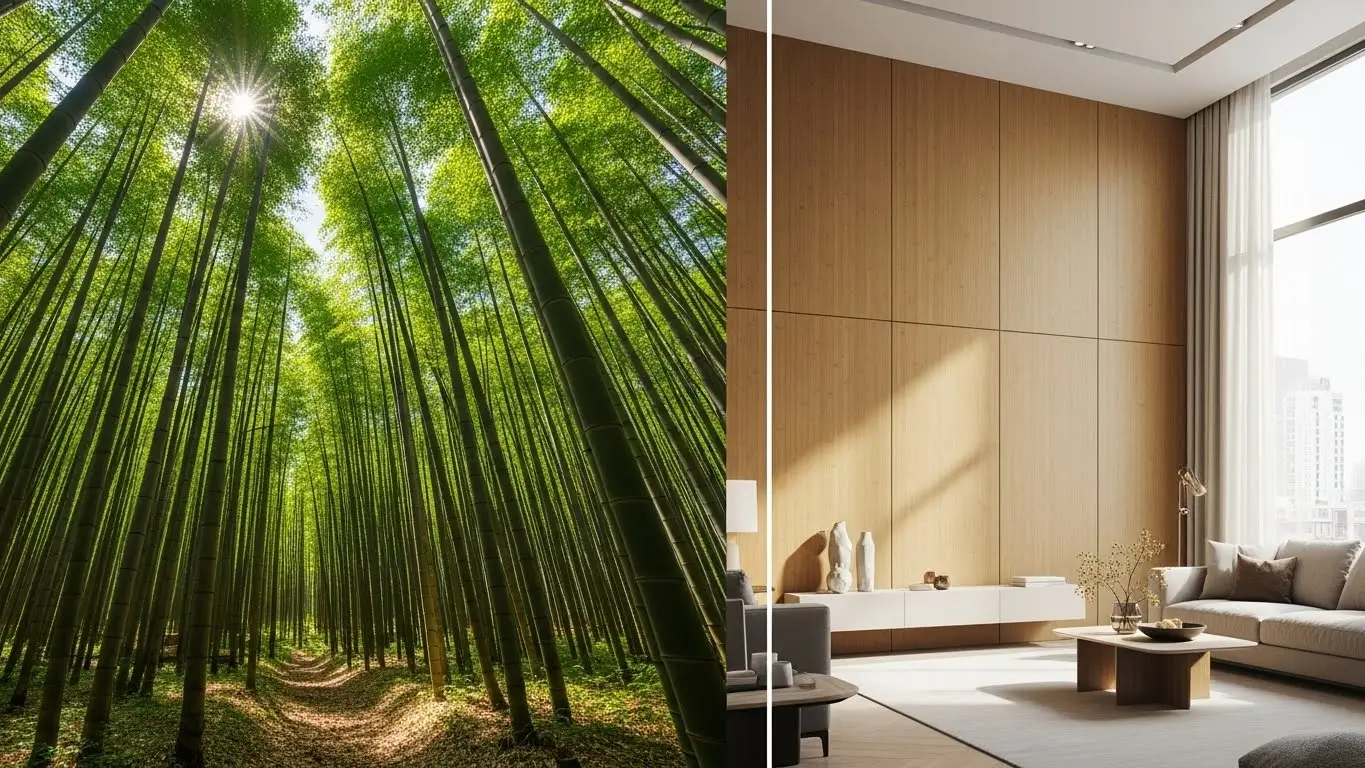
The primary "green" argument for these panels is the source material. Oak, maple, and cedar trees require 40 to 60 years to reach maturity. In contrast, bamboo is a grass that regenerates its root system after harvesting and reaches full maturity in just 3 to 5 years. This rapid growth cycle prevents deforestation and soil erosion, allowing for high-volume production without depleting natural forests.
2. Zero Formaldehyde & Low VOCs
Indoor Air Quality (IAQ) is a critical metric for eco-friendly interiors. Traditional plywood and MDF boards heavily rely on urea-formaldehyde adhesives, which off-gas toxic carcinogens into your home for years.
Bamboo fiber panels are manufactured using high-temperature extrusion. The polymer matrix melts around the bamboo fibers, fusing them together physically rather than chemically. This results in a product often rated E0, meaning zero detectable formaldehyde emissions. For hospitals, schools, and nurseries, this makes them a safer choice than traditional wallpaper or painted drywall.
3. Superior Durability = Less Waste
In the world of sustainability, longevity is king. The most sustainable product is the one you don't have to replace every few years. Because of the polymer fusion, these panels are inherently waterproof and mold-proof.
While traditional wood rots in humidity and wallpaper peels, bamboo fiber panels maintain their integrity in damp environments. This durability naturally raises questions about where they can be installed, such as are WPC wall panels waterproof for bathroom use? The answer is yes, which prevents the environmental cost of ripping out and replacing water-damaged walls.
4. Thermal Insulation & Energy Efficiency
Many bamboo fiber panels feature a hollow-core structure (honeycomb or rectangular channels). This design traps air, acting as a natural thermal barrier. By improving the insulation of your walls, these panels can reduce the load on HVAC systems, lowering the overall energy consumption of the building in both summer and winter.
5. Recyclability
Unlike drywall, which often ends up in landfills as gypsum waste, thermoplastic composites are recyclable. At the end of their lifecycle, bamboo fiber panels can often be reground and processed into new composite materials, closing the loop on the manufacturing process.
Bamboo Charcoal vs. Traditional Wall Materials (Comparison)
When sourcing materials for a project, it helps to see the data side-by-side. Here is how bamboo charcoal panels stack up against common alternatives regarding environmental impact.
| Feature | Bamboo Fiber Panel | Solid Wood | Drywall / Gypsum | Wallpaper |
| Raw Material | Rapidly Renewable (Bamboo) | Slow Growth (Timber) | Mined Gypsum | Paper/Vinyl |
| Formaldehyde | E0 (None) | Low (if untreated) | Low | High (Adhesives) |
| Moisture Resistance | High (Waterproof) | Low (Rot/Warp) | Very Low (Mold risk) | Low (Peels) |
| Lifespan | 20+ Years | 15–30 Years | 10–15 Years | 5–7 Years |
| Maintenance | Wipe Clean | Polish/Varnish | Paint Required | Re-glue/Replace |
Are There Any Downsides? (Honest Assessment)
While bamboo fiber panels are a fantastic eco-solution, transparency is vital. There are a few considerations to keep in mind:
- Manufacturing Energy: The extrusion process requires heat and electricity. While this is arguably less than the energy required to kiln-dry timber or mine gypsum, it is not a zero-energy process.
- UV Sensitivity: Like many materials, the surface film can react to intense, direct UV exposure over many years. It is important to ask do WPC wall panels fade in sunlight before installing them on exterior-facing walls with heavy sun exposure, although high-quality UV coatings mitigate this significantly.
- Biodegradability: Because the bamboo is encapsulated in polymer, the panel will not biodegrade in a compost heap like raw wood. It must be recycled industrially.
Certifications to Look For
To ensure you are buying a genuinely eco-friendly product and not a cheap plastic imitation, look for these trust signals in the technical specifications:
- Formaldehyde Emission Class: Look for E0 or E1 ratings. E0 is the gold standard for indoor safety.
- Fire Rating: Safety is part of sustainability. Check if the panels are rated B1 (flame retardant). If you are unsure about safety specs, you can read more about are WPC wall panels fire resistant to understand how they perform in emergencies.
- ISO 14001: This certification indicates the manufacturer follows effective environmental management systems.
Frequently Asked Questions (FAQ)
Are bamboo wall panels better than wood?
Yes, for specific applications. Bamboo panels are more water-resistant, termite-proof, and cheaper than solid wood, while being more sustainable than slow-growing timber.
What is bamboo charcoal wall panel made of?
They are made of a composite mixture of bamboo powder, activated charcoal, and a polymer resin (PVC or PP) that acts as a binding agent, fused under high heat.
Is bamboo composite toxic?
No, high-quality bamboo composite is non-toxic. The co-extrusion process eliminates the need for formaldehyde glues, making it safe for bedrooms and nurseries.
How long do bamboo fiber panels last?
These panels typically last 15 to 20 years or more. Their resistance to moisture and impact means they outlast wallpaper and drywall significantly.
Can you paint bamboo fiber wall panels?
Technically yes, but it is not recommended or necessary. They come pre-finished with high-quality films in various textures, so painting them defeats the purpose of the low-maintenance finish.
Do bamboo wall panels off-gas?
No. Unlike new carpets or painted drywall which release VOCs, bamboo fiber panels are generally odor-free and low-VOC immediately upon installation.
Is It the Right Green Choice for You?
Bamboo fiber wall panels represent the ideal middle ground for modern design. They offer the aesthetic warmth of wood and stone without the environmental heavy lifting of harvesting old-growth forests or mining natural stone.
For architects and homeowners who prioritize Indoor Air Quality and long-term durability, these panels are a superior choice. By choosing a product that lasts decades and emits no toxins, you are making a substantial investment in the health of your building and the planet.
Ready to see the difference?
Contact HSCS Decor today to request a sample of our E0-rated Bamboo Charcoal series and feel the quality for yourself.


