



Do WPC Wall Panels Fade in Sunlight?
Do WPC Wall Panels Fade? The Short Answer
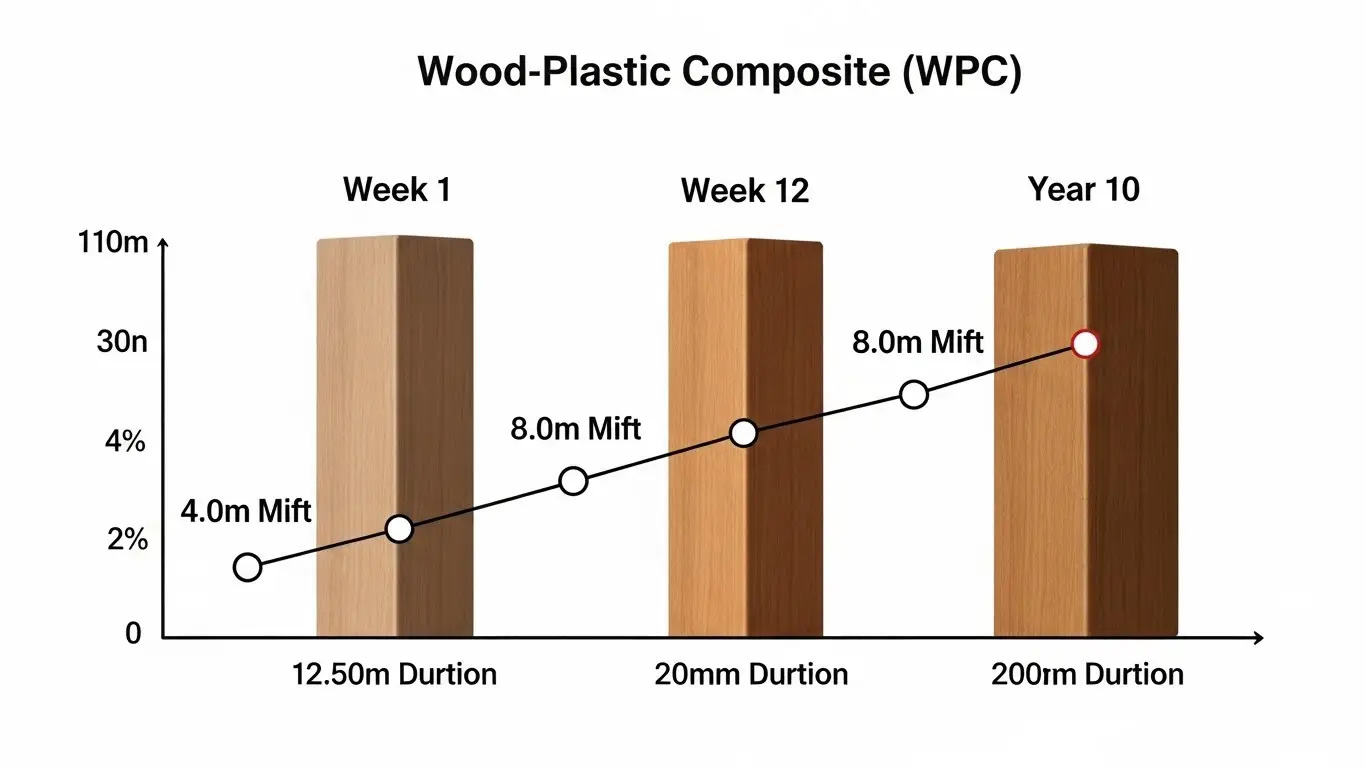
Yes, all outdoor materials experience some UV exposure effects. However, high-quality co-extruded WPC panels are engineered with a protective "cap layer" containing UV stabilizers. While uncapped WPC may fade to a greyish tone over time, co-extruded panels typically experience a minor "stabilization" color shift (approx 5-10%) in the first 12 weeks, then retain their vibrancy for 15-20 years.
At Zhongshan Hengsu Decoration Materials Co., Ltd., we believe in transparency. Since our establishment in 2009 (and with roots dating back to 1995), we have seen the evolution of Wood-Plastic Composite (WPC) firsthand. We know that the biggest fear for any homeowner or contractor is installing a beautiful "Teak" or "Walnut" facade, only to have it turn "Ghost Grey" within a year.
As a manufacturer with over 20 years of PVC and WPC industry experience, we want to clarify the difference between "fading" and "stabilizing."
The "12-Week Stabilization" Myth
Many clients panic when they see a slight color shift in the first month. This is normal.
- Weeks 0-4 (Initial Exposure): The natural wood fibers in the core matrix react to sunlight.
- Weeks 4-12 (Stabilization): Excess tannins are released, and the color lightens slightly (about 5-10% Delta E).
- Years 1-20 (Color Lock): Once stabilized, our high-grade UV inhibitors lock the pigment in, maintaining that shade for decades.
The Science: Why WPC Fades (And How We Fix It)
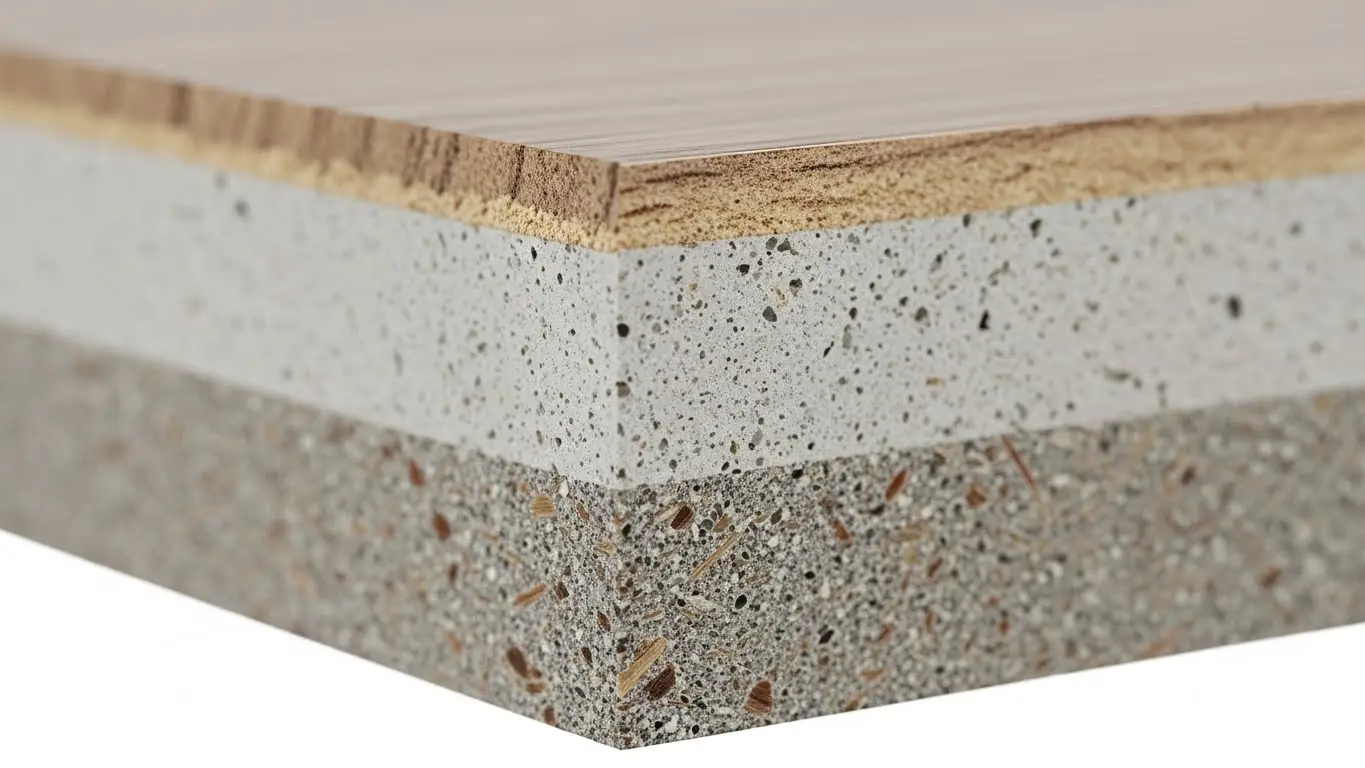
The primary cause of fading in lower-quality WPC is the degradation of lignin within the wood fibers when exposed to UV radiation. We mitigate this by using a "Co-extrusion" process, which wraps the core in a non-porous polymer shield. This shield blocks UV rays from reaching the organic fibers, effectively stopping the photo-oxidation process that causes greying.
To understand why some panels fail and others don't, you have to look at the chemistry.
The Problem: Lignin Degradation
In traditional timber or first-generation (uncapped) WPC, ultraviolet rays attack the lignin—the natural glue holding wood fibers together. As lignin breaks down, the surface turns grey and becomes brittle.
The Solution: Co-extrusion Technology
At Hengsu Decor, our R&D team focuses on Co-extrusion. Think of this as a suit of armor.
- The Core: A mix of recycled plastics and wood fiber for structural strength.
- The Cap (Shield): A high-performance polymer layer loaded with UV Stabilizers and Anti-Oxidants.
This cap layer is what separates "Cheap WPC" from "Performance WPC." It prevents the UV rays from ever touching the wood fibers inside.
Measuring Fade: What is "Delta E"?
"Delta E" is the standard metric for measuring color change perceivable by the human eye. A Delta E score under 1.0 is unnoticeable, while 1.0-3.0 is barely perceptible. High-quality WPC panels aim for a Delta E of <3.0 after 3,000 hours of UV testing, whereas natural wood often exceeds a Delta E of 10.0 (severe greying) within months.
We don't just guess about durability; the industry measures it. When comparing materials for your exterior facade, use this table to understand what to expect.
| Material | UV Stability (Scale 1-5) | Est. Fade Time | Delta E Rating (Lower is Better) |
| Natural Wood (Cedar/Pine) | 1-2 (Poor) | 6-12 Months | > 10.0 (High) |
| 1st Gen WPC (Uncapped) | 3 (Moderate) | 2-3 Years | 5.0 - 8.0 |
| Co-extruded WPC (Hengsu) | 4-5 (Excellent) | 15+ Years | < 3.0 (Low) |
Note: A Delta E rating below 3.0 means that even if you held a new panel next to a 5-year-old panel, you would struggle to see a major difference.
For more on how our materials compare to traditional options, read our guide on WPC wall panels vs wood panels which is better.
Real-World Testing: 3,000 Hours of Sunlight
Manufacturers simulate decades of exposure using Xenon Arc Chambers. A standard "3,000-hour test" subjects the panel to intense radiation equivalent to approximately 5-7 years of Florida sunlight. Passing this test with a Grey Scale rating of 4 or 5 proves the product's ability to withstand harsh UV environments without structural or aesthetic failure.
At our manufacturing facility in Zhongshan, we emphasize quality control. Our experience in the PVC industry since 1995 has taught us that lab results must match real-world performance.
We recommend that all our clients look for "weather-resistance" data specifically for Xenon Arc exposure. This is the gold standard for testing. If a supplier cannot provide data on how their panels react to 3,000 hours of simulated sun, they are likely selling a 1st-generation product that will fade.
Are you considering WPC for wet areas? It’s not just about sun; moisture matters too. Check out our insights on are WPC wall panels waterproof for bathroom.
Comparing WPC vs. Painted Wood vs. PVC
Unlike painted wood which relies on a surface film that cracks and peels under UV stress, WPC integrates color into the material itself. While PVC can chalk (turn powdery) if not properly stabilized, modern WPC uses advanced additives to maintain flexibility and finish. This makes WPC the superior choice for low-maintenance longevity compared to both painted timber and standard PVC.
- Painted Wood: UV rays penetrate the paint, breaking the bond with the wood. Result: Peeling and cracking within 2-5 years.
- Standard PVC: Often lacks sufficient UV blockers, leading to "chalking" where a white powder forms on the surface.
- WPC Exterior Panels: Designed specifically to absorb thermal expansion and resist UV degradation.
For specific applications like bathrooms, thickness plays a role in durability. Learn more about what thickness WPC wall panel for bathroom is best.
How to Choose Fade-Resistant WPC (Buyer’s Checklist)
To ensure you are buying fade-resistant WPC, always verify three things: 1) It must be "Co-extruded" or "Capped" (look for the shield layer), 2) The warranty should explicitly cover "Stain and Fade" for at least 10-15 years, and 3) The manufacturer should provide technical data sheets showing a Delta E < 3.0 or a Grey Scale rating of 4.
Before you order, run this quick check:
- The Cut Test: Ask for a sample. Cut it in half. Do you see a distinct outer layer wrapping the core? That is the UV shield.
- The Scratch Test: Try to scratch the surface with your key. High-quality UV caps are dense and resistant to scratching.
- Fire Safety: UV resistance is great, but safety comes first. Always verify: are WPC wall panels fire resistant?
Conclusion: The "Lived Experience" Verdict
At Hengsu Decor, we have spent over a decade refining our formula. While no material on Earth is 100% immune to the sun forever, our modern co-extruded WPC panels are the closest you can get.
By accepting a minor "stabilization" shift in the first 12 weeks, you gain a facade that requires no painting, staining, or sealing for the next 20 years.
Ready to see the quality for yourself? Contact our team at hscsdecor@gmail.com or visit us in Zhongshan to request your free sample kit.
Frequently Asked Questions (FAQ)
Can I paint WPC wall panels if they fade?
Yes, but it is rarely necessary with co-extruded panels. If you have older, uncapped WPC that has faded, you can paint it using a high-quality acrylic latex paint or a specialized composite deck stain. However, doing so may void your warranty and will require future maintenance like regular wood.
Does the color of WPC panels affect fading?
Yes, darker colors (like Black or Dark Grey) tend to absorb more heat and UV radiation, potentially showing "stabilization" changes more clearly than lighter shades (like Teak or Sand). However, darker panels from Hengsu Decor are engineered with higher concentrations of UV inhibitors to counteract this thermal load.
How do I clean WPC panels to prevent fading?
While cleaning doesn't stop UV rays, removing dirt, pollen, and debris prevents "spotting" and keeps the UV inhibitors functioning correctly. We recommend washing your panels twice a year with warm soapy water and a soft-bristle brush. Avoid harsh bleach or acetone, as these can strip the protective cap layer.
What is the lifespan of WPC wall panels in direct sunlight?
High-quality co-extruded WPC panels are designed to last 15-20 years in direct sunlight without significant aesthetic loss or structural failure. First-generation (uncapped) panels may begin to show signs of significant fading and surface degradation within 5-7 years.


